

He Risked 5 Years of Profit & £22M on ONE Product
with Paul Dolman-Darrall, CEO, G.Games
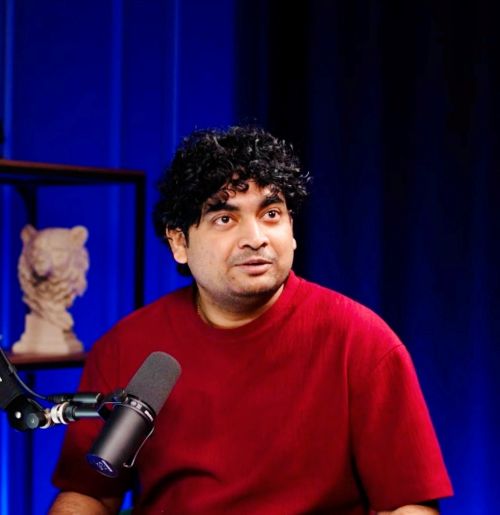


In this long-form conversation with our host Surya, Paul Dolman-Darrall the CEO of G.Games talks about coming into gambling as an outsider, why relationships still have enormous influence over who gets deals in iGaming, and why trying to build something genuinely different can take years of failure before the idea starts to work.
A major part of that story is G.Games' multiplayer slot project. Paul says the company has spent years and around £22 million developing the idea, effectively putting years of company profit behind one product. The original vision was always built around competition and multiplayer, but getting there required Paul to challenge his own bias against slots and learn why players actually enjoy them.
The conversation also goes deeper into product design. Paul argues that customers usually cannot tell a company what product should be invented, but they know very quickly whether they want something once they see it. He also gives a deliberately provocative view on game engagement, addiction and responsible gambling, arguing that a product designer's job is to create the strongest possible experience within rules set by operators and regulators.
But the thread running through the full conversation is persistence. Paul talks openly about unsuccessful products, an acquisition that came extremely close to completion, being an outsider in a relationship-driven industry and the difficulty of building an independent iGaming company today. His advice to would-be founders is simple: there is no playbook. If you want to build something, you need to start and keep going long enough to find your own route.
“When you come in, you want to create a monopoly. You've got 600 companies. You need to do something nobody else does.”
“I would say in gambling relationships is more important than any sector I've ever worked in.”
“The number one thing you want if you're a founder is persistence. The ability to sit there and go, there isn't a playbook. You create your own.”
Key takeaways
G.Games is betting years of profit on one product
Paul says very few companies would put several years of profit behind one idea.
“I don't think there's a company who would gamble five years of profit on a single product.”
For him, persistence is what has given G.Games the opportunity to build something that could genuinely be different.
A crowded market does not mean there is no room to enter
Paul does not believe founders need to find a tiny untouched space before launching.
A company can either do something new or take something that already exists and execute it better.
“When you come in, you want to create a monopoly.”
His point is not about owning an entire market, but finding something important that competitors cannot easily replicate.
Relationships still decide a lot in iGaming
Paul continues to see himself as partly outside the industry's inner circle.
He believes access to relationships can determine how easily a new company gets distribution, customers and cash flow.
“In gambling, relationships is more important than any sector I've ever worked in.”
He does not argue that relationship-led companies have bad products. His point is that strong relationships can give good companies the cash flow to improve much faster.
A successful product and a successful business are not the same thing
G.Games came close to being acquired by Scientific Games, with the process continuing through months of due diligence.
During that process, Paul says he found himself arguing against pushing G.Games' multiplayer idea into the acquiring company's strategy.
“My job isn't to come up with a successful product. My job is to come up with a successful business.”
A product can be exciting without being the right strategic product for a particular company.
About the guest

Extended summary
Published by the podcast, not written by our newsroom.
Read the summaryHide the summary
(01:47 - 03:31) Surya: Hello and welcome back to another episode of iGaming Real Talk. We are here in London with Paul Dolman-Darrall from G.Games. He's the CEO of G.Games and has been there for a very long time, since 2016. Paul: Yeah. That's certainly when we took our first bet. Surya: I like this company because I've been looking at Helen's posts mostly. I've bumped into yours. Paul: The real showwoman. Surya: I wouldn't say so.
I think they come across as really real for me because at the moment LinkedIn is full of AI slop. Paul: Yeah. Surya: And then the posts that are real are going to stand out. I also like the fact that you describe your company as having this sort of irreverent attitude. That's also what is interesting to me because it's somewhere closer to what we're trying to create as well for iGaming Real Talk. So first of all, Paul, welcome to the show. Paul: Thank you very much.
Surya: I've known you for a while. I've seen your posts, as well as looked into a few interviews you've done online. But for anyone who hasn't come across your background, can you give us a one-minute overview of the way you see it from your side? Paul: I very much see my background as quite varied. I think for the audience, the most relevant thing is that I decided to create a gambling company and I'd never worked in gambling, or anything close to gambling.
I just went, “Yeah, there's lots of money in that. We can do that.” Truthfully, I think it's been a lot harder than we expected. I thought we'd come in and we'd be really successful at this really fast. What we discovered was a sector that is lacking in innovation, is closed, very network-orientated, is very hard to break into and is full of lots of cliques. Entrepreneurship and Corporate Life (03:32 - 06:19) Surya: Let's rewind a little bit.
You've had a lot of experiences outside of gaming before you came into the sector, right? You sold your first business at nine. Paul: No, no, no. That is a bit of an exaggeration. I've always had an entrepreneurial spirit. I started wanting to make money at nine. I didn't grow up in a very rich family. I grew up in a poor family by UK standards. So I needed to make money.
By 11, I was selling food to other kids and gambling on the side, truthfully, with children, because the most obvious person to serve a child is somebody who is also a child rather than a gambling company. So I used to do a lot of gambling as a kid and make money from gambling. Then I sold my first business when I was 18, actually, at university. Surya: Okay.
And then you worked in retail, you worked in tech, you launched Banana Republic in Europe for GAP, you were IT Director at Pearson, and you were also a chief examiner for Agile. Paul: Yeah. I've been all over the place. To me, it seemed quite consistent at the time. I think the truth is that I was kind of an entrepreneur and I'd make money, but I'm also very good at, or was very good at, spending money. I sold my first company and I spent all of that money quite quickly.
I was always fighting this battle between being an entrepreneur and just being a serious corporate person. Surya: Right. Paul: I didn't have tons of money behind me. So I started going down a corporate career, John Lewis, Pearson, etc. Steve Jobs talks about this idea of pirates versus the Navy. Who do you really want to be? Surya: Yeah. Paul: I am so sure what I am. I'm a pirate.
So I knew I wanted to go back to running my own business again and be an entrepreneur and be a pirate. Gambling is the ultimate pirate industry in some ways. Since I've made that move away from rising up the corporate ladder, I've worked on HS2, which is a billion-pound train project. I've worked on Universal Credit, which is a £20 billion project. I've worked on some enormous, enormous things.
But I get far more joy from working on something small and something where it's striving to succeed rather than corporate success. Surya: You wouldn't have known if you didn't try the corporate side and have the success. Paul: I'm not sure I had a choice. It's called that thing called salary, which pays mortgages and pays bills. No, I think I've always known. Deep down, I've always known from the age of nine I'm a pirate. I want to be in control of myself.
Even if you're the CEO of a company in a large corporate, you're never fully in control. Whereas if it's your own business and you're a CEO, yes, you can be fully in control. That matters to me a lot. Tinkerers and People Who Change Industries (06:19 - 07:19) Surya: Cool. Recently I was watching House of the Dragon. A family member was saying, “I don't like this character. It's a negative character,” to put it simply.
A thought came to me and I just said every character has a purpose. Paul: Yeah. Surya: Without which the story is not complete. At the end of the day, the story isn't complete without either of them. Paul: 100%. The skill set is very different. I think those who are rising in the corporate ladder, I call them tinkerers. Surya: Tinkerers. Paul: Yeah.
What they do is change little things to improve business models and make a company a little bit more profitable and grow a company by 5%, 10% a year. Most of the world are tinkerers. We need way more tinkerers than we need the other side. So there's definitely a purpose for them. But for me, I am very driven by the idea of changing stuff very significantly, and even if that means failing at it. How can I take this and completely change it? That's not what a tinkerer does.
Starting G.Games (07:19 - 08:22) Surya: Okay, got it. So G started kind of in 2013. Paul: Yeah. Surya: You've joined the project in 2016. How did you actually come across G? Did Helen approach you? Paul: No, no, sorry. I founded G along with two other founders. That's probably just because we changed our company name. I founded it with two other co-founders, Helen and someone who's even more anonymous than me, Dan. Surya: Oh.
Paul: We very much viewed it as Helen being the marketing person. That's the reason why people see a lot of her as well. Dan is very much the technical founder of the business. Though I have a technical background, that isn't what I was trying to bring to the company. I think what I bring is business. My area of expertise is business and the love of it and the pursuit of it. So I spend inordinate amounts of time trying to understand how things succeed.
How do you make something successful? And not just in gambling. How do you do that in any possible business ever? Finding Space in a Crowded Market (08:22 - 10:39) Surya: When you were going through the process of creating a new gambling company, there were already hundreds of game providers. What went through your mind starting something similar that's already there?
There's more content than ever, and every month there are hundreds of games being released, something similar all the time, sticking to traditional themes. The space is quite crowded, but it still works. So what made you feel there is a little space for us that we could carve for ourselves with G? Paul: I don't think I ever sat there and went, “Is there a little space for us?” Any sector, you can come in and either do something new or do something better.
Some companies, Pragmatic probably being a good example, haven't really been that innovative as a company. Surya: Yeah. Not as much as No Limit if we talk about it. Paul: Yeah. Pragmatic came in and they've done a lot of things better. Probably the most innovative thing they did was Drops & Wins. They've been able to have this constant, “We're going to be better, we're going to be better, we're going to be better,” and it's led to their enormous success.
Or you can take No Limit as a good example, who came in and basically went, “Nobody's done controversy.” A really good example, we've got a can of water here on the table that we struggle to open, Liquid Death, which is a can-of-water business. It's a really good example of a No Limit. You can come in, you can be controversial and you can be successful that way. No Limit have then built upon that innovation with things like bonus buys.
Originally bonus buys were done by BTG, but No Limit really innovated bonus buys. They're still doing it today. They've just added another feature the other day. So you can innovate in two ways. But I think what you want to do, and this is my view of it, is when you come in, you want to create a monopoly. It sounds really bizarre, but you've got 600 companies. You need to do something nobody else does. Surya: Blue ocean. Paul: Yeah, a blue ocean.
You've got to be able to create a monopoly of some sort if you really want to produce big, large excess profits. We had some ideas of how we did that. G.Games' First Big Idea (10:39 - 11:51) Surya: Okay. So that was the plan, to create a monopoly, look at the market and ask how we can not do more of the same but something completely different. So we will be the first. Paul: Yeah, 100%. We had a big idea right at the very beginning.
We won ICE Startup of the Year at the first ICE. This was around 2015. Surya: Oh. Paul: I told you we took our first bet in 2016. So I think it was 2015 when we won that. Surya: That's good. Before you took the bet. Paul: Yeah. We were like, “We're going to do game shows. We're going to be the first company that does game shows properly online.” Then, hey presto, along came Evolution.
That idea disappeared very fast as we realised that Todd and his team had a lot more money and were a lot more capable and blew us out of the window, really. We've survived by sometimes producing content that's probably not that good and is a bit like everyone else's. But we've always fundamentally had that idea that we are going to become brilliant at something. We had to go and find what that was. Man v Fat and Building Better Business Models (11:51 - 13:54) Surya: Okay.
We'll come back to this part of the story. During the research, I also found an amazing venture of yours, Man v Fat. What's the story there? There are lots of parties, lots of alcohol involved and it's easy to get into unhealthy habits that might not be good in the long run. Could you share the story there? Paul: For me, I'm an individual who sees himself as quite controlled. Some might say controlling, but I'll go with controlled.
As a result, I very much don't like being out of control in anything in my life. Weight has always been a battle for me. There was just a point where I was like, “Okay, Paul, you're putting on weight every single year and you need to stop this because if you don't stop this, the truth is you're just going to die.” I still battle with it today. The Man v Fat thing is quite interesting because a guy had set up a magazine called Man v Fat.
I basically said to him, “This is brilliant, but the business model is all wrong.” I told him, “You need to turn this into a football business.” At the time I started talking to him about that, and that's exactly what he did. I don't know how many millions he sold that business for, but Man v Fat Football became the number one male weight-loss treatment in the United Kingdom. I'm quite proud to be involved in that, even though I was not a shareholder.
But I did sit there going, “How do I transform this business?” I remember saying to him, “Football. Men like football. You need to connect weight loss to football, and then it will become an interesting business model.” But I still struggle with my weight today. I'm hoping to be involved in the boxing and I have to lose 10 kilos for that. I still find it one of the most frustrating things as somebody who wants to feel always in control.
Willpower and Changing the Environment (13:54 - 16:43) Surya: Personally, I've always tried to frame it in such a way that it's against willpower. So there is no other choice but to drop it. If I accept that it's willpower, then there's nothing else to do. Paul: But it is more than willpower. I talk about myself personally here rather than saying it applies to everyone. Losing weight is actually quite easy. Keeping weight off is the hard part.
When you lose weight, let's be honest about it, you just need to cut your food. But when you're trying to keep weight off, you are eating normally. This is the thing that's really weird to understand. When you put weight on, how many calories do you think you need to eat in excess a day? It's 50 calories a day, and you will be putting on weight at the same speed as anyone else in this country. When we talk about willpower, we're talking about 50 calories.
That's half a biscuit. Half a biscuit is the difference between you being thin and you putting on weight every day. It's not enormous. It's not as if someone who's overweight is going out and eating six extra meals a day. It's half a biscuit extra a day. That's not willpower. It's so tiny that applying willpower at that level every single day is very difficult to do. It's opportunity. When you put lots of food in front of people, you eat. Surya: Yeah.
Paul: So you need to remove opportunities to eat. That's not willpower. That's changing your environment. Surya: So willpower is not even a test. One thing that worked for me was intermittent fasting. Paul: Yeah, I did that as well. Surya: I eat two times a day, breakfast and an early dinner around 6:00 p.m., and that's it. Paul: The evidence is very clear. Intermittent fasting mainly doesn't work. And I'm someone who uses it. Clearly, I have some belief in it.
I think it's partly because it reduces opportunities. But if you look at longitudinal studies of intermittent fasting, it doesn't work because it's predominantly willpower-based. People just run out of willpower. I think some of the biggest changes you can make are changing the food around you. I'm a really big believer that willpower should be applied at the point of buying, not at the point of eating.
If you apply it at the point of buying, then you're lowering the number of opportunities. This is true of everything. If you want to control something, limit the number of times you're exposed to it if it's a bad thing. And if you want to do something positive like exercise, maximise the number of opportunities you're exposed to it. Surya: That's a good one. I'm going to use that for myself, especially for exercising.
Being an Outsider in iGaming (16:47 - 18:31) Surya: In a lot of interviews you've described yourself as an outsider. This is a known fact that we've established at the moment. Do you actually want to become an insider at some point, or do you want to see the industry from the outside so that you always have a new perspective? Paul: I get a lot of stick when I call myself an outsider. People are critical of it because they're like, “What are you on about?
You're a CEO of a studio. You know everyone. You're not an outsider at all.” Sometimes I think to myself, am I being paranoid? Is it just a paranoia or a mindset that maybe I want to be an outsider? I don't know. If I'm really deep down about it, I still feel an outsider. One of the easiest ways to know whether you're an insider or an outsider is whether you're connected to the flows of money that happen in the industry.
Can you connect yourself very easily to a flow of money? For example, you've got a new studio. Can you get your studio live on Stake because you know the founders? Then you're an insider. If you have to sell to them, you're an outsider. Almost everything we've done has been earned. I'm not saying that makes us superior. I want to be very cautious about that. But it means not very much has arrived as a favour or because we know someone.
I still think that's reasonably true today. We're signing deals left, right and centre at the moment. I don't think many of them today are being passed to us because they're our friend. That makes me feel like an outsider. But I'd love to be an insider. How Much Do Relationships Matter? (18:31 - 20:59) Surya: This is something I've been thinking about a lot recently. How do companies make decisions? Is it just because you know someone that you get your foot in the door?
Or is it because your product or your service is worth being there? In iGaming, from the little experience that I do have, it seems mostly through relationships. Paul: 100%. Surya: No matter if you have a better product or better service, the person who has a better connection within the company has the better chance to get the deal. Paul: Yeah. You'll be aware of the anonymous company Shady Lady. Do you think they've got the deals they have because they're anonymous? No.
Anyone who knows them knows who they are, and every deal they've signed is connected to previous businesses that they've been involved with. Do you think Red Tiger, and now Octoplay, get live onto Flutter because they had the best product in that moment, or because they had relationships? Relationships are a big part of it. It doesn't mean, by the way, that they don't have good products or that they can't provide good services. The two aren't separate from each other.
But if you're able to turn on a flow of cash into your business, boy does it help you make a more successful product more easily. That's the beautiful thing. You turn on cash flow, you don't need to go and raise money from investors. You can start investing in things more quickly and you can become a better company faster. That matters. I would say in gambling relationships is more important than any sector I've ever worked in.
Surya: It is more closed, like a club in that sense, not allowing outsiders to enter and be part of it. Paul: Yeah, 100%. I feel that way. I feel like I'm in the queue. I know some people inside the club. People say hello to me as they walk past. Maybe I even get in the club at some point. I've waited outside for two hours and they let me in, but I'm not up in the VIP section.
I think it's almost impossible today to create a studio from scratch without that, unless you had a lot of money. Today there are companies who help us out. There are people we regard as friends. So for me to completely sell myself as an outsider is disingenuous. The Biggest Bet (21:01 - 22:29) Surya: Cool. Let's talk about your newest bet. Paul: Yeah. Surya: Probably it's not so new. Paul: Newest, biggest bet. Surya: Biggest. Paul: Craziest bet. Surya: Right.
So you spent £22 million developing this product for four years. Paul: Yeah. Four or five years. In fact, the idea is six years old. Surya: Six years, let's say including the idea. You've tried to turn a slot into a multiplayer video game, which never existed before. Paul: No. Surya: So I'm curious to understand the intention behind it. Is it mainly how you started in 2015?
Is it what you wanted to create as the blue ocean, as a new thing and take over as the monopoly, and it just took some years to materialise from idea to prototype? Paul: I could sit here and say, “Yeah, it's originally what we thought of.” That's partly true. And we sometimes tell that story. Our company was originally called Gamevy before it was called G. Surya: Right. Paul: The “vy” bit was vi to vi. It's a Latin word. It means to compete.
We knew from the very beginning that we wanted competition in our games, real competition. We knew that would probably be multiplayer. We knew that before we even started the company. But it's also true in our company that we said we would never build a slot. Surya: Yeah. Paul: And that we hated slots. Surya: Okay. Paul: Yet this is a slot. So that changed. It's a combination of something that changed and something that was always true.
Learning to Understand Slots (22:29 - 24:29) Surya: The industry that is built on risk is risk-averse. Paul: Yeah. I think this is where you've got to be very careful sometimes. I love gambling. If you asked what my favourite games are, this isn't true anymore, but this used to always be my answer: I love all gambling except slots. Slots was the one that I always struggled to understand. Surya: Yeah. Paul: Because I like winning. Surya: Because you can't control it.
Paul: I like poker because I'm good at poker. I like sports because I believe prediction is a place that you can make money from. I like almost everything. I can card count, so I like blackjack because I can count cards and the game has positive EV. I don't like roulette that much because it's a game that screws you over. Slots is not a game you play to win. It's a game you play for the roller coaster. Surya: Yeah. Paul: Why would I want a roller coaster? I want to win.
It took me a long time to understand slots. I'm a product designer at heart. You used to join the company and we'd say to people, “We hate slots. We're never going to build slots.” What I realised is that I was allowing very much a personal bias to infect the company's bias. There was a point where I went, “This is pretty stupid, Paul, isn't it?” Because 80% of the revenue of casino is slots. So why would you turn off your ability to access 80% of the revenue?
That's just the stupidest thing you've ever done. It took me three years to realise that. Then, when we started to change that, I began to open up my mind to the idea that my original vision could become a slots vision. Surya: So it's not completely new in that sense, but it's a calculated risk because you don't want to exclude 80% of the revenue. Paul: Revenue is a pretty important thing. So yes, I would say it's quite calculated.
The Multiplayer Slot Idea (24:29 - 26:17) Paul: I tell this story a little bit, and usually very short. I was sitting down with Helen. We were with a team from Unibet and we had a lottery product. Helen was trying to sell them a lottery product. I didn't want to sell them a lottery product, and I didn't want to work on the lottery product. I was already sure the lottery product was going to fail. They were like, “What's the future?”
And in an almost flippant tone, I turned around and went, “Whoever invents a proper multiplayer slot is going to be very rich. That's the future.” They were like, “Oh my God, that's amazing. How would you do it?” And I went, “I'm not going to tell you, am I?” That was an absolutely pivotal moment. It's the flight that I took after that where I sat down with a pencil and paper and wrote down just a tiny little bit of maths.
I got off the plane, picked up the phone to Helen and went, “You know that thing I've been working on for six or seven years now? I've solved it.” I know how to do a multiplayer slots game that's going to change the world. It's crazy to think that. But that was with a pencil and a piece of paper following a flippant conversation. It's not that it happened in a second. It's six years of failure. It's six years of screwing things up.
It's three years of realising that maybe you should chase the 80% of revenue rather than ignore it through your own personal bias. Surya: Flights are a great location to come up with new ideas. It's worked for me a few times as well. Paul: It's just something in the clouds. You're looking out, calmness, nobody is going to disturb you. You get two or three hours to yourself. Nobody's going to pick up the phone to you. I could just sit there.
After that flight, I was a man obsessed. The Acquisition That Almost Happened (26:17 - 29:41) Surya: You've also got an acquisition offer along the way. £40 million, is it? Paul: Did I ever reveal the number? Who knows? Clearly I did. I don't think I'm tied by any NDA at this point. I think it was £28 million in cash and about £20 million in earnout available. Surya: So that was a good deal at that point. Paul: It was a good deal.
Surya: Because you're still halfway through the build itself and we don't know if it will work as intended. Paul: I would say actually at the point that that deal came along, we were stuck. We were working on this big idea. We'd spent about £4 million or £5 million at that point, and we were stuck. Along comes somebody offering you somewhere between £28 million and £48 million. Surya: So was it turned down, or it didn't happen? Paul: We accepted it. It went a long way.
We spent eight or nine months in due diligence. Surya: That's a long time. Paul: Yeah, it was a really long time. The multiplayer project was put on hold during that. We stopped it. I've been fairly public about this. That company was Scientific Games. We started working on Scientific Games' strategy and where their business should go. They actually really liked the multiplayer product, and I kept telling them, “No, this product is wrong for your strategy.”
Surya: Oh, so your strategy needed to be something different. Paul: They really struggled with this idea because people fall in love with products. But my job isn't to come up with a successful product. My job is to come up with a successful business. They're not the same thing. For Scientific Games, which is an enormous powerhouse owned by venture capital, what moved the needle for their business wasn't my multiplayer product.
They didn't have the right customers for it either. What moved the needle for them was something that changed the US lottery or iLottery market. What changes the needle for us was very different. But it was absolutely crucial because I remember shaking hands with the CEO. This was a done deal. All we're waiting for is the signature on the paper. At that time, we had just gone to a conference in Canada and I had a Scientific Games badge on me and my name on it.
That shows you how public it was. Surya: Yeah. Paul: And how close it was. I spent three days working on their stand in their team, with my team, with all of us in Scientific Games stuff. At ICE, about a month and a half later, we were the Scientific Games stand. We had Scientific Games on our stand. It was too late to change any of the stuff, but the deal had already fallen through. Surya: Why did it fall through?
Paul: In our business, we did quite a lot of business in Germany. There have always been question marks about the legality connected to the court case in Malta. This was four years ago. It's taken four years for that court case to conclude itself through the European Union. That money was seen as a bit risky. Therefore, during due diligence, the deal fell through at the last minute.
That was annoying because we'd always been quite public about our revenue in that space and aware of the risks associated with it. It didn't particularly matter to Scientific Games because we were going to solve their North American business problem. Do Players Know What They Want? (29:41 - 31:26) Surya: Let's look at game design. You're a builder at heart. Do you think players know what they want, or do you think it's your job to tell them what they should want?
Paul: It's the Henry Ford problem, isn't it? Do they know what they want? No, of course they don't know what they want. I think this is pretty established in almost any industry ever. Surya: Even Steve Jobs said something similar. They don't know what they want. Paul: They don't know what they want. They can't know what they want. They're not product designers. The bit which is very complex is that as soon as you have designed something, do they know whether they want it?
100%. They know if they want it. Surya: Then marketing comes into play. Paul: Yeah. You can sell anything to anyone, but can you build a sustainable business off a bad product? No, not really. Customers know what they want when they see it, but they don't know what they want if you ask them to envision it. We did a lot of market research for this product. One thing we never ask them is, “What do you want?” Because it's a very bad marketing question.
You will build the wrong thing if you ask a customer what they want. I listened to a Todd interview the other day and he was like, “There are 15 people on the planet right now who can design gambling products that will change the world.” I don't know if I agree with him. But why on earth do we think any of them are customers? Because they're not. They're running their own studios. That doesn't mean that I'm not a customer. I think that is quite crucial.
It's very hard to design a product if you don't immerse yourself in that product itself. We talked about slots. I used to hate slots. I spent a year playing hardcore slots for a long time. Surya: Just to switch yourself. Paul: Right. Becoming a Slots Expert (31:26 - 33:32) Surya: When did it occur to you that you need to merge slots with multiplayer? When did you have the confidence to say, “Right, this is what we're going to build and people are going to play”?
Paul: They don't all come at one point, and they don't necessarily come in the order you'd expect either. I think we decided we knew we were going to have to do something in slots. So we started building some slots. It's at that point that I was like, I need to understand these slots a little bit better than I do. Surya: Even if you don't like them. Paul: Even if I don't like them. That means I have to start playing for money. It has to be real.
I have to go and play everything. Realistically, I went from somebody who didn't really know a lot about slots to someone today who I think is an expert in the subject. A deep expert in the subject. Part of that is just sitting there losing money and beginning to realise, what is the joy of the roller coaster? Why do people enjoy this? I'm obsessed with the idea of watching other people play. Why do they enjoy it? Because they're not necessarily me.
What enjoyment do they get from that? The multiplayer idea and slots probably came together two years later. Surya: Okay. Paul: So a long time after I really got back into slots and started to study both. I hate not knowing stuff. You can't know everything, but you can know a lot in life. I spend enormous amounts of time learning everything.
I remember, for example, we had a new guy join us and he was like, “You're an idiot, Paul, because you know nothing about land-based slots.” I'm like, “Okay, maybe I am. Time to go and learn about land-based slots.” This is an addiction for me in itself. Someone might say something to me and I'm like, “I don't know a lot about that. I'm going to have to go away this weekend and learn about that random topic that I will never ever have to use.”
With knowledge, you don't have to be the elite. You just need to be in the top 1%, and that actually requires a lot less knowledge than you might think for any subject. Addictive Products and Responsible Gambling (33:32 - 39:23) Surya: Let's say you've built a product that's super addictive. Would you be proud of that as a product designer, or would you worry that it has probably created a bad influence on the players themselves? Paul: What is addictive here for a second?
Do I want to build a game that someone always wants to play, feels they don't want to leave because it's so good, that they can't stop playing, that they want to return to that game when they've stopped playing, and they think about that game even when they're not particularly thinking about that game? That's the product designer's dream. If we want to label that addictive, which it may well be, then is my goal at that point to build addictive products? 100% it is.
I don't see how any product designer's goal isn't that. Would I be proud of that? Yeah, 100% I'd be proud of that. I don't think my goal as a product designer comes into conflict with a regulator's goal to regulate me, or with an operator's goal to look after their customer. My goal is to build amazing, great experiences through games that nobody has ever felt before. Is that addictive? Yeah, it probably should be.
Just in the same way Grand Theft Auto will be addictive when it comes out. Surya: So you're saying responsibility is not on the creator's side here. Paul: I don't think so personally. I think it's a mistake to put it on the creator's side. I genuinely do. I think I have the biggest conflict of interest. Pretending that I can be both the ethical game designer... It's quite funny this week because I think Helen is literally talking at iGB this week on ethical game design.
And I'm sitting there going, “I don't think ethical game design is possible.” Someone has to hand rules that I have to follow. So in the UK, that might be a 2.5-second spin. It might be limitations upon what I can do in graphics. You have to hand me my design constraints. But truthfully, I think my goal is to build the best possible game experience within the design constraints that are given to me, not create design constraints myself.
Surya: So where does the responsibility lie? Paul: It's a good question. Going back to the weight-loss example, opportunity matters. Realistically, if you want to control gambling and you think gambling is bad, I do not think gambling is bad. I do think it should be regulated, but I think almost every industry on the planet should be regulated. I don't view gambling as inherently evil, bad or morally wrong.
I just don't. There are lots of things that are gambling that we don't call gambling, and it's okay. I think ultimate responsibility exists with the player. But I do think it's the responsibility of regulators and operators to manage opportunities. So if a player says, “I don't want to be given any opportunities,” then an operator who deliberately gives that player an opportunity through an advert or something like that is very clearly going against the wishes of the player.
But ultimate responsibility has to exist with the players, as it does for alcohol when someone goes drinking in a pub. And we don't find that anywhere near as controversial as gambling for some reason. Surya: I do agree with that framing, that ultimate responsibility is with the user or the player. The problem starts to happen when any particular person doesn't accept responsibility for whatever happens in their life.
There are cultures, for example Brazil and India, who act on the other side of regulation and try to ban it in the hopes of doing good to society. The problem with that is you're essentially making people less responsible. Paul: I think this is always tricky. You have to have some things done at a societal level. There's no escaping it. Let's take our food industry.
Should the food come from farms that are healthy and everything is well maintained and animals have good welfare? It's very hard to hand that choice to the end customer. The same is true of gambling. Should we have responsibility programmes, things that help deal with addiction, things that help you deal with the problems that exist in gambling? Yes. Should that be mandated? In my opinion, yes. Should companies take responsibility for that? Yes.
But ultimately, the player still has to have the ultimate responsibility. If you don't have that, essentially, you always have the excuse. Some people might pick gambling. Some people might pick drinking. Some people might pick eating. We're in an addictive world. That's how our minds work. We produce dopamine, serotonin and adrenaline. We do it all the time for everything, including watching this podcast.
Is this podcast now an addictive podcast if you watch more than one of them? The real problem is, do we cause harm and how do we minimise harm? Not, do we make something less addictive? How do we minimise the number of people who commit suicide? How do we minimise financial damage when somebody is addicted to something? These are the areas we have to focus on. Not so much the addiction, because everything is addictive. Exercise is addictive. Surya: Ambition is also addictive.
Paul: Ambition is addictive. Everything is addictive because that's what our brain is. It's a reward-recognition pattern. All industries have responsibility for dealing with the harm that they cause. Whether that's pollution harm, whether that's gambling harm, they should contribute and be part of that. Failure, Pride and Building Something Different (39:23 - 42:37) Surya: I haven't heard a more holistic answer to the whole... Paul: And think about this.
I sit very heavily on the left wing of politics. So trust me, suggesting that it's individual responsibility immediately makes me think my parents would be sitting here in shame thinking I'm a Thatcher. Surya: All right. Let's look at the hardest part of building G. You've mentioned before that you've had imposter syndrome at that level when you don't know... Paul: I wouldn't even say it's imposter syndrome. I don't think I suffer from imposter syndrome.
Surya: But at the company level, when we're trying to build something that you wouldn't know whether it would be successful or not, how would you lead a team in that uncertainty? Paul: This sounds crazy, but we've been very clear internally, and I wouldn't say this is true for every product, but for quite a few products that we've built, we're bad at this. How do we solve this problem? We are really bad at this.
The mentality in our company isn't driven by thinking we're great and then selling it and failing. It's driven by, we're really bad at this. I'll be honest with you. Today, in our company, I think we have roughly 450 products. I think there are two, maybe three, that I am personally proud we built. And neither of them made tons of money either. We've had far more financially successful products that I'm not proud of. Surya: Okay.
Paul: But the thing that we're working on now is just so much more. If it fails, I will walk away knowing that I did the right thing. That's really weird to think, that it is the journey of building it that matters and being proud in what you built. If it fails, it fails. But we're still proud. Surya: There's this VC I follow from Silicon Valley, Naval Ravikant. He says the true measure of intelligence is when you can achieve what you want. Paul: Yeah.
There are two parts to it. Knowing what to want in the first place. You might want to be a six-foot model, but this is not physically possible. Knowing what to want is very important. And the second thing is being able to achieve it. What as a company have we been really good at? I can literally tell you in a very short number of answers. We survived for four or five years by building stuff and getting money into the company.
It wasn't maybe the best stuff ever, but it helped us survive. Then there was a point where I turned around and went, “We're big enough now. We should try to thrive.” There is not a company on this planet in iGaming right now that has the persistence we have. We are the most persistent company. Surya: Maybe an overstatement. Paul: It's not an overstatement. I genuinely don't think there's a company who would gamble five years of profit on a single product. Who is it?
I don't think there's anyone who would gamble a year's worth of profit on a product. But we've gambled five years' worth of profit on a product. We are the most persistent company today in iGaming. Full stop. I'm quite happy to criticise where we're bad. But we're the most persistent company. It's the persistence that has put us into a position to maybe do something that might change the industry.
Advice for New iGaming Founders (42:37 - 45:23) Surya: That's quite interesting. For anyone who's watching, who's maybe in a job or contemplating their next move, for anyone wanting to start an iGaming B2B business today, in the second half of 2026, what advice do you have for them? Paul: My first advice is don't. Get out now. Surya: But there are dreamers. People want to do this stuff. Paul: Yeah.
The answer is don't. And if you're able to deal with my “don't,” then maybe you really are a dreamer. Surya: But Paul, you've built something. I want to build something now as well. Can you hand over the playbook to me? Paul: First of all, almost wrap these things around a little bit. Weight loss is persistence. It's the daily commitment to something. Building a company is persistence. Being successful in your career is persistence.
Persistence is deeply underrated and doesn't exist as much as you might think because we get excited by the next thing and we change all the time. We're not prepared to just commit to something. So I would say that's the number one thing you want if you're a founder. Persistence. The ability to sit there and go, there isn't a playbook. You create your own. You do something that nobody else has thought of. The idea that you would get it from me...
If you're listening right now and you think you're going to get it from me, stick with the “don't.” And if you're sitting there going, “I could do that and I'm that crazy,” go for it. One in a hundred of you will succeed. Surya: Because we glorify entrepreneurs, but there's only, what, 1%, 2% successful? Paul: Yeah. We glorify them, and probably wrongly as well.
But what is the fundamental difference between most entrepreneurs and most people who never make it as entrepreneurs? They start. The vast majority of people are just sitting there talking about how they're going to set up an iGaming company. If you genuinely believe you're a dreamer listening to this podcast right now, stop listening to this podcast right now and start right now. Not tomorrow. Not the day after. Sit down right now. What is your big idea?
How are you going to get there? How much money do you need? How much persistence do you need? If you haven't done it five minutes by the end of this podcast, go home. It's not for you. It's okay. Go be a tinkerer and climb the corporate ladder. Work for an entrepreneur. You don't need to be the entrepreneur to be exposed to the success of the entrepreneur. Go find an entrepreneur and work with them. Give up the corporate life. Go work for a startup.
There are so many other options to be part of the dreamer's journey than be the dreamer themselves. Learning From Other Entrepreneurs (45:23 - 47:44) Surya: I loved my time at SiGMA, working closely with Eman and seeing that growth from single-digit employees to about 100. That's the best I could have asked for. I've started this on my own now, bootstrapping, trying to build it as a media business.
If it wasn't for that experience working alongside Eman, probably I wouldn't have done what I'm doing. Paul: There's a certain truth to that as well. If you begin to see dreamers in action, you probably are likely to be a better dreamer. You're more likely to become an entrepreneur because you start to see the persistence of someone like Eman. And he does not lack persistence. In spades, really. Some entrepreneurs are lucky to come from money, some come from no money at all.
We have differing starts. But there are definitely sometimes personality characteristics. It's that ability to just go, “Yeah, we're just going to do it. Just going to get on with it.” There are points where, since we're on Eman, I remember when he changed the SiGMA location next to the abattoir and it was the stinkiest conference ever. But boy has the man got persistence. Who else runs seven events in a year today in iGaming and just gets on with it?
Truthfully, there are only a few of the big conference people, and almost all of them have come from fairly persistent characters. But I think what's hard about iGaming today is that margins are dropping and competition is intensifying. Keeping your independence, building your own studio from absolutely scratch, or building your own operator from absolute scratch, it's getting hard. It's getting really hard. iGaming is going to go through more and more challenges.
But maybe there's a dreamer listening. Surya: Persistence. Persistence is going to be very big in the title here in this episode. Paul: Go with it. Surya: I didn't know what questions were going to be or where we were going to go, but persistence is where it is.
Why iGaming Events Need to Change (47:44 - 49:31) Surya: Since we were talking about events, which is your favourite event? iGaming B2B companies do depend on events because face-to-face is where relationships are built. What's your favourite event? Paul: This is crazy, but my favourite event is the boxing. It really is. I want to explain why because I've not done the boxing. I've not been involved in the boxing. So why do I think it's ahead of other gaming events?
Surya: We can go into... Paul: It's the SBC, now Clarion. The SBC boxing, which is now becoming Clarion Midnight Mayhem, which is part of ICE. It's a boxing iGaming event. 600 iGaming professionals. Why do I think it's great? Because we're bored of conferences. We're bored of talking to each other. Most of my conferences are glorified account management. Surya: Yeah. Paul: And you spend a lot of money for glorified account management.
We're beginning to reduce our conference spend and increase our customer-visit spend. I think the boxing is the exception to that. I think there's more room for event-oriented iGaming events, where it isn't just about business cards. It's far more about involvement in something which is an experience. I think all of our conference events are massively missing that. There's room for events to become more entertainment than they are today.
The ones that increase their entertainment will be the things people go to more. We're bored of talking to each other a little bit, and we want to have an experiential thing to do when we turn up to conferences. Surya: That's an interesting perspective. Eventually, you turn up to 20, 30 conferences a year, so maybe you're particularly bored of it. What Is Paul Actually After? (49:31 - 53:22) Surya: Just to close off our discussion, what is it that you're after? Is it money?
Is it power? Paul: Money, power, a wish. I always wanted to be Prime Minister when I was younger. Surya: Wow. Maybe we're watching a future Prime Minister here. Paul: No, I'm too old these days for that. But at one point, maybe I sought power. I think I want to have enough money in life, and maybe I'm close or already have that. Surya: Do you have a number in mind? Paul: No. Not at all. Not in the slightest.
I watched an interview yesterday with Warren Buffett, an absolute hero of mine. I would name other heroes like a guy called John Bogle, who set up a company called Vanguard. These guys, John Bogle had $200 million, Buffett is a multi-billionaire. Money is the thing that drove both of them because they both run finance companies, and yet neither of them particularly cares about money. Buffett did wear a Rolex, but he bought it in the '60s or '70s and never replaced it.
I'm a one-watch guy. He's like, “I own two cars and one house. Do 10 houses make me happier? No, they don't. Do 10 cars make me happier? No, they don't.” It's kind of nuts. Ego is the driver of me. I'm here to change the industry. Power? Is it power? I don't know. But I'm here to change the industry. It's not even influence. Maybe it's influence. But I'm here to change the industry by doing something nobody's done before.
To prove to myself, I don't really care if I've proved it to anyone else, to prove to myself I can do it. And then I will walk away. My ego will be fed by that. It sounds horribly crazy, but that's it. It's back to your definition of intelligence. It's almost to prove to myself that that's true. To take on something that I think is difficult to do and then I can sit back and go, “Yeah, I did it.” It's something I've thought about quite a bit.
At one point in time, I really wanted to change society quite significantly. Then I started to realise I probably won't. So I do want to change the lives of the people around me. Whether that's friends, colleagues, if they all end up with money and freedom. I think freedom does not require a lot of money. And I probably already have freedom. I would like to give a lot more people freedom. Freedom to choose who they work for. Freedom to choose what they do with their time.
Freedom to have most of the things they need in life. The more people I give freedom to personally, the happier I will feel. Even though that sounds quite worthy, I'll mix it with the ego bit of it. But that's probably what I want. Surya: So that's your true definition of success. Paul: Yeah, I think it really is. I'm hedonistic, so I feel like I've got to live the rest of my life doing as many experiences and moments and happiness.
I value experiences far more than I do any material item, which includes running a business. That's all part of the experience of life. I'm fatalistic. I'm dead in 30 years' time probably. Surya: Most of us. Paul: Yeah. So I've got 30 years left to go and maximise my hedonism and really enjoy it. Closing (53:22 - 54:08) Surya: With that, it's a perfect point to sum up this conversation. Thank you so much, Paul. Paul: It's been an absolute pleasure.
Really enjoyed this podcast. Surya: Thank you so much once again for coming in here without any preparation. Of course, I'm going to share with the audience that I haven't shared any questions with you, and you were quite open about it, which I like the most about these kinds of conversations. They're unscripted and then we can show the truest form. Paul: God help you. Surya: Not always possible, especially in our industry, but we try. Paul: We try.
Surya: Thank you so much, Paul. So that's it, guys, for today. Thank you so much for watching. Do give a like, share your thoughts in the comments below. If you have any questions for Paul, tag him or reach out to him on LinkedIn. And I'll see you on the next one.
 14 min
Could Regulation Be the Better Path for Asia’s Online Gaming Markets? | Paul Fox, Claymore Solutions
Paul Fox · Founder, Claymore Solutions
 12 min
Why iGaming Companies Struggle to Enter Asian Markets | Pierre Wuu
Pierre Wuu · Advisory Board Member, SiGMA Group
 14 min
Can Casinos Bring the Online Experience Back to the Floor? | Joe Pisano, Jade Entertainment
Joe Pisano · Founder, Jade Entertainment