

Can Casinos Bring the Online Experience Back to the Floor? | Joe Pisano, Jade Entertainment
with Joe Pisano, Founder, Jade Entertainment
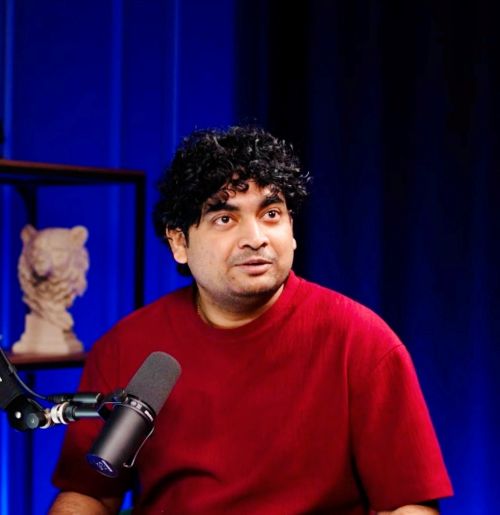


The Philippines has one of Asia's most developed gaming markets, but Joe from Jade Entertainment believes licensed operators are still competing for only a fraction of the total opportunity.
Speaking with Surya at SiGMA Asia, Joe looks back at a career in gaming that started in 1988 and covers the market's move from land-based casinos into sports betting, remote gaming and today's growing online sector. His view is that online gaming has now surpassed land-based gaming, creating a new challenge for traditional casinos: how to bring the online and physical experience together.
A major part of the conversation is channelisation. Joe says legal gaming in the Philippines represents only 22% of revenue, with the rest going elsewhere. For him, licensed operators should not see each other as the main competition. The bigger challenge is moving players away from illegal and grey-market alternatives.
The discussion then widens to Asia and other emerging markets. Joe sees further potential in Sri Lanka, East Africa, Vietnam and Malaysia, while remaining much more cautious about markets such as Thailand. He also argues that governments should consider regulation not only as a source of tax revenue, but as a way to introduce player protection, responsible gambling and KYC.
Surya and Joe also discuss crypto casinos, tax structures and the importance of making regulated products competitive. Joe's wider point throughout the conversation is consistent: demand for gaming does not disappear because legal options are removed. If regulated gaming is not available, illegal alternatives will continue to exist.
“Online has surpassed the land base. Now we're looking at how we use omnichannel.”
“Our competitor is not other licensees. We need to work together to work against the illegals here, not only here but worldwide.”
“If you don't have legal gaming, you have illegal gaming. There's no, ‘We're not going to have gaming and it's going to go away.”
“People are going to gamble anyway. It's much better if there's regulation in place, player protection, responsible gaming, all the mechanisms, KYC.”
Key takeaways
The grey market is the bigger competitor
Joe argues that licensed operators should stop looking only at other licensed companies as competition.
“Our competitor is not other licensees.”
He believes operators and regulators need to work together to move more players from illegal and grey-market products into the regulated market.
Regulation needs to make the legal market competitive
Blocking websites alone is not enough, according to Joe.
He points to deposits, taxation and the overall player experience as areas that can influence whether players choose licensed or grey-market operators.
His view is that lower taxes do not automatically mean lower government revenue if a more competitive regulated market attracts more players back into the legal system.
Removing legal gaming does not remove gambling demand
One of Joe's strongest arguments is that prohibition does not make gaming disappear.
“If you don't have legal gaming, you have illegal gaming. There's no, ‘We're not going to have gaming and it's going to go away.’”
He argues that regulation allows governments to introduce KYC, responsible gambling and player protection mechanisms that illegal operators do not provide.
About the guest

Joe Pisano
Founder, Jade Entertainment
Joe Pisano is the Founder of Jade Entertainment, with extensive experience in the gaming and entertainment industry, particularly across the Asian market.
LinkedIn profileExtended summary
Published by the podcast, not written by our newsroom.
Read the summaryHide the summary
Joe: If you don't have legal gaming, you have illegal gaming. There's no, “We're not going to have gaming and it's going to go away.” Surya: What do you think about the Filipino market in general, from where you started to where it is right now? Joe: Pre-COVID, we applied for a sports betting licence. Online has surpassed the land base. Now we're looking at how we use... Legal gaming here in the Philippines, we only represent 22% of the revenue. 78% is going elsewhere.
Our competitor is not other licensees. (00:37 - 01:22) Surya: Barcelona, Dubai, São Paulo, Madrid, and now we're here in Manila. We spoke to leaders, experts, as well as industry pioneers talking about what's happening in Asia, what's also happening with the Filipino gaming market and the wider Asian region. This series is brought to you by Kensho Media. They have been helping iGaming companies rank higher with SEO since 2008.
This series is also brought to you by Quantum Gaming. They help companies with white label and turnkey solutions in emerging markets. This year we're doing the Real Roadshow initiative as part of iGaming Real Talk, where we go to iGaming events all around the world and cover the insights from the ground. Stay tuned and subscribe to iGaming Real Talk. (01:31 - 02:18) Surya: Hello and welcome back to another episode of iGaming Real Talk.
We are here at SiGMA Asia and I have veteran Joe with me today. Very excited to have Joe here. Welcome, Joe. Joe: Thank you very much. It's always a pleasure. I think the last time we talked, we were in Dubai together. Surya: Dubai, yes. Joe: So yeah, it's good to be at another SiGMA event. Surya: Definitely. You've had an amazing journey in the iGaming industry, also land-based. You founded Jade Entertainment in 2009. Joe: 2009.
Surya: And you went through the full circle, the full journey from land-based to online. Joe: Correct. Surya: With the market as well. Then we had the POGO crackdown a year and a half, two years ago. What do you think about the Filipino market in general, from where you started to where it is right now? (02:19 - 03:32) Joe: Well, where I started was 1988. Surya: Oh yeah. Joe: And that was racing. There were only three casinos in Asia at that time. Surya: Wow.
Joe: So I've gone through the whole life cycle of gaming. We've operated jai alai. We've operated land-based. We've supplied land-based and continue to do that. Pre-COVID, we applied for a sports betting licence. Surya: Yeah. Joe: Started the sports betting, then the change during the COVID period to extend casino floors into remote gaming. And here we're in probably one of the most diverse markets in the world. Surya: Yeah.
Because now online is almost equal to the land base and is growing. Joe: Online has surpassed the land base. Now we're looking at how we use omnichannel to bring some of what online is developing onto the casino floor. Originally we were going from casino floor out. Now we want to bring online games back into a casino floor and provide customers with that experience. (03:32 - 04:55) Surya: How's that integration going on at the moment? Joe: There's some great tech out there.
But it's not the technology that makes the change. Land-based casinos are built within silos. You have the slot department, you have the table department, you have finance. So rather than a product-based offering, we now need to go to an acquisition-based offering. Acquire players. Get those players to be lifetime players. The actual model that we're using, it's the model they've been using for the past 100 years in casinos.
With the change in tech and online, we now need to change the way we do land-based if we want to use online as a marketing tool to bring players back in. Surya: Okay. And currently, is it already being implemented as we speak? Joe: No, there is a learning curve. Surya: Okay. Joe: The one that started to do it successfully is Swiss Casino Group. They're now bringing online games into slot machines on the casino floor.
So players that are playing their online games can now come to the casino floor and play the same games. (04:55 - 06:07) Surya: Interesting. You've been operating in the Asian region for a very long time now. Which markets, which emerging markets, do you think are gaining interest at the moment? Joe: There's still a lot of interest in the Philippines. And there's really still a lot of growth to be had here in the Philippines. Surya: You think so? Joe: Yes.
Legal gaming here in the Philippines, we only represent 22% of the revenue. 78% is going elsewhere still. So the legal operators and the regulator need to work together to convert a lot of that grey market to the legal side. And it's not just the Philippines. That's a worldwide statistic. Surya: Yeah. This is the channelisation issue that keeps coming back.
Even in very regulated jurisdictions, if we look at the UK, Netherlands or Germany, they say channelisation is very high, but we don't know if it's real. Joe: Our competitor is not other licensees. We need to work together to work against the illegals here, not only here but worldwide. (06:07 - 07:09) Joe: But an emerging market I feel very strongly about is Sri Lanka. Surya: Yeah. They're going to regulate soon. Joe: Yes.
The parliament has already enacted the bill to form the regulator. Regulations are being put together. I see a lot of potential in investing in Sri Lanka, especially with 1.4 billion people next door. Surya: Yeah. I know people back home who just go to Sri Lanka for entertainment. They also go to Goa, of course, because it's legal over there. Sri Lanka is just a flight away. Joe: East Africa. Surya: Yeah. Joe: I think there's a lot of development in East Africa.
A lot of companies have gone to Central Africa. South Africa is well developed. But East Africa, there's potential there. (07:09 - 08:38) Surya: And Thailand has been looking at regulation for a while now. Joe: They'll look for the next 20 years. It took them 20 years to pass legislation for the Skyway. Gambling will take another at least 20. Surya: You think it's more cultural? Is it more stigma? What's stopping them?
Joe: I think it's more who runs the gambling in the country at the moment, without naming people. Surya: Yeah, of course. Joe: Is it in those people's interest to regulate? I think we'll see more regulation coming out of Vietnam as far as iGaming. Surya: Okay. Joe: I think the Ministry of Planning there is keen to improve their regulations. I think Malaysia within the next three years. Surya: That's interesting as well.
Joe: The Ministry of Communications has been looking at it. Surya: Do you actively talk to these government bodies? Are you in touch with them? Joe: Yeah. Surya: They consult you probably or something like that? Joe: Yeah. People ask. But Malaysia, there's over 8,000 illegal sites in Malaysia. It's in the government's interest to regulate, not only for tax purposes but also for player protection and responsible gaming.
So that's an area, and I think Malaysia in three to five years will regulate. (08:38 - 09:38) Surya: Indonesia? Joe: No. Nothing. Surya: Okay. It's more religious? Joe: Yeah. The religion there, even though it's a very big grey market. Indonesia, Pakistan, Bangladesh. Surya: India as well. I mean, India, they took the wrong route because players will play anyway.
Joe: All they've achieved in India is to take what legal gaming there was, like fantasy, skill-based gaming, and hand it over to illegal operators. If you don't have legal gaming, you have illegal gaming. There's no, “We're not going to have gaming and it's going to go away.” People are going to gamble anyway. It's much better if there's regulation in place, player protection, responsible gaming, all the mechanisms, KYC, stop children from gambling.
But now what they've done, they've taken all that away. (09:41 - 11:43) Surya: Coming back to the Filipino market, you mentioned 22%. That's very low in terms of channelisation. What needs to happen, Joe? Is it regulators not having enough resources? What's mainly the concern? Or do they not want to do it? Joe: Oh no. They want to do it. And this current regulator, they've been doing a lot of work since coming into office. They've made a lot of changes.
They've been helping the industry. Blocking IP addresses doesn't do anything. Most of these operators have revolving IPs anyway. You can block as many IPs as you want. They just rotate and the next IP takes over. They're working with operators. You need to make the offering that legal operators are giving, ease of deposits, taxation.
Lowering taxes doesn't mean you're going to get less tax because it means you're bringing more people from the grey market into the legal market. People would prefer to gamble with a legal sportsbook or casino. So if you were to say, “We're going to drop it down from 25 to 15,” it doesn't mean you're going to lose 10% in revenue. You're probably going to gain more because more people are going to move across and transition. Surya: Yeah.
Joe: But PAGCOR has been working on this. The current administration, they've been doing a lot of work. They've done a lot of work on the compliance side. Previously there was really very little in the way of regulation, and that's where a lot of these came in and took foothold. But the current administration is really trying to do their best to look at compliance. They've helped the industry with allowing new verticals, numeric games, specialty games, to build.
(11:47 - 12:23) Surya: Definitely. What do you think about the whole wave of crypto casinos, which are taking over in a sense around the world? Joe: Well, it's just another payment method. Whether you use fiat or crypto, you either convert fiat to crypto back to fiat, or crypto to fiat. A lot of the crypto, let's say sweepstakes in the US, it's crypto to stablecoin, tokenisation. It all ends up back in fiat. It's better to regulate it and allow it.
That way you have some control over it. (12:23 - 13:25) Surya: Cool. If we look at building a business itself, you've been in business for a very long time. What's been the best part of building Jade over the last 15, 20 years? Joe: It's not only Jade, but the industry as a whole. It's the relationships you form within the industry, the friendships. We're here in the Philippines. I now have friends in India, Sri Lanka, Europe and globally.
You create an international network of partners and friends. The industry is very supportive. They like to work with you. I like to learn. Others also like to learn, and we feed off each other. Surya: So building the relationships, obviously travelling to these events, maintaining those, is the best part for you? Joe: Yeah. Coming to these events, I'm exhausted by the end of them because there are a lot of people to talk to. We meet, and sometimes you can't meet everyone.
(13:28 - 13:38) Surya: Well, thank you so much for joining me and sharing your insights. Joe: My pleasure. Surya: That's it, guys. Thank you for watching. Do share your thoughts in the comments below. And if you have any questions for Joe as well, follow him on LinkedIn, and I'll see you on the next one.
 54 min
He Risked 5 Years of Profit & £22M on ONE Product
Paul Dolman-Darrall · CEO, G.Games
 14 min
Could Regulation Be the Better Path for Asia’s Online Gaming Markets? | Paul Fox, Claymore Solutions
Paul Fox · Founder, Claymore Solutions
 12 min
Why iGaming Companies Struggle to Enter Asian Markets | Pierre Wuu
Pierre Wuu · Advisory Board Member, SiGMA Group