

Is Traditional Affiliate Tracking Already Broken?
with Tamara Hovhannisyan, Head of Products, Digitain
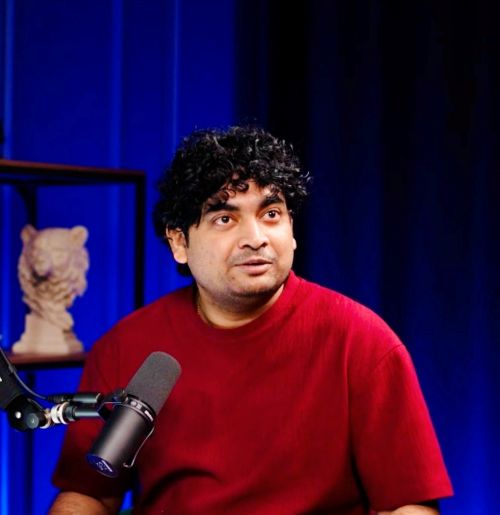
Players no longer discover a betting brand through one clean journey. They can move between TikTok, streamers, Google, WhatsApp, Telegram and different browsers before finally registering.
In Episode 97, Surya speaks with Tamara Hovhannisyan, Head of Products at DIGITAIN, about what that fragmented journey means for affiliate tracking and attribution.
Tamara says traditional cookie-based tracking is no longer enough. The harder question is deciding which channel should actually receive credit when a player may have first discovered the brand through a streamer, searched for it later, opened another app and registered somewhere else.
The conversation also looks at the relationship between affiliates and operators. Tamara says both sides can sometimes try to protect their own interests, which makes transparency around reporting, permissions and attribution especially important.
They also discuss retention, hybrid affiliate deals, responsible product development and where AI can provide practical value. For Tamara, the clearest use cases today are reporting, data management and helping affiliates create content more efficiently.
“Today it’s more challenging because players are jumping from one channel to another. We need to track the first click, the last click and the whole journey.”
“They may hear about the brand from a streamer and then start searching somewhere else. The question is under which channel you should attribute this player.”
“It’s important to provide player lifetime value, NGR, 60-day and 90-day data. But all this information needs to be provided per traffic source.”
“Affiliates are the people who bring the players to the door. After registration and first deposit, retention is mainly the operator’s job.”
“If operators have hybrid deals with affiliates, not only CPA but also NGR share, it can motivate the affiliate to care about the retention of the players as well.”
Key takeaways
Attribution is becoming a business decision
Affinet tracks the player across multiple channels and provides operators with the available attribution data.
Tamara says the operator can then decide whether the player should be attributed to the first click, last click or another source.
The technology provides the journey. The commercial attribution decision stays with the operator.
Affiliates can play a bigger role in retention
Affiliates traditionally bring the player to the operator and then step away after registration or first-time deposit.
Tamara believes hybrid deals can change that behaviour.
If an affiliate also earns a share of NGR, they have more incentive to care about the long-term quality and retention of the players they bring.
Transparency matters because both sides have competing interests
Tamara says her product sits directly between affiliates and operators.
That means she sees situations where either side may want information hidden or controlled.
Her approach is to build technology that gives operators permission controls without manipulating the underlying information.
AI has a practical role in reporting and data access
Tamara does not frame AI as a complete product revolution.
Her first priority is much more practical: making reporting and data management faster.
She says DIGITAIN is developing ways for users to fetch data more easily and use it inside external AI platforms.
AI can also make affiliate creative production easier
The second area Tamara highlights is content creation.
She sees AI helping affiliates generate banners, videos and other creative assets faster inside the product.
About the guest

Extended summary
Published by the podcast, not written by our newsroom.
Read the summaryHide the summary
(00:00 - 00:48) Surya: The average user has around four different screens. They're moving between TikTok, WhatsApp and streaming. Tamara: You decide whether they see it or not. Both of them are trying to cheat. The operator is trying to cheat the affiliate and the affiliate is trying to cheat. Surya: There's always a question that comes up in terms of responsible creation of technology. Tamara: My product is responsible for the relationship between affiliates and operators.
I think traditional tracking, cookie tracking, is not working. So the question is under which channel to attribute this player. Surya: How do you think AI is changing the way products are built? Tamara: In my opinion, first is... (00:48 - 01:18) Surya: We are here in Lisbon. iGaming Real Talk is launching the seventh edition of Real Roadshow, where we spoke to 24 leaders and experts covering insights and conversations from the expo floor, but also from the sky.
Stay tuned for more on that. (01:18 - 02:06) Surya: Hello and welcome back to another episode of iGaming Real Talk. We are here in Lisbon and I have Tamara from DIGITAIN with me. Tamara, welcome to the show. Tamara: Hello. Surya: I wanted to start with something I just heard at your panel at the conference. The panel was discussing player attention. We live in an era where the average user has around four different screens.
They're moving between TikTok, WhatsApp, streaming and other platforms. Their attention can shift between different apps within seconds. From a product and technology perspective, how should products be built for these audiences? (02:06 - 03:12) Tamara: Today, the industry and tracking technology have changed. Before, it was mainly an affiliate website, cookie-based tracking and that's it. Today it's much harder because players are jumping from one channel to another.
For example, from a streamer to Google Search, from Google Search to WhatsApp or Telegram. They're also opening browsers inside apps. So today it's more challenging to create technologies that can track the first click, the last click and the whole journey. Operators need to know where the player is coming from. Attribution is very important, whether that's first-click attribution or last-click attribution. In Affinet, we provide technology for all these channels.
We track the player through the channels and then let the operator decide which channel should receive the attribution for the click and the player. (03:12 - 03:55) Surya: Do you think the traditional attribution model is still working? Tamara: No. I think traditional tracking, like cookie tracking, is not working today. Surya: There are also privacy concerns and guardrails. Tamara: Yes. Because within just a few minutes, players are jumping from one channel to another.
The question is whether they should be attributed to the first click. Maybe they heard about the brand from the streamer. Then they started searching, opened other applications and eventually registered. So the question is under which channel you should attribute this player. (03:55 - 04:38) Surya: How do we figure that out? How do you provide that information to your partners? Tamara: We provide all this information using the click ID.
During the first click, we generate a click ID and fingerprinting. We have our own tracker in Affinet and keep that original click in our database. Later, when the operator sends us the conversion, meaning the registration of the player, we attribute it. We show the operator the available attribution across the channels so they can decide who should receive credit for that player. We provide all the options and the operator decides.
(04:38 - 05:41) Surya: In this situation, what data or signals are becoming more important for product teams? We can't depend entirely on cookies and there are more privacy guardrails coming. Tamara: We keep all the data related to the click ID. I think it's important to have different reports per traffic source. For example, you can track 90-day or 60-day retention of players, but do it per traffic source.
That way affiliates and operators can understand how each traffic source is actually performing. For our product team, it's important to provide data such as player lifetime value, NGR at 60 days and 90 days. But all this information is important to provide per traffic source. I think that's important for operators and affiliates. (05:41 - 06:34) Surya: There's a difference between acquiring a player and giving that player a reason to come back and play sustainably.
What do you think brands that are doing this well are getting right? Tamara: Everybody knows that affiliates are the people who bring the players to the door. But after registration and the first-time deposit, we think it's mainly the operator's job to maintain retention through loyalty programmes and healthy player engagement.
However, if operators have hybrid deals with affiliates, not only CPA but also some NGR share, I think that helps motivate the affiliate to care about the retention of those players as well. (06:34 - 07:47) Surya: Since you work more on the product and technology side, there's always a question around responsible creation of technology. Do you ever think about where the line is between building a product that retains a player and making something too addictive?
Tamara: My product is not a player management platform. We're not creating bonuses or loyalty programmes. Affinet is responsible for the relationship between affiliates and operators. Standing between them, I can say that I see both sides trying to cheat. But as Head of Product, I provide solutions for transparency. Even with column-based permissions, what the affiliate can see and cannot see, I provide all this technology to the operator. I never agree to cheat one side.
Sometimes an operator might say, “I don't want the affiliate to see this or that.” I say no. I show everything and give you the permission settings. You decide whether the affiliate sees it or not. (07:47 - 08:49) Surya: Before we close, how do you think AI is changing the way products are built? With AI in the picture, development can become more cost-efficient. Where is AI already helping and where is it mainly noise? Tamara: AI will definitely help.
We're currently developing a new module around AI technologies to make life easier for affiliates and operators. The idea is to help them quickly fetch and access the reports they need. We are also building technology that allows them to fetch data from our system and use it in different AI platforms wherever they want. Surya: So mostly reporting and data? Tamara: Reporting and data.
Getting the data more quickly and easily, and allowing users to fetch the data from our platform through any AI platform. (08:49 - 09:13) Surya: Are there any other areas where you see AI really helping the product? Tamara: In my opinion, the first is reporting and data management. But for affiliates, I think AI can also make it easier to create different types of creatives, banners and videos inside the app. That would be my second priority.
(09:13 - 09:28) Surya: Thank you so much for joining me and sharing your insights. I look forward to meeting you again. Tamara: Okay. Thank you. Surya: That's it, guys, for today. Thank you for watching. If you have any comments, do share your thoughts and I'll see you on the next one. Thank you.
 14 min
Is Table Tennis Still Just a Gap Filler?
Maksym Vitushko · General Manager of Sports, BETER
 17 min
Key Takeaways from SOFTSWISS’ 2027 iGaming Trends Report
Alexandra Kavelich · Deputy CMO, SOFTSWISS
 8 min
Are Operators Overlooking Their Most Valuable Retention Channel?
Anna Mnatsakanyan · Head of Product Marketing, Digitain