

Is Table Tennis Still Just a Gap Filler?
with Maksym Vitushko, General Manager of Sports, BETER
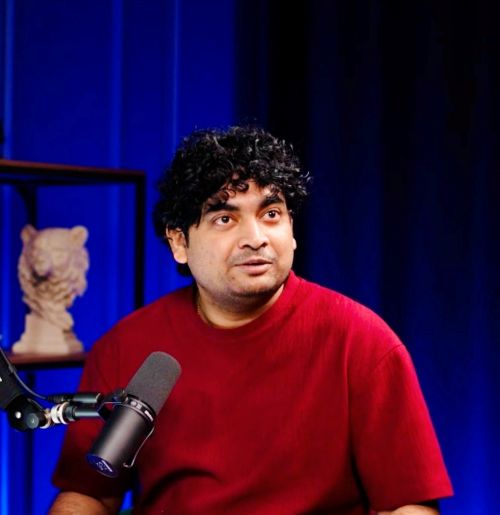


Table tennis is still sometimes treated as content that fills the space between bigger sporting events. Maksym Vitushko says that view is already outdated.
In Episode 96, Surya speaks with BETER’s General Manager of Sports about fast betting content, why table tennis has developed into a standalone category and what happened when the 2026 World Cup brought a new wave of bettors into sportsbooks.
Maksym says BETER saw table tennis betting volume grow during the tournament, but the more interesting part came afterwards. Some of those new players continued betting on table tennis even after the World Cup ended.
The conversation also looks at why the format works. A table tennis match is short, settlement is quick and players can move to the next bet faster. Maksym says this behaviour has helped the category move beyond its old “gap filler” label.
Surya also asks what operators still get wrong. Maksym points to two things: perception and visibility. If table tennis is buried inside a sportsbook, players are less likely to discover it. Better positioning can directly affect turnover.
They also discuss different betting behaviour across regions, what younger players want, the role of data and gamification, and where fast sports content could move next.
“Despite the World Cup ending, we still see those players staying with us and continuing to place bets on our products.”
“Each bettor can make a bet faster, receive settlement faster and make another bet.”
“In the beginning, it was like a gap filler. But now table tennis has become a stable product and a stable category.”
“From our data, we don’t see one specific audience. A lot of bettors can bet on football, basketball and also go to table tennis.”
“The new generation mostly focuses on new markets and fast markets.”
“Many operators still have the perception that it’s just a gap filler and not an independent category.”
“If the bettor sees the category and the events have good visibility, you will receive much more turnover.”
“It will be about more data, more statistics, more fast markets and more gamification for the player.”
Key takeaways
Table tennis is no longer just filling empty time
Maksym says the category may have started that way, but player behaviour has changed.
“For now, it's not just a gap filler.”
He says table tennis has developed its own audience and is now a stable betting category rather than something players only use between major events.
Speed is one of table tennis betting’s biggest advantages
A typical match lasts roughly 25 to 30 minutes according to Maksym.
That means players can place a bet, receive the settlement and move on to another bet relatively quickly.
The shorter cycle is one reason he believes the format works well for modern betting behaviour.
Major football tournaments can introduce players to other sports
Surya raises BETER data showing increased table tennis activity during the 2026 World Cup.
Maksym says the tournament brought additional bettors onto operator platforms, and some of those players moved into table tennis.
More importantly, he says some stayed with the category even after the World Cup finished.
Volume alone is not enough
Maksym says BETER offers significant event volume, including more than 140,000 table tennis events annually.
But he argues the commercial value also comes from continuous availability, fast data delivery and reliable margins for operators.
Player behaviour changes significantly by market
In Europe, North America and parts of Asia, Maksym says in-play betting dominates table tennis.
In parts of Africa, he sees more pre-match betting and a stronger preference for combining multiple events into one bet.
The product may be the same, but the way players use it can be very different.
Younger players do not necessarily want hundreds of markets
Surya asks whether players want more betting markets or simply something faster and easier.
Maksym says younger generations are interested in new and fast markets, but they do not necessarily need an overwhelming number of choices.
His view is that a smaller number of useful markets can often be enough.
Operators still underestimate visibility
Maksym says one of the biggest mistakes is still treating table tennis as secondary content.
The second problem is where the category appears inside the sportsbook.
He compares it to search results: the things people see first naturally get more traffic.
About the guest

Extended summary
Published by the podcast, not written by our newsroom.
Read the summaryHide the summary
(00:00 - 00:35) Surya: A gap filler. That's a label we hear a lot in the industry. Maksym: For now, it's not just a gap filler. The average duration of one game is around 25 to 30 minutes. Surya: Amazing. So the outcome is quicker. Maksym: Exactly. It's more than 140,000 events annually. Surya: Just table tennis? Maksym: Just table tennis. Surya: What makes it special? Maksym: It's fast, reliable content that gives opportunities to our clients. Surya: Interesting.
Do players want more markets? What does the new generation want? What do you see that operators are not understanding yet? (00:35 - 01:29) Surya: We are here in Lisbon. iGaming Real Talk is launching the seventh edition of Real Roadshow, where we spoke to 24 leaders and experts covering insights and conversations from the expo floor, but also from the sky. Stay tuned for more on that.
This series is brought to you by the SOFTSWISS 2027 iGaming Trends Report, featuring five years of insights and trusted by 32,000 readers. (01:29 - 02:44) Surya: Hello and welcome back to day two in Lisbon. I'm here with Maksym from BETER. Maksym, welcome to the show. Maksym: Thank you very much. It's a pleasure to see you. Surya: Definitely. For anyone who hasn't come across your brand, I've known BETER for a long time, of course.
How would you describe what BETER does at a high level? Maksym: BETER offers fast betting content for our clients. The main idea is that we don't just deliver volume of content. We deliver quality and potential commercial value for clients. If we're talking about the division I'm responsible for, we work mainly with table tennis and basketball. It's fast, reliable content that gives our clients an opportunity to make money from it.
Surya: So you're mainly focused on table tennis and basketball content? Maksym: Yes. If we're talking about the sports direction of BETER, it's mainly table tennis and basketball right now. We're also working on launching new content. If we're talking about BETER as the whole company, we also have esports content, including eFootball, eBasketball, eHockey, eTennis and global esports. (02:44 - 03:44) Surya: Why would you say a client comes to you over your competitors?
Everyone offers volume. Technology can sometimes look very similar. Is there something else you provide? Maksym: Absolutely. Firstly, on the volume side, we have a good amount of content. For example, with table tennis, it's more than 140,000 events annually. Surya: Just table tennis? Maksym: Just table tennis. But from the other side, we offer content 24 hours a day, seven days a week. We have great athletes.
We provide value for clients from a margin perspective and through the speed of data delivery. A lot of our clients use a bet acceptance delay close to one second. It gives them an opportunity to increase turnover and receive more value from the product. (03:44 - 05:04) Surya: If we look at the stats from the 2026 World Cup, it looks like table tennis volume grew by more than 26%. The number of bets also grew by around 20%.
What correlation do you see between a major football tournament and increased table tennis activity? Maksym: You're right about the numbers. The World Cup brings an additional audience to our B2C clients. Some of those clients who start betting on the operator's site continue betting after the World Cup. As you mentioned, general volume increased almost 26%. At the same time, the number of bettors increased almost 20%.
Despite the World Cup ending, we still see those players staying with us and continuing to place bets on our products. It gives additional volume and additional GGR for our clients. Surya: Is it the same players, or do you see additional players as well? Maksym: We see additional players who came during the World Cup and stayed with us. Surya: So they move into table tennis? Maksym: Exactly. (05:04 - 05:33) Surya: What makes table tennis special?
Football is obviously more familiar to most players, and the tournaments are more familiar. Maksym: I guess the main reason is because table tennis is fast. The average duration of one game is around 25 to 30 minutes. Surya: Amazing. So the outcome is quicker. Maksym: Exactly. Each bettor can make a bet faster, receive the settlement faster and make another bet. (05:33 - 06:35) Surya: Sometimes table tennis is considered a gap filler.
That's a label we hear a lot in the industry. Do you think that's fair, or does it deserve a better name? Maksym: It's a tricky point. In the beginning, it was more like a gap filler. But now table tennis is strongly positioned around number four or five in the category list. It has become a stable product and stable category where bettors place bets throughout the full day. So the main answer would be no. For now, it's not just a gap filler.
It's a fully independent category. It's fast, with fast settlement and a low duration of the game. It has already found its own audience. Right now, it's an independent category and independent product for the bettor. (06:35 - 07:00) Surya: Is there a correlation with any other type of player? Or do you think people who come to table tennis are very specific? Do they have a pattern? Maksym: It's a really good question.
What I see from our data is that there isn't one very specific audience. A lot of bettors can bet on football or basketball and also go to the table tennis category and place bets there. (07:00 - 08:10) Surya: When it comes to formats, match winner and set winner still dominate? Maksym: Yes. Those are the strongest markets. But there is a big difference depending on geography. If we're talking about North America, Europe and Asia, you're right.
Those are the main markets and almost 95% comes from in-play betting. But if we're talking about the African market, a major part of bets comes from pre-match. Another interesting point is that many bettors make multi-bets. They combine a large number of events into one bet. (08:10 - 09:06) Surya: From the data that we see, do players want more markets or simply something fast and simple? Maksym: I think it's mainly related to the generation of bettors.
If we're talking about the new generation, Gen Z, they focus more on new markets and fast markets. But on average, they don't need a huge number of different markets. Around 10 markets can be fully enough for them to place a bet. That's it. (09:06 - 10:34) Surya: When it comes to table tennis, because that's one of your main focuses, what do you think operators are getting wrong? Do they focus too much on football and leave other categories behind?
What are they not understanding yet? Maksym: First, it's about perception. As I mentioned before, many operators still have the perception that it's just a gap filler and not a separate, independent category. Second is visibility. Visibility is key. I think it's similar to Google Search. If you're in the first position, you get most of the traffic from the page. The same situation applies to table tennis.
If the bettor can see the category and the events have good visibility, you will receive much more turnover. Another important thing with our table tennis and basketball products is that we give our partners strong and reliable margins. Surya: It's interesting that you're calling the player a “bettor.” Maybe there's some wordplay there with the BETER brand name. Maksym: Absolutely. Maybe it sounds like that from my side.
(10:34 - 11:49) Surya: Where do you think the table tennis market and other fast sports markets are going in the next two years? Maksym: Firstly, table tennis will continue to grow. Football is still number one in the industry. But table tennis already has enough volume. If we're talking more broadly about the future, in my personal opinion it will be about more data, more statistics, faster markets and more gamification for the player.
For example, on our map we've already created new widgets with statistics. We give opportunities for better visualisation and we're adding additional AI overlays to video streams. I think that's the main direction table tennis is going. (11:49 - 13:22) Surya: Okay. This one is multiple choice. Which of the following micro-engagement player strategies will have the biggest impact in 2027? I'll give you the options. Personalisation. Bonuses and rewards. Gamification.
VIP programmes. Maksym: It's a tough question because all of them have a significant impact. But I think gamification. Surya: You hit the nail on the head. As per the SOFTSWISS 2027 iGaming Trends Report, gamification was the leading answer in the survey at 41.87%. Maksym: Nice. It means we're moving in the right direction. Surya: Personalisation was also significant, along with bonuses and rewards and VIP programmes.
Respondents could choose multiple answers, so the percentages don't add up to 100%. But you got the leading answer. Maksym: That's great. I think it will also depend on geography. Emerging markets may have different preferred options. But for markets that are already stable and have a long history, gamification can become number one. (13:22 - 13:38) Surya: Perfect. Thank you for joining me and sharing your insights. It's been a great pleasure.
Maksym: Thank you very much for inviting me. See you later. Surya: That's it, guys, for today. Thank you for watching. Do share your thoughts in the comments below, follow Maksym as well, and I'll see you on the next one. Thank you. Maksym: Thank you. Bye.
 10 min
Is Traditional Affiliate Tracking Already Broken?
Tamara Hovhannisyan · Head of Products, Digitain
 17 min
Key Takeaways from SOFTSWISS’ 2027 iGaming Trends Report
Alexandra Kavelich · Deputy CMO, SOFTSWISS
 8 min
Are Operators Overlooking Their Most Valuable Retention Channel?
Anna Mnatsakanyan · Head of Product Marketing, Digitain