

Why iGaming Companies Struggle to Enter Asian Markets | Pierre Wuu
with Pierre Wuu, Advisory Board Member, SiGMA Group
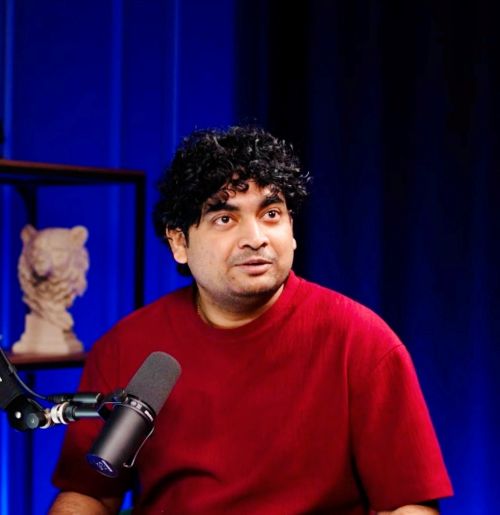


In Episode 83, Surya Palli sits down with Pierre Wuu, Board Advisor at SiGMA Group, at SiGMA Asia in Manila to discuss the development of the Philippine market, the impact of the POGO reset and what international companies need to consider before entering Asia.
Pierre explains why stability from regulators is important for companies investing in the region, and why the Philippines has been able to build a stronger regulated online market than many other countries in Southeast Asia.
The conversation also looks at Thailand, Cambodia, Singapore and the UAE, including why some markets have struggled to put clear regulatory frameworks in place and what Thailand needs to do before it can fully develop its gaming opportunity.
Pierre also talks about why international operators need to get closer to the markets they want to enter. For him, having people on the ground and understanding local marketing, payments and compliance is essential.
The discussion ends with a simple point: Asia is not one market. Japan, Thailand, the Philippines and other countries all have their own rules, habits and opportunities.
“A lot of the operators that are investing in this market want to see stability. They don't want to see, hey, you told me about this license, and all of a sudden, the rug got pulled.
“First you need the government fully behind you. You can't be welcoming people like in Cambodia and then, you know, a few months later inviting the Chinese police to come in and round up everybody.”
“If you're foreign companies that were in this space and they don't have an ASEAN presence, you really need to kind of come out to events like this. Establish those relationships, get certain partners.”
“Asia is also not one-size-fits-all. What's happening in Japan is way different than what's happening in Thailand and vice versa. You're going to need local people in each state.”
Key takeaways
Stability is one of the biggest concerns for investor
Pierre explains that international operators looking at the Philippines want to know that the regulatory environment will remain stable.
“A lot of the operators that are investing in this market want to see stability. They don't want to see, hey, you told me about this license, and all of a sudden, the rug got pulled.”
For companies considering long-term investment, regulatory certainty can be just as important as the market opportunity itself.
The Philippines has a blueprint other Asian markets can learn fro
Pierre believes the Philippines has managed to establish itself as a leading regulated online market in Asia.
He points to the country's experience, the presence of established operators and the level of activity around the regulated market as signs of how far it has developed.
Thailand needs to turn years of discussion into regulation
Thailand has been discussing gaming regulation for years, but Pierre believes the next step is putting clear rules into place.
“Thailand just really needs to get behind it and lay all the talk into paper. And lay that down.”
He sees strong potential for Thailand because of its tourism industry and believes gaming could complement that sector if the right framework is established
International companies need boots on the ground
Pierre believes Asia is a major opportunity for companies that are willing to invest properly in the region.
“If I were foreign companies that were in this space and they don't have an ASEAN presence, you really need to kind of come out to events like this. Establish those relationships, get certain partners.”
Being physically present can help companies build relationships and understand how each individual market works
About the guest

Pierre Wuu
Advisory Board Member, SiGMA Group
Pierre Wuu is an Advisory Board Member at SiGMA Group and has been involved with the development of SiGMA's presence in Asia from the early stages.
LinkedIn profileExtended summary
Published by the podcast, not written by our newsroom.
Read the summaryHide the summary
(0:00 - 0:25) Surya: How do you see the evolution of the market itself in terms of foreign companies coming in, getting regulated, having the opportunity to somehow run operations right now? Pierre: No. The operators that are investing in this market want to see stability first. You need the government fully behind you. If you're established and you don't have any boots on the ground, the problem is going to be what's happening with Thailand. They've been working on Thailand.
Thailand just really needs to get behind it. (0:25 - 1:11) Surya: Barcelona, Dubai, São Paulo, Madrid, and now we're here in Manila. We spoke to leaders, experts, as well as industry pioneers talking about what's happening in Asia, what's also happening with the Filipino gaming market and the wider Asian region. This series is brought to you by Kensho Media. They have been helping iGaming companies rank higher with SEO since 2008.
This series is also brought to you by Quantum Gaming. They help companies with white label and turnkey solutions in emerging markets. This year we're doing the Real Roadshow initiative as part of iGaming Real Talk, where we go to iGaming events all around the world and cover the insights from the ground. Stay tuned and subscribe to iGaming Real Talk. (1:20 - 2:49) Surya: Hello and welcome back to another show. It's iGaming Real Talk. We are here at SiGMA Asia in Manila.
I have Pierre with me, who's an advisor at SiGMA, and we're going to talk all about the Asian iGaming industry. Pierre, welcome to the show. Pierre: Thank you for having me. Surya: I have known you for a long time since I have worked at SiGMA. You've always been a supporter and advisor since the beginning, as I remember. So, how has the journey been associated with SiGMA so far and helping them in Asia? Pierre: Well, I'll tell you, it's been fantastic.
I mean this started right before the pandemic. You were there from the beginning, right? Surya: Oh, prior to the pandemic. I'm talking specifically about Asia itself. Pierre: Even had the dream of coming out here. He knew it was a big... Surya: How did you both meet? Pierre: We had met each other through the social circles and so forth and then he was all in. He came out, lived, moved into Manila and then boom, pandemic happened.
Surya: I don't know if he told the story about that. Pierre: Yeah, he did. But then he was still all in and through sort of perseverance and being able to see the market with his own two eyes, we actually, two years, less than two years later, were able to start the very first show, which was a boom, and here we are on the fourth show. So, it was something that I saw from the beginning.
And now when you look around and you see all the action that's going on here, inside and outside of the event itself, it's just become a staple as the leading premier show and summit globally for the Asian market, basically. (2:49 - 4:18) Surya: The market has changed quite a bit. If we look at Asia, Southeast Asia as a market, the Philippines has always embraced regulated markets in some form or shape. How do you see that the market has changed over the course of years?
Recently, a year and a half to two years ago, we had regulatory changes as well. So from where it was in 2018 to now 2026, how do you see the evolution of the market itself? Pierre: I've been coming back and forth and originally back in around 2005. That's how I started in the market. Surya: You lived here from 20 plus years ago. Pierre: And it's changed. One thing's for sure, the Philippines has always led.
When you talk about what has happened a year and a half, two years ago with the POGOs, kind of resetting and getting kicked out, and now having the focus of the PIGOs, or the domestically regulated online market, is still pretty much the only regulated online market in Asia. It's a very successful one. You can't drive around town without seeing billboards for some of the leading... Surya: Yeah, even the radio, I hear some ads. Pierre: Social media, everything.
So, it is very vibrant. It's doing very well. Surya: The market has started originally here, performed very well here and continues to lead in terms of the domestic PIGO market. (4:18 - 5:08) Surya: What happens to the foreign market in terms of foreign companies coming in, getting regulated? Back to the POGO days, they had the opportunity to somehow run operations right now? Pierre: No, there is none of that like it used to be.
Surya: And so there could be a reset button, I think, maybe over the last two years economically speaking. But there is something I heard about special class BO for just running operations. Is it something similar? Pierre: There are some things like that, but it's not the same. It's not necessarily the same. It'd be highly regulated, but it is better than nothing if you want to have sort of a back office BO, which the Philippines and India are known for.
The Philippines has experienced people to do so. There could be people looking into that. (5:08 - 6:06) Pierre: But, you know, the government in good faith got to really get committed behind it because a lot of the operators that are investing in this market want to see stability. They don't want to see, hey, you told me about this license, and all of a sudden, the rug got pulled.
So, I think hopefully the Philippines and the regulatory bodies here have learned that we're looking for stability. And with the chairman coming here and giving a keynote... Surya: Are you in constant communication, delegations with the regulators themselves in terms of the market? Pierre: SiGMA itself has a very good relationship with PAGCOR and they've come here to the opening ceremonies and the kickoff and so forth.
They've done a great job supporting what we're trying to do and we're trying to support what they're trying to do. But ultimately speaking, whether it's Cambodia, Thailand, some of these other countries, they haven't been able to really replicate what the Philippines has done. (6:06 - 7:23) Surya: Why? What are the reasons you think? Pierre: First you need the government fully behind you, right?
You can't be welcoming people like in Cambodia and then, you know, a few months later inviting the Chinese police to come in and round up everybody, right? And Thailand, it's a bit gray still. None of it's been laid down on paper. So, the Philippines has that blueprint and hopefully we can get back to something regulated and welcome some of this community back here. And they want to be somewhere stable. They don't want to be spread out throughout Southeast Asia, right?
What's happening with Thailand? They've been working on regulation for 20 years now. Surya: I'm not a Thai, I'm not a Thailand expert, but you see a lot of up and down. Obviously, you have Macau. Obviously, you have Singapore that does well. Pierre: Singapore does extremely well. I think with the POGOs leaving, it kind of hurt the market a bit from a land-based perspective and Thailand's been talking about and Japan for years. Obviously, they started breaking ground finally.
Surya: I remember in 2008 they were talking about it. Pierre: South Korea is very stable. I've been out to Jeju and some of the other IRs near the airport in Seoul and so forth. Thailand just really needs to get behind it and lay all the talk into paper. (7:23 - 8:45) Pierre: And lay that down. And they just, as any government has political infighting, you know, you have your opposition and so forth. So, they just got to get that thing sorted. I think it'll get done.
And it's a perfect situation. I mean, people trust Thailand. They think it's safe. The travel industry there is great. And what other to better complement the travel industry than having IRs, having casinos? Surya: Yeah. Pierre: You know, and you can do it and chop it up in different ways. If you're worried about problem gambling, you kind of do what Singapore's done and kind of put a lever down and say, "Hey, it's the domestic app is going to cost you money to get in."
Surya: Yeah. Pierre: And gaining controls and problem gambling and you could do that. Surya: Does it really well? Pierre: Exactly. So, I think Thailand will be there and once they combine that with what they've done from a tourism perspective, you know, it's going to be a powerful combination for them. I think Dubai is trying to, I mean UAE in general is trying to replicate Singapore more. Surya: Yeah. I mean, you know, this war doesn't help much at the moment. Pierre: Yeah.
But the wind is all in, right? I mean, you know, they have boots on the ground and Brandon, it won't, I don't think it's going to be straight downtown Dubai but yeah, it's going to be a travel destination whether or not you're in Dubai or just outside. So that combination will be great. We just need to get through this war. (8:49 - 10:35) Surya: Where do you think the whole Asian market is going as a general compared to other regions itself?
Do you think it's interesting for international operators to focus on Asia as a region? Pierre: Well, yes. If you're established and you don't have any boots on the ground or any of your revenue, then Asia becomes this big opportunity, comes this big blue sky. Hey, what can we do there? And if I were foreign companies that were in this space and they don't have an ASEAN presence, you really need to kind of come out to events like this.
Establish those relationships, get certain partners, but the market's massive. It's not going to go anywhere. And typically tied to the global economic sort of forecasts and ebbs and flows of how that goes, right? So I would say when boom times are happening, gaming companies do great. And you look, you have all that data in terms of you can look at the publicly listed companies, Sands, both in Macau and in Singapore and see what kind of GGR they have done.
And those are people who gamble. Those are people who like to travel. (10:35 - 11:24) Pierre: But those people as time goes by are only going to want to get more convenient and come to mobile devices. The problem's going to be, can we get more country entities like the Philippines to regulate that? Yes. And I think we will because if you're a foreign company, you want to come over here and you're above board, then you're going to want that all regulated.
So there's blueprints and there's paths and as we know, we talked today, in five years we look down the road and this could be and will be a whole different situation and it's not overnight that you can get there. So it's time to get boots on the ground. And I see a lot of foreign companies trying to do that, which is fantastic. Surya: And with the support of local teams because of course, otherwise it's tough to do it.
Pierre: Oh, you don't have local people here who understand the market, especially on the marketing side, compliance side, payments. Business is done a certain different way. (10:51 - 11:39) Surya: Asia is also not one-size-fits-all. Pierre: No. Surya: Right. Well, some people come in and say, "Oh, we get one Asia team, one director, and then we're going to go dominate every country."
I mean, what's happening in Japan is way different than what's happening in Thailand and vice versa. Just kind of like if you wanted to regulate in the States and you think you're going to just go one-size-fits-all. No, every state has their own regulation in the United States. And until they federally tie that up, you're going to need local people in each state. Surya: Absolutely. Thank you for coming in. Pierre: Thank you for having me. I appreciate it.
Surya: Thank you so much. That's it, guys. Thank you for watching. Do like, subscribe as well as share your thoughts in the comments below and I will see you on the next one.
 54 min
He Risked 5 Years of Profit & £22M on ONE Product
Paul Dolman-Darrall · CEO, G.Games
 14 min
Could Regulation Be the Better Path for Asia’s Online Gaming Markets? | Paul Fox, Claymore Solutions
Paul Fox · Founder, Claymore Solutions
 14 min
Can Casinos Bring the Online Experience Back to the Floor? | Joe Pisano, Jade Entertainment
Joe Pisano · Founder, Jade Entertainment