

Could Regulation Be the Better Path for Asia’s Online Gaming Markets? | Paul Fox, Claymore Solutions
with Paul Fox, Founder, Claymore Solutions
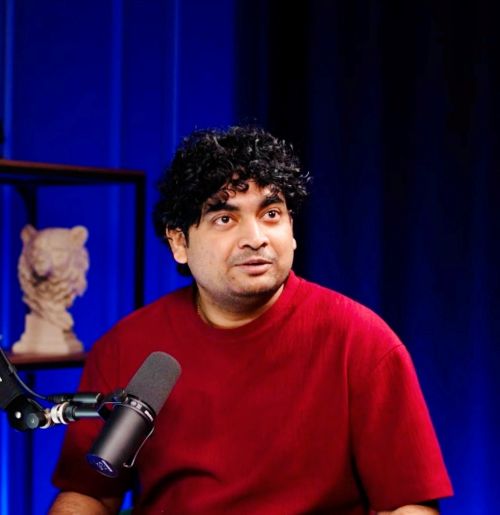


The Philippines has become one of the most important regulated online gaming markets in Asia, and Paul Fox believes other countries in the region can learn from how the market has developed.
Paul, Founder of Claymore Solutions, speaks with Surya about why the Philippines has become a natural base for gaming operations and back-office teams, particularly for larger and publicly listed companies that need to operate carefully around regulation.
The conversation also looks at where online gaming in Asia could go next. Paul describes the Philippines as a regional trailblazer, pointing to the growth of licensed online gaming alongside the country's established land-based casino market.
For markets such as Thailand, he believes the Philippines offers a more relevant comparison than Europe or the United States because of the similarities within the region. Malaysia and Indonesia may face more complicated paths because of religious and cultural factors.
Paul's wider argument is that gambling demand already exists across Asia, whether it is legal or not. His preference is for clear legislation that allows governments to regulate the activity properly, create safer operating conditions and collect tax revenue.
Key takeaways
The Philippines is becoming a natural operational base
Paul points to the Philippines as an attractive location for gaming back-office operations.
For companies that need to be particularly careful around regulation and compliance, including publicly listed businesses, he sees the Philippines as an obvious option.
“The Philippines is the very obvious option.”
Paul describes the country as a trailblazer for online gaming in Asia.
“The Philippines has long been a trailblazer, a trendsetter when it comes to online gaming.”
His view is that the market can give neighbouring countries a more relevant model than looking only at Europe or the US
Thailand could learn from the Philippine model
Paul believes countries considering casino and online gaming regulation could study what the Philippines has already done.
He specifically mentions Thailand, which has discussed casino regulation for a long time.
For him, there are enough regional similarities to make the Philippines a useful comparison.
Gambling continues even where it is prohibited
Paul argues that banning or refusing to regulate gambling does not necessarily remove demand.
“We all know that the reality is people are gambling everywhere.”
He even points to highly restrictive jurisdictions as examples of places where people can still access online gambling.
About the guest

Extended summary
Published by the podcast, not written by our newsroom.
Read the summaryHide the summary
(00:00 - 00:29) Surya: The regulation was kind of banned in 2024. So what's the state of the market? Paul: President Marcos announced the ban on POGOs. When they banned the POGOs last year, there were over 40,000 Filipinos who lost their jobs in this industry. Surya: Where do you see the Filipino gaming market evolving when it comes to online gaming? Paul: The Philippines has long been a trailblazer, a trendsetter when it comes to online gaming.
Online has almost overtaken the land-based market very, very quickly. The difference between the Philippines and India is that in the Philippines, this is completely legal. (00:33 - 01:18) Surya: Barcelona, Dubai, São Paulo, Madrid, and now we're here in Manila. We've spoken to leaders, experts, as well as industry pioneers, talking about what's happening in Asia, what's happening with the Filipino gaming market and the wider Asian region.
This series is brought to you by Kensho Media. They have been helping iGaming companies rank higher with SEO since 2008. This series is also brought to you by Quantum Gaming. They help companies with white label and turnkey solutions in emerging markets. This year we're doing the Real Roadshow initiative as part of iGaming Real Talk, where we go to iGaming events all around the world and cover the insights from the ground. Stay tuned and subscribe to iGaming Real Talk.
(01:27 - 01:58) Surya: Hello and welcome back to iGaming Real Talk. I'm here at SiGMA Asia and I have with me Paul Fox, and we're going to talk about what's going on with the regulation, as well as the market in general. Paul, welcome to the show. Paul: Thank you for having me. It's a pleasure to be here. Surya: Paul, give us a quick overview of the Philippine gaming market, as well as Asia in general. We know that the POGOs and offshore operators were kind of banned in 2024.
So what's the state of the market as of today, from your experience in all these years in Asia? (01:58 - 02:56) Paul: I've lived here for the majority of my adult life, almost 20 years. Initially it was CEZA, and then when online took over, PAGCOR came on board. That's where, in 2017, under the same executive order, POGO and SCBPO were created. Surya: Oh. Paul: And then in 2024, during the SONA, the State of the Nation Address, President Marcos announced the ban on POGOs.
Surya: Yeah. Paul: Which came into effect on the 1st of January last year. So as it stands today, for PAGCOR, obviously there's land-based casino, but from an online standpoint, there are what's known as the PIGOs. They're the operators for the domestic market. Surya: Yeah. Paul: DigiPlus being by far the biggest. Surya: Yeah. Paul: And then other than that, there's what my company focuses on, which is SCBPO. Surya: Okay.
Paul: Standing for Special Class Business Process Outsourcing. (02:56 - 04:29) Surya: So is it still kind of the legal way to run back-office operations in the Philippines? Paul: Yes, that's exactly what it is. The largest industry in the Philippines is BPO. Surya: Okay. Not only just support and... Paul: No. Most Fortune 500 companies have their back offices in the Philippines. JP Morgan, for example, only the US and the UK have a higher headcount than the Philippines.
Surya: Oh, wow. Paul: When you walk around Manila, you see all of the biggest companies in the world, HSBC, Amazon, whoever it may be. They have their back offices here. The English proficiency here is high, and the Filipino accent is seen to be more neutral or Americanised. So the BPO industry has existed here really since the turn of the century. That's when it exploded.
As it pertains to online gambling, the initial company that was doing their back office here is what today is known as Entain. Surya: Entain. Paul: Yeah. Previously it was GVC, and then before that you had the merger on the Sportingbet side and the Ladbrokes side. That's what brought me out here in 2009, the Sportingbet side. Entain is an FTSE 100 publicly listed company. They are only in regulated markets now.
So the only work they're doing in the Philippines is back-office work. Customer service, risk, fraud, trading, payments, QA, BI, IT, HR, etc. Surya: So everything that's not kind of sales or business operations? Paul: No payments are made here. It's purely back-office operational work. (04:29 - 05:32) Paul: So SCBPO was created in 2017 initially for Entain. Surya: Okay. I thought it was created after they banned offshore. Paul: No.
It was created in the exact same executive order as POGO in 2017. I moved here in 2009, so Entain has been here for the longest time. Entain was the initial SCBPO, which they still have to this day. Manila is the engine room of their business, if you will. I believe over 2,000 staff. Surya: Wow. Paul: The Super Bowl for BetMGM, for example, is traded right here in Pasay.
Entain were the first SCBPO, and then swiftly followed by William Hill, who also run their back-office operation here. Today, as it stands, there are seven SCBPOs in total. Entain and William Hill are the two biggest ones. There are a few smaller ones, and then there's my company, Claymore Solutions. (05:32 - 06:38) Paul: What differentiates us from the others is that we are the only SCBPO that has the employer-of-record business model.
Meaning all of the other SCBPOs, like Entain and William Hill, they're captive centres. So it's just the William Hill office in Manila servicing the William Hill business, or the Entain office in Manila servicing the Entain business. Whereas for ourselves at Claymore, we don't actually have an internationally licensed gambling brand. We are just an employer of record.
So if you are an online gaming company, and again, PAGCOR now, and this is very important, they only accept reputable licences. Surya: Yes. Paul: So the likes of Curaçao and Vanuatu, they don't accept, whereas the top-tier ones and nation-state licences, these are the ones that they do accept. Our marquee client is Fanatics. They're now number three in the US behind FanDuel and DraftKings. Surya: Pronet as well is your... Paul: Pronet is another, yeah, a B2B one.
So we do B2C and B2B. (06:38 - 07:18) Paul: But using Fanatics as an example, US-based company, US-licensed company, all the players are in the US. But they want access to the labour market in the Philippines because not only are there phenomenal cost savings... Surya: A fraction of the price you would pay in the US. Paul: But the talent here is the absolute best. Furthermore, the industry, as I mentioned earlier, has existed in the Philippines now for about 20 years.
So there's a wealth of talent here, compounded by that wealth of experience. When you can get quality staff with that experience for pennies on the dollar, it makes nothing but sense. That's the upside of the Philippines. (07:18 - 08:09) Paul: As much as I love the country and it is my home, the downside of the Philippines, if I'm being brutally honest, is there's an incredible amount of bureaucracy here. Surya: Really? Paul: Yeah.
It's a developing nation, so typically developing nations have more bureaucracy. Surya: True. Paul: For that reason, I love the UAE. Surya: UAE is the best. Paul: The absolute best. Number one. So in the Philippines, the real challenge here, particularly if you're not from this part of the world, is actually getting established. Setting up your business, registering with the SEC, getting all your business permits, all the government-mandated benefits, SSS.
Surya: So that's what you essentially solve for international companies because you're here? Paul: We take care of all of that. They don't need to worry about it. We just package that as a service whereby they get an invoice at the end of the month for their staff, and that's it. (08:09 - 08:56) Paul: Again, using Fanatics as the example. They want to cut their operating costs and have a great workforce, but they don't want to deal with all of the... Surya: Absolutely.
They want to focus on their operations. Paul: Correct. So that's where we come in, whereby we are the entity on the ground here. This is compounded in the online gaming industry because anything in the Philippines that touches gaming falls under PAGCOR. Surya: Yeah. Paul: And that's what SCBPO is. It's an accreditation to handle this back-office work here legally. So we have that accreditation and Fanatics are a client under our accreditation.
What that means in reality is that once everything is submitted, it takes two weeks and that's it. You're fully live. Surya: And how long does it take for you to set up all the teams? (08:56 - 09:46) Paul: Very fast. Ironically, fortuitously, when they banned the POGOs last year, there were over 40,000 Filipinos who lost their jobs in this industry through no fault of their own. Surya: Yeah.
Paul: But at Claymore, we work directly with DOLE, the Department of Labor and Employment. Surya: Yeah. Paul: You mentioned Pronet, who are another client of ours. They are building out a trading operation in Manila. So we can just go to DOLE and say, “Right, we need traders.” So all of those traders that were with POGOs before, with the big Asian operators, we've got these people ready and we can recruit them quickly.
For Pronet, from submission of the documentation, which consists of the licence, the articles of incorporation, the service agreement and the PAGCOR fee, we had them approved in under two weeks. (09:46 - 10:39) Surya: So something that would take you months, not even months, years? Paul: Really. If you try and do it by yourself, it's done for you. Again, it's the employer-of-record component whereby that's all taken care of. We hire the staff.
We pay the staff, all their government benefits, all these things. But also from the office standpoint as well. For example, if you walk into the Fanatics office here in Manila, it's just like walking into their office in New York. It's the same logos, branding and colour schemes. So when you walk in, you're in the Fanatics office. The only difference is Claymore's name is on the lease.
So you can build that company culture and everything else, but you don't have to have these challenges. Like I say, you get the invoice every month. So you've got X amount of customer service, risk, fraud, trading, whatever, plus your office space, and that's you. (10:39 - 11:37) Surya: That's a very good deal for whoever is going to consider the Philippines. Paul: Like I said, the talent here is the best, and cost-effectively it's the best.
Surya: And also it's completely legal. So when you think about BPO in general, the two main players are the Philippines and India. Paul: Yeah. Surya: The difference... Paul: Well, the difference between the Philippines and India as it pertains to online gaming is that in the Philippines, this is completely legal. PAGCOR, the government regulator, literally regulates this with SCBPO. Surya: Smart, actually.
Paul: Whereas in India, it is at best very grey because, as you know, online gaming is not legal now. Even if you're an international operator that isn't taking bets from Indian customers... Surya: Huge operations. Paul: But you're just using India as a base for back offices. There's still no regulation around it. And if you take publicly listed companies who have to be very careful in what they do, the Philippines is the very obvious option. (11:37 - 12:11) Surya: Yeah.
Cool. Where do you see the Filipino gaming market evolving, as well as Asia in general when it comes to online gaming? Paul: The Philippines has long been a trailblazer, a trendsetter when it comes to online gaming. As it stands, it's the only country in the region that actually has licensed online gaming operations. I believe, or I would think, I would hope, the other... Surya: Because we saw that online gaming is catching up with the land base in the country.
Paul: In the Philippines, absolutely. I think it's on the verge of almost overtaking the land base very quickly, for the very first time. I would think, I would hope, that other countries in the region... (12:11 - 12:47) Paul: Like, say, Thailand, who have discussed having casinos for the longest time, hopefully they would look at the Philippines and say this is effectively an apples-to-apples comparison. You couldn't compare it to, say, Europe or the US.
But the Philippines has a lot of similarities. Countries like Thailand could look at the Philippines, how they've done it, done it very well, and learn. Obviously, it's a bit more complicated when it comes to Muslim countries in the region, like Malaysia or Indonesia, where there's a religious aspect. As such, they're less likely to do it. (12:47 - 13:11) Paul: But yeah, I think the Philippines in that regard has set a tremendous example for the region and how to do it.
Because we all know that the reality is people are gambling everywhere. Surya: No matter what. Paul: In the likes of Saudi Arabia, where it's considered completely haram, people are still gambling online. So yeah, I'm a big proponent of having that legislation and the legality so that you can do it in the right way and the governments can receive taxation from it. (13:11 - 13:37) Surya: Well, Paul, thank you so much for joining me for this interview.
For anyone watching, if you're planning operations in the Filipino market, I mean back-office operations in the Philippines, obviously for tier-one companies, as I understand, you can reach Paul. Follow him on LinkedIn and also Claymore Solutions. For any thoughts, do share them in the comments below, wherever you're watching, and I'll see you on the next one. Thank you so much. Paul: Thank you.
 54 min
He Risked 5 Years of Profit & £22M on ONE Product
Paul Dolman-Darrall · CEO, G.Games
 12 min
Why iGaming Companies Struggle to Enter Asian Markets | Pierre Wuu
Pierre Wuu · Advisory Board Member, SiGMA Group
 14 min
Can Casinos Bring the Online Experience Back to the Floor? | Joe Pisano, Jade Entertainment
Joe Pisano · Founder, Jade Entertainment