

Is Overregulation in Sports Betting Giving the Black Market an Advantage? | Eric Su, DigiPlus
with Eric Su, Former Head of ArenaPlus, DigiPlus
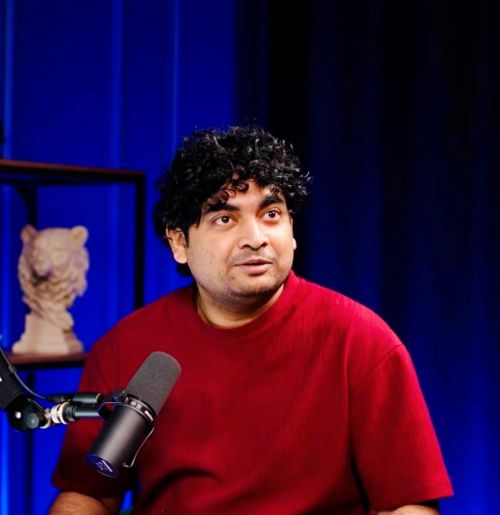


Sports betting in the Philippines is growing, but Eric Su believes the next phase cannot simply be about chasing faster revenue.
In Episode 79, Joining Surya on iGaming Real Talk, the former Head of ArenaPlus at DigiPlus explains why the market needs to move towards more sustainable growth, stronger compliance and responsible gambling without making the regulated product so restrictive that players move elsewhere.
Eric argues that banning or heavily restricting betting does not remove demand. Black market operators are already present, and overregulation can give them a stronger position if legal operators become less attractive or harder to access.
The conversation also looks at the large gap between sports fans and sports bettors in the Philippines. Eric explains why education and better fan engagement matter, and how ArenaPlus used its NBA partnership to connect betting content with the way people already follow basketball.
Surya and Eric also discuss prediction markets, micro betting and the future of sportsbooks. Eric does not expect prediction markets to replace traditional sportsbooks, but believes different products could increasingly overlap as technology and player behaviour continue to change.
Key takeaways
Overregulation can give black market operators an advantage
Eric believes stronger safeguards are necessary, but regulation can become counterproductive when it makes the legal market too restrictive.
“If you do overregulation, you will drive the betting activities to the black market operator.”
His point is simple: betting demand remains, even when legal options become harder to use.
The Philippines needs sustainable growth, not another short-term spike
The market has already experienced extremely fast growth. Eric expects operators to focus more on stable growth, responsible gambling and compliance.
“Operators are looking at a change of their strategy from short-term increase of the revenue into a more sustainable, stable growth over time.”
For him, sustainable does not necessarily mean slow.
Sports fans remain a major opportunity
Eric sees a large gap between the number of people following sports and those actively betting on them in the Philippines.
Many new players still need to understand concepts such as moneyline, handicap and different betting markets.
The opportunity is therefore partly about education and making prediction a more natural part of the sports experience.
Prediction markets are unlikely to replace sportsbooks
Eric sees prediction markets as another option rather than the end of traditional sportsbooks.
He compares them with betting exchanges, which have existed alongside sportsbooks for years.
Sportsbooks themselves are also changing through micro betting, AI, better data and new ways to interact with games.
About the guest

Eric Su
Former Head of ArenaPlus, DigiPlus
Erick Su is the Head of ArenaPlus at DigiPlus Interactive Corp., leading the company’s flagship sportsbook platform.
LinkedIn profileExtended summary
Published by the podcast, not written by our newsroom.
Read the summaryHide the summary
(0:00 - 0:28) Eric: Only the black market wins. Surya: Is that the main reason for your partnership with the NBA? Eric: People more refer to us as the number one brand here. People have trust in us. Surya: Now I feel it's more like politics. Eric: We are not trying to encourage betting. Unfortunately, it is. Surya: What do you think about prediction markets? Eric: Guests will predict based on the markets available. Surya: The easiest thing you can do is ban.
The president is talking about shutting down the casino. Eric: To drive player acquisition, I think the one thing is to... (0:33 - 1:19) Surya: Barcelona, Dubai, São Paulo, Madrid, and now we're here in Manila. We spoke to leaders, experts, as well as industry pioneers talking about what's happening in Asia, what's also happening with the Filipino gaming market and the wider Asian region. This series is brought to you by Kensho Media.
They have been helping iGaming companies rank higher with SEO since 2008. This series is also brought to you by Quantum Gaming. They help companies with white label and turnkey solutions in emerging markets. This year we're doing the Real Roadshow initiative as part of iGaming Real Talk, where we go to iGaming events all around the world and cover the insights from the ground. Stay tuned and subscribe to iGaming Real Talk.
(1:28 - 2:16) Surya: Hello and welcome back to another episode of iGaming Real Talk. I'm here at SiGMA Asia and I have with me Eric from DigiPlus. He's the Head of ArenaPlus at DigiPlus. Very excited and it's a pleasure to have you here. Eric: Thank you for having me. Surya: How was the day so far? Eric: Yeah, busy. Lots of friends, lots of exciting talks and conversations. Surya: Cool. Let's kick off with the Philippines market.
It's relatively very young when it comes to sports. Eric: Yes. Surya: I think only about 10% are betting on sports, and most of them have joined in the last one year or so, according to the research and data. What have you personally, as well as from the team, learned about what drives user acquisition and what drives long-term partnerships in your country? (2:16 - 3:43) Eric: I think one thing, of course, is that sports betting is very young here.
But if you look at the sports fans here, 70 to 80% of the population are sports fans. Surya: Yeah. Eric: So that's a big gap between the sports fans and the sports betting players. If you benchmark with other markets... Surya: Brazil. Eric: Brazil is a particularly good example because sports betting is 60% of the market. People bet more on sports rather than casino. But here, sports is only 10%. If you consider the demographics, the fans are huge.
So I think to drive player acquisition, the one thing is to integrate betting or prediction into the cycle of how the player engages with the game. Surya: Yeah. Eric: So that's the key. I think the habit hasn't been created in terms of how people consume and engage with the game. For example, a lot of new players don't even understand what the market means, like a moneyline or handicap.
Many players don't understand that there are betting options for certain things in the market. So I think education and integrating the idea of betting or prediction into the game is the key driver of transforming the sports fan into a sports betting player. (3:43 - 5:25) Surya: Is that the main reason for your partnership with the NBA? And basketball fans here, is that the main sport? Eric: Yeah, definitely. That's one of the key reasons because everybody watches the NBA.
The NBA is the biggest, most popular league here. The NBA has been a long-term partner with top-tier operators in the US, so they are very open to partnership opportunities. They also consider betting could be a natural extension of how fans engage with the game. The partnership with the NBA is not just basically a branding partnership. It's also an engagement partnership. That's why we try to build a lot of content with the NBA.
Recently, we just did a betting show with the NBA about the NBA playoffs. Surya: Okay. Is it more educational? Eric: It's more entertainment and fun. Every day before the match, we're going to analyse today's playoff match and show the markets that are available. The guests will predict based on the markets available. They choose, and based on what they choose, we also boost it on our products. We give a promotion based on their prediction.
It's more entertainment combined with content. That's one thing we do, and there will be more integration of betting elements into the full cycle of how people interact with the game. We are not trying to encourage betting, but we're trying to integrate the idea of betting as an option for how they can engage with the game. By nature, they will be more interested in betting and making predictions to be engaged with the game.
(5:25 - 6:03) Surya: And so far, how do you see that has impacted creating player trust? Eric: I think definitely it's significantly increased trust. We have more share of voice on social media. People refer to us more as the number one brand here. People have trust in us. There's a lot of talk in our community. We have a large increase in new acquisition. I think we doubled that compared to the pre-NBA partnership period.
So yeah, it's all very positive on our side and increased the interest and trust from the player. Surya: You mentioned prediction as a word two times already in our interview today, which brings me to the point... (6:03 - 7:27) Surya: What do you think about prediction markets as a category? Are you planning to integrate them into your sportsbook? Eric: At the moment, from a regulation perspective, prediction markets are not legalized.
But the prediction I mentioned is different from the prediction market. Surya: You just reminded me of that. Eric: Yes. Because prediction is how you analyse the game. Is the game going to go over or under? Is LeBron going to get 10 assists or fewer assists? That's a prediction about how you see the game. Prediction markets are a different category because it's more P2P exchange. It's similar to a betting exchange.
It's just different terminology when you're in the US and using the financial model as a prediction market. Surya: So yeah, it's a hot topic. Let's forget about the Philippines and your company for a moment. What do you actually think about prediction markets as a category? Do you think it's going to replace traditional sportsbooks in the coming future? Eric: To be honest, I don't see it replacing them. Betting exchanges have been there for 20 years.
I actually worked for Betfair before. Surya: Oh yeah. Eric: But it never really overtook sportsbooks. It could be a different category. It gives people different options for how they want to engage with the market and the prediction. But I don't see it overtaking traditional sportsbooks. (7:27 - 8:08) Eric: Saying that, traditional sportsbooks should also try to evolve.
I think in the last three to five years we've seen a lot of evolution because of technology and because of the new products available. There's AI. There are big models. There is micro betting. There's more data available. So there are more betting opportunities like micro betting. That is the evolution of the sportsbook itself. Over time, I don't know, maybe in three to five years you will see a consolidation of some of the products.
Prediction also available to sportsbooks, sportsbooks into prediction. We'll see how the industry evolves. (8:08 - 9:46) Surya: When it comes to the Philippines market itself, where do you think the market is going? It was very different before POGOs. It is now obviously totally changed. How do you think the market is going to mature in the coming two years, and what are your plans at ArenaPlus as well?
Eric: I think the market has been through a high-growth period, like 100%, 200% growth. That is not a sustainable growth speed. I think the market will slow down a little bit. Operators are looking at a change of their strategy from short-term increase of revenue into more sustainable, stable growth over time. When we say stable, it doesn't mean slow. It will still be an emerging market. It will still have 10 to 20% growth every year, just not like 100%.
But the whole industry, I think, will be leaning into sustainable industry growth, more responsible gambling, more compliance, but not necessarily being overregulated like what happened in Europe and Brazil. Surya: Brazil also, the president is talking about shutting down the casino, right? Eric: Yeah. I think if the operator can be more proactive in switching into a sustainable mode rather than still looking for a short-term spike of revenue, the market can be healthier.
It's also good for the player because if the market grows too quickly and the regulation and operator safeguards are not in place, it will generate a lot of negative impact on society and negative opinion against the industry. So it will become unsustainable. (9:46 - 10:43) Surya: Yeah. I think that's what essentially happened in Brazil.
Everything just exploded at some point, and then there was bad press about a few cases, and obviously there was a stigma in the community as well. Eric: Now I feel it's more like politics. Surya: Yes, unfortunately it is. Eric: The gambling industry will always be a high-risk industry, and it's always a hot topic between politicians. Surya: Yeah. The easiest thing you can do is ban.
Eric: I think it is easy, but that's not the right solution because betting is always there, even before POGOs. Even after the legislation, still at this moment we can see probably a substantial amount of activity on the black market. If you do overregulation, you will drive betting activities to the black market operator. Then everybody loses. Only the black market wins, to be honest. Surya: Yeah. True.
(10:44 - 10:58) Surya: Well, thank you so much for joining me, sharing your insights as well as plans for the coming years. I look forward to another opportunity to meet you. Eric: Thank you for having me. Surya: Thank you. So that's it, guys. Share your thoughts in the comments below, and I will see you on the next one. Eric: Thank you.
 11 min
LinkedIn Is Cringe. So Why Does It Still Win Business?
Eugene Camilleri · Director, Malta, Pateplay
 30 min
Can Good Marketing Save a Bad Product?
Dinos Stranomitis · Director & COO, Alternar
 11 min
All Roads Lead to Rome: What’s in Store for SiGMA 2026? | Chloe von Brockdorff
Chloe Von Brockdorff · CCO, SiGMA Group