

Can Good Marketing Save a Bad Product?
with Dinos Stranomitis, Director & COO, Alternar
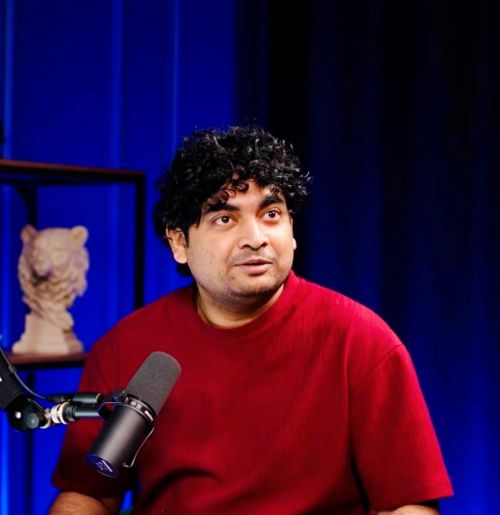


Altenar is known for making itself visible at major industry events, but Dinos Stranomitis still believes the product has to come before the marketing.
In Episode 91, Surya speaks with Dinos about almost three decades around betting and iGaming, how the industry moved from almost no standards to the much more regulated environment we see today, and why he still believes there is significant room for new companies to grow.
A major part of the conversation focuses on how Altenar itself developed. Dinos says determination mattered, but the bigger factor was getting the right people together. For him, knowledge and motivation are the two qualities that matter most when building a team.
The discussion then turns to startups. If he were starting again today, Dinos says the first priority would be simple: build a product that works, solves a real problem and has enough quality for people to want it. Only then should sales, marketing and large conference investments follow.
He is equally direct about companies arriving at exhibitions with a stand before their product is ready. His view is that customers need something real to see, test and trust before marketing can do its job.
The conversation also covers Altenar's growth, why the company is not currently for sale, what success means personally to Dinos, expansion into Europe, North America, Asia and Africa, and why he believes AI will change jobs rather than simply eliminate them.
“The main point for me is the product should come first, marketing to follow.”
“You can have empty years. It's important to understand what's the quality of these years.”
“Every day, in every step you make, there is a new opportunity.”
“Knowledge without motivation, it's not that great.”
“The focus needs to be the product.
“A good product will sell.”
“You must have your product ready. You must have the example, the showcase, and then you go to market it.”
“I never believe that AI will cut jobs. AI will evolve the jobs.”
Key takeaways
Product comes before marketing
Dinos believes marketing can accelerate a strong business, but it cannot create quality where the product itself does not deliver.
“The main point for me is the product should come first, marketing to follow.”
His view is simple: visibility matters only after there is something worth making visible.
iGaming still has room for new companies
Dinos remembers hearing a CEO say in 2008 that the industry was effectively finished for startups.
He says the years that followed proved the opposite.
“Even today there are huge opportunities to go. We have a long way to go.”
For him, opportunity never disappears. It changes as the industry develops.
Altenar's growth came from determination and people
When Surya asks for the main factors behind Altenar's development, Dinos points first to the team.
The company had to combine developers, business people and different backgrounds with limited resources in the early years.
“It's all about the people.”
Knowledge without motivation is not enough
Dinos looks for two things when assessing people: knowledge and motivation.
Someone with knowledge but no motivation can stagnate.
Someone with motivation but limited knowledge may still grow if the environment helps them learn.
For him, the strongest combination is having both.
Startups should not market something that does not exist yet
Dinos is particularly critical of companies paying for major exhibition presence before their product is ready.
He gives the example of asking a company at an event to see its product and being told it will be ready months later.
“You must have your product ready. You must have the example, the showcase, and then you go to market it.”
Customers should come before the big marketing spend
Dinos believes early businesses should first prove that someone wants what they are building.
Marketing becomes more powerful after the company has customers, references and a working showcase.
That does not mean waiting forever to invest in branding. It means knowing when the business is ready to be amplified.
AI will change jobs, not simply remove them
Dinos sees automation as an important part of Altenar's future.
But he does not believe that necessarily means fewer people.
“I never believe that AI will cut jobs. AI will evolve the jobs.”
His expectation is that people will move toward higher-value work while repetitive tasks become more automated.
About the guest

Extended summary
Published by the podcast, not written by our newsroom.
Read the summaryHide the summary
(00:00 - 00:50) Surya: If you would start from scratch, what would be your focus? Dinos: A good product will sell. Something that has software services with business services together with a very good quality concept. Surya: How much revenue would you be currently making? And do you see the motivation in the eyes when you have an interview? Dinos: Knowledge without motivation, it's not that great. Motivation without knowledge, very weak approach.
Surya: When do you think Altenar should aim to have a strong presence? Dinos: The biggest opportunity in this industry actually, after all, was the COVID period. All the world talks about AI. I never believe that AI will cut jobs. (00:50 - 01:34) Surya: We are here at iGB Live in London. iGaming Real Talk is excited to announce the next edition of Real Roadshow 2026. Very excited to bring the insights from the expo floor.
We spoke to leaders and experts from companies including Altenar, ST8, Endorphina, SOFTSWISS, My Gaming License, Tequity and many more. This series is brought to you by ST8, a single API game aggregator for regulated markets. (01:34 - 02:40) Surya: Hello and welcome back to iGaming Real Talk. We are here at iGB in London and I'm with Dinos from Altenar. Dinos: Good morning. Surya: Good morning. Thank you for accepting the invitation. Dinos: Thank you for coming here.
You're very welcome. It's our pleasure and our honour. Surya: When I think about the brand Altenar, it's the brand that I always see at SiGMA shows with the biggest banner at the entrance. Dinos: It's a long story. Surya: I worked for SiGMA, and every time at a SiGMA show, the first thing I would see was Altenar. Dinos: That's the intention of the marketing. I think that was there from the very beginning when my partner kept saying, “We need the gate. We need the gate.”
I'm not necessarily a big fan of marketing, but I think he was very right doing that. That established Altenar in people's minds. Marketing itself does not constitute quality. But if you have the quality and you have the marketing, it's a very nice combination. That's what we try to do. (02:40 - 04:00) Surya: I work in marketing, and when I speak to leaders who are in the beginning phases, there are usually two types.
There are people who understand the importance of marketing. And the other side mainly thinks that the product will sell itself. Dinos: Believe it or not, I'm more a fan of the second. I'm more a fan of the idea that the product can sell itself. But what is true is that marketing maximises reputation. If you don't have the product, marketing itself cannot do much magic. Surya: Also the other way is true. Let's say we do great marketing and people remember us and consider us.
But if the product doesn't hold up to the marketing claims, then the trust is lost. Dinos: That's very true. The main point for me is the product should come first, marketing to follow. The approach with the SiGMA gate was, okay, it's time to be known. When you feel it's time to be known, you should not hesitate to spend in the right manner, in the right concept, and you should have a plan around your marketing.
(04:00 - 04:50) Surya: You've been in the industry for more than 25 years. Dinos: It's true. It's like evolution. You never know exactly when the first human appeared and you never know exactly when I first got into the industry. More likely my first time was when I started creating a website with football tips. Surya: Oh. Dinos: Yes. As an affiliate. That was late 90s, something like that. Even though the first job in the industry was around 2002, part-time as a trader.
Surya: That's quite a few years. Almost 30 years then. Dinos: It depends how you count. The years are not important. You can have empty years. It's important to understand what's the quality of these years. (04:50 - 06:44) Surya: Since the time you started to where we are now, how have you seen the iGaming industry evolve? What has changed? Dinos: It's definitely a big change. But this industry is still shaping.
It has not yet arrived at the level where everything is specified. I studied as a naval architect and marine engineer. In maritime business, everything is set properly. When I had to go to work, I had thousands of pages of technical specifications. Everything is specified to the millimetre. You cannot deviate from standards. Then I came to an industry where, when I started, there were zero standards. Imagine an industry like the Far West.
You go first, you find the gold, it's yours. No rules. That's how it started. Over time, the industry started shaping the rules. Today we have some rules. They're not unified. They're not globally appreciated. Every country has whatever rules they like, depending on their approach. I've seen the industry go from zero standards to some standards. In my opinion, we still have a long way to go. That change itself created opportunity.
We're here today because we managed to get some opportunities in this industry. (06:44 - 08:24) Surya: Do you think there is still opportunity? Dinos: Oh yes. There is. Every day, in every step you make, there is a new opportunity. Big or small, it depends. When you talk, when you meet a new person, there is always an opportunity. It's a matter of priority and statistical success. You have to approach your journey as continuous and evolving opportunities around you.
With this mindset, you're more likely to get something out of it. I remember in 2008 I attended a conference in Barcelona. There was a CEO of a very big company. He said, “The industry is done.” Surya: In 2008? Dinos: In 2008. He said only the big ones would survive and startups had no chance. Obviously that statement was wrong. There were huge opportunities after 2008. Even today there are huge opportunities. We have a long way to go.
The biggest opportunity in this industry, after all, was the COVID period. The lockdown made people stay home and appreciate online slots and sports betting even more. You had to be there. You had to have an online section. Retail had some issues during those years, but that's what it is. (08:24 - 11:27) Surya: If we look at Altenar itself, it started around 2011 and became the brand we know later. Now in 2026 you have multiple offices and hundreds of employees.
If you could name two main factors behind the success so far, what would they be? Dinos: Let me put things a bit from the beginning. In 2011, my two partners started Bet In Action. That was mainly a software company. Coincidentally, I met them out of business necessity. I met them in 2013. After a year we decided, let's try to create something more concrete together. I think determination can be a big ingredient. We had to succeed through problems.
Whatever happened, we had to succeed. And the second, maybe more important, actually the first and more important in my opinion, was the people we got into Altenar to create that mix. Surya: Before you go there, what does Altenar mean? Dinos: Nothing. Surya: Nothing? Dinos: Nothing. There's no reason to create a myth behind it. Altenar is a name you can remember. It was free on the internet. We had four or five names and we liked it. It's easy to remember. It's a good brand.
Surya: And the domain was available. Dinos: Yes. There's no reason to pay hundreds of thousands to get a name. You need to spend on marketing and make it remembered anyway. Today, if you ask me what Altenar represents, that's another story. For me, it represents software services and business services together with a very good quality concept. (11:27 - 13:47) Dinos: In my opinion, determination and the people are what made Altenar start moving forward.
We had limited resources in the beginning, but the right resources. That helped us survive and create something bigger. Surya: Mainly, it's all about the people. Dinos: It's all about the people. Surya: How do you choose the people? Dinos: Every person has different criteria. Mine are not necessarily the best. But if you ask me for two main things: knowledge and motivation. Surya: Do you see the motivation in their eyes when you have an interview? Dinos: You should.
Through their approach, you see the motivation or you don't. Knowledge without motivation, it's not that great. Motivation without knowledge, there is a chance, but it's a weak approach. If you have knowledge and motivation, it's the best combination. If you manage to get someone with not necessarily wide knowledge but motivation to learn, you can improve both. If you have someone with knowledge and not great motivation, you need to create the environment that motivates them.
These two elements make the difference. (13:47 - 15:14) Surya: Determination and people's determination are mainly the two factors. Dinos: The drive. Surya: And bringing those things into one equation is probably the leadership part. Dinos: A leader should be clever enough not to do many things. If you have the right people there, you better step back a bit and listen to them. Of course, you need to have an idea where you're going. You need a strategic approach.
But strategy can be short sometimes. A leader should definitely listen to his people after choosing the correct team. And not necessarily “correct people” in an absolute sense. There can be people who are correct in one environment and not correct in another. Every person deserves success and can succeed if they're in an environment that appreciates them and that they appreciate.
At the same time, if someone does not fit the team, you're obliged to let them go in the name of the rest of the team. That doesn't mean that person doesn't deserve success somewhere else. Sometimes the best thing is helping them find that success somewhere else. (15:14 - 17:21) Surya: We have a lot of new B2B suppliers and providers coming into the market. If you would start from scratch in 2026, what would be your focus? Dinos: It's very clear. Very easy.
The focus needs to be the product. Product quality is what matters in the end. If you want to start a business, make sure you have a product, it works, people need it and it has good quality. Simple as that. Everything else comes later. A good product will sell. Even if you're not getting paid and you give it to someone for free, it will be appreciated. A bad product will not be appreciated even if you give it for free. Surya: We are a very relationship-driven industry.
Often I talk to startups whose main complaint is that even if they have a good product, they aren't able to get their foot in the door. Dinos: Yes. One product itself is zero. You have to sell it. If you understand your product and how it fits the market, you probably know your customer before the customer knows you. You have to analyse who needs it. Then you have to make sure you're around them. One day or another, they'll buy from you. Go to the market. Make your sales.
Make your marketing. Marketing does not necessarily need to be expensive. If you know where you're going, where you're positioning yourself and who is going to look at you, you can optimise your expenses. The market is becoming more competitive. Some B2B providers disappear and new ones appear. But at the end of the day, product quality prevails. (17:21 - 19:30) Surya: A lot of things in our industry depend on conferences.
When do you think someone should aim to have a strong presence and a stand? Do customers come first or marketing? Dinos: Customers come first. You need marketing. But if you don't have customers and you only have marketing, that's a financial risk. Some people may want to take that risk. But that's my view. If someone comes to sell me something, the first thing I'm going to ask is, “Can I see an example of your work?”
If they say, “I'm starting now,” it's difficult for anyone to buy without seeing an example. We like it or not, we buy by the eye. We need to see something. If you don't have a customer, you have to create a customer. I've seen examples even at exhibitions where someone says, “We have a stand.” I ask, “Can I see your product?” They say, “It will be ready in three months.” For me, that's a very wrong approach. You must have your product ready.
You must have the example, the showcase, and then you go to market it. You're more likely to have better marketing when the product itself becomes the showcase. The reference drives you somewhere. You have the product. You have the showcase. Then you go for the marketing. The other way around is too risky. (19:30 - 20:10) Surya: Altenar is clearly a successful business. How much revenue would you currently be making? Dinos: We're a private company.
We have more than 800 people. We have revenue, but I don't think it's necessary to disclose all the numbers publicly. A lot of people come and say, “You're selling Altenar.” No. Altenar is not for sale. Surya: Okay. Dinos: Then they say everything has a number. Everything has a number. I don't know. But I wouldn't discuss anything below six or seven hundred million. (20:10 - 22:07) Surya: What does that success mean to you personally?
Is it about building a company to a certain extent and then selling it? What are you mainly after? Dinos: I think it's a journey. If the journey becomes better and better, nicer and nicer, that's what matters. When we started, it was a very bumpy road. Then the road became a bit wider and wider. Then you see you're going to the motorway. Probably that's what success means. You have three lanes. But in those three lanes, you have many lights. You have police.
You need to respect limits, traffic lights, regulations. Is it easier? Not necessarily. But it's more comfortable, even though the problems are on a different level. I would say it's a journey. You have to enjoy the journey. You have to enjoy the next project. Every day you wake up and you have things to deal with. If you have the courage to go through them and you like it, that's what matters.
If one day you wake up and you don't want to deal with the issues, probably that's the day the idea to get rid of it comes to mind. Hopefully not yet. We have a long way to go. We have many things to improve. And I'm happy. That's it. (22:07 - 23:01) Surya: What is the belief that makes you enjoy this journey? Dinos: We're not alone. We're 800 people, potentially with 800 families. We have to go forward all together. We have to make a plan.
I still believe our product has very good quality. But I also believe we have challenges. We can improve certain elements in the operation and in the software. There are many things to battle. AI is coming. The whole world talks about AI. Can you take advantage of it? Can you miss the train? There are so many things to do. All this keeps you busy. If you find yourself not interested in being busy with that, then you don't belong there.
(23:01 - 24:01) Surya: How do you get through challenges? Not everything is a smooth path. Dinos: Very simple approach. You have a challenge. You have to know the challenge. You have to understand the challenge. You need to study the case. Once you study the case and understand where you're standing, eventually you have to make a plan. And be ready to change the plan every time, every day and every minute. You need an educated approach in every single case.
It's better that you don't deal with a case if you don't have the time to have an educated approach. Better you skip it. Surya: It sounds very structured. Engineer experience. Dinos: Yes. The scientific approach is what I think pays off better in the end. (24:01 - 26:38) Surya: Looking ahead, where would you like to see Altenar in the next five years? Where is it going in terms of positioning and relevance?
Dinos: Today, in my opinion, we have a product, especially the sportsbook, that is of very good quality. One of the top products in the market. What is necessary for us moving forward is for this quality to be appreciated by top operators in the industry. We need not just a good reputation, but for this to be applied with top operators. Especially in Europe. Europe at this moment is facing significant challenges around regulation, taxation and the wider financial approach.
But Europe is still the cradle of this industry. The UK is still where sports betting has deep roots. You have to prove yourself there. In Latin America, we already have an established presence. I also see an opportunity in North America. The US is a different environment that needs a different approach. That's coming for us. It's something we want to investigate and make sure we play correctly. It will take time.
We're still looking at Asia, which needs to be carefully studied in terms of regulation and compliance. And I always have Africa in my mind. With the large population and potentially micropayments, it can become a good opportunity for more stable income in the future. (26:38 - 27:40) Surya: What about technology? Dinos: I hope in the coming years Altenar takes an approach where we automate what is possible. People say it's AI, whatever it is.
Let's have modern systems that give operators and customers opportunities to move fast with optimised personnel. Saying that, I never believe that AI will cut jobs. AI will evolve the jobs. AI will allow people to have better jobs, not just any jobs. Focus on better things. I think this is what Altenar should do in the coming years. (27:40 - 29:50) Dinos: I have a question for you. Do you watch football? Surya: Yes. Dinos: What team do you support?
Surya: I'm a big fan of Barca. Dinos: Barcelona. Why? Surya: I lived in Barcelona around eight or nine years ago. That's the first football match I went to in person. It was during the Messi years. I went to Camp Nou. 99,000 people. The energy and emotion were unlike anything else. Dinos: It's more than a club. Surya: It's more than a club. The whole city changes during that evening. I wanted to be part of it.
I was very disappointed when Messi left Barcelona because I associated him with Barcelona. I couldn't decide whether I was supporting Messi or Barcelona when he left. Dinos: Only diamonds are forever. Players cannot play forever. I think Messi moving to Miami was a very good move, especially knowing the next World Cup was in the US. It gives him time to adapt. The Messi and Mbappé battle will be interesting. Mbappé obviously has the advantage of age.
(29:50 - 30:11) Surya: It's always important to stay focused. Thank you very much for being open and taking the time to join us today. Dinos: Thank you. Surya: That's it, guys. Thank you so much for watching. If you have any thoughts, please share them in the comments below. And if you have any questions for Dinos, ask them in the comments. I'll see you on the next one.
 11 min
LinkedIn Is Cringe. So Why Does It Still Win Business?
Eugene Camilleri · Director, Malta, Pateplay
 11 min
All Roads Lead to Rome: What’s in Store for SiGMA 2026? | Chloe von Brockdorff
Chloe Von Brockdorff · CCO, SiGMA Group
 1h 2m
1h 2mJust Play the Game
Alexandre Tomic · Founder, Alea & Vegas Legends