

Just Play the Game
with Alexandre Tomic, Founder, Alea & Vegas Legends
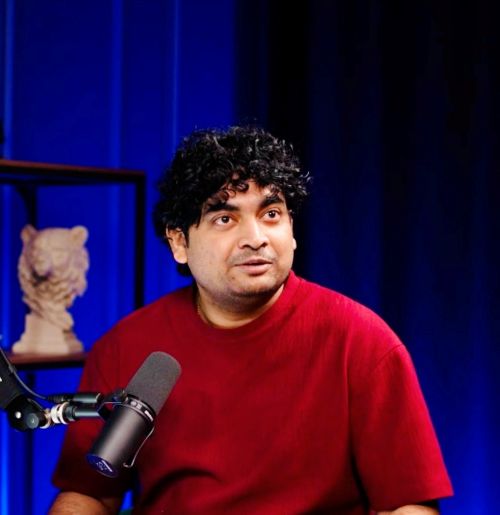


Alexandre Tomic, Founder of Alea, returns to iGaming Real Talk for a conversation that begins with the business he has built and gradually moves into much bigger questions around purpose, identity and what success actually means.
Surya and Alexandre first catch up on what has changed at Alea since their last conversation. They talk about the company's jackpot product, the very different models operators are asking for, and why building something flexible enough to serve both sides has become part of the challenge.
The conversation then moves into sweepstakes, the US market and the new formats starting to appear around skill, P2P and multiplayer mechanics. Alexandre also reflects on how his own view of sweepstakes changed as the market developed, and why he thinks gambling may be moving closer to certain parts of the video game world.
There is also a closer look at the reality behind aggregation. Alea sits between operators and game studios, which means trust, payments, technology and risk all have to work together. Alexandre explains why community, partnerships and strong technology have mattered so much to the company's growth, especially in a market where much larger competitors were already established.
But the conversation changes when Surya asks a much more personal question: what would be left if Alea was removed from Alexandre's story?
From there, the episode becomes less about building a company and more about why we build anything in the first place.
Alexandre talks about how closely Alea has become tied to his life, why selling the company no longer feels like the obvious end goal, and how he has started thinking about business as one of the ways we learn about ourselves.
That opens the door to a much deeper discussion around happiness, purpose, perception, consciousness and whether success is really something you eventually reach.
They also talk about Alexandre's support for research into psychedelic-assisted therapy and gambling addiction, his own curiosity around consciousness and ego, and why he believes some of the value created by the gambling industry should find its way back toward helping gamblers.
The episode eventually returns to more familiar industry territory with conversations around conferences, LinkedIn, AI and sobriety. But by that point, even those topics feel slightly different.
Because this episode is not only about where Alea is going next.
It is also about what keeps someone building after the obvious goals begin to matter less.
“There's two schools that are so opposite.”
“Very high interest. We're not delivering to everyone, to be completely honest with you. We're beta testing with some close customers.”
“Maybe tomorrow we'll have the 99 Royale type of vertical or the P2P skill game vertical, or maybe something else we don't even see now.”
“There's the branding, the personal branding. There is more, I would say, the sense of community that Alea has managed to build within the industry.”
“The true partner, for us, is very important, to have trustworthy, transparent relationships with our customers, operators, and with our suppliers, game providers.”
“Alea is my entire life today.”
“We don't want to sell because we want to grow more and we want to do more things.”
“AI in everyday work? Completely overrated for me.”
“The companies that are laying off the people right now in exchange of AI are making very, very big mistakes.”
Key takeaways
“There’s nothing else than Alea.”
When Surya asks Alexandre to imagine his story without Alea, he pauses before answering.
For him, the company is no longer simply a business he is building.
“Alea is my entire life today.”
Alexandre says it currently occupies most of his mental and emotional space. That also helps explain why selling the company no longer feels like the obvious destination it once did.
Alea had originally been approached with a relatively normal startup plan: build, grow and eventually sell.
But once that stage became more realistic, the goal changed.
“We don't want to sell because we want to grow more and we want to do more things.”
Happiness is not the goal. It is a byproduct.
The conversation moves from business into a much broader question: what should people actually aim for?
Pleasure, happiness, money, success, power or influence?
Alexandre sees pleasure as something temporary and closely connected to dopamine. But he also questions the idea of chasing happiness itself.
His argument is that once happiness becomes the objective, not having it can create another layer of dissatisfaction.
“Actually, happiness is a byproduct.”
For Alexandre, the more important question is finding some kind of truth, purpose or “north star” to move toward, even if the journey itself does not always make you happy.
The same reality can feel completely different to two people.
Alexandre's interest in philosophy and consciousness leads the conversation into perception.
Two people can experience the same event and come away with completely different experiences of it.
One may experience it as something positive, while another may experience the same thing as suffering.
That raises a bigger question for Alexandre: how much of the reality we experience comes from what happens to us, and how much comes from the way we perceive it?
He does not present this as an answer.
It is one of the questions he says he is still trying to understand.
“It’s hard to have good tech. It’s really hard.”
When Surya asks what has actually helped Alea grow against much larger aggregators, Alexandre does not point to one product feature.
He talks about community, partnerships and technology.
Alea sits between operators and game studios, so Alexandre believes trust on both sides matters. He also stresses transparency around customers and markets rather than hiding information from suppliers.
But the technical side is just as important.
Alexandre openly says Alea has experienced bad technology in the past, which changed his understanding of how difficult genuinely reliable infrastructure is to build.
“A lot of platforms are not working correctly.”
For him, Alea's technology is not simply a selling point. It is one of the foundations underneath the business.
Alexandre was wrong about sweepstakes, and he is comfortable saying it.
A little over a year earlier, Alexandre did not believe strongly in sweepstakes.
At the time, regulatory pressure and major suppliers pulling away made him think the vertical could be closing.
Instead, Alea saw the market continue to grow.
“Since then, we've seen a boom.”
Alexandre now describes sweepstakes as a significant part of Alea's activity, while still recognising that regulation could change the market again.
His attitude toward that risk is also pragmatic.
Because sweepstakes is still relatively new revenue for Alea, he does not yet see losing it as losing something the company has always depended on.
His analogy is simple: it is still the cherry on top of the cake, not the cake itself.
The next big gambling format may come from outside traditional casino.
Alexandre sees the boundaries between video games and gambling becoming less clear.
Video games already use mechanics such as loot boxes, skins and other systems that can resemble gambling behaviour, while iGaming has moved toward formats such as crash games and is now experimenting with skill, P2P and multiplayer mechanics.
“It's been years we've been talking about multiplayer and these kind of things in our industry.”
The difference now is that Alexandre feels something may finally be starting to happen.
Rather than the next vertical looking like another traditional slot or table game, it may borrow much more heavily from mechanics players already understand from gaming.
A jackpot is not the same product to every operator.
Alea originally approached its jackpot as a player-funded product that could generate revenue for operators.
Operator feedback quickly showed that the market is split.
Some operators want to fund the jackpot themselves and treat it entirely as an acquisition or retention expense.
Others want the jackpot to carry a house edge and generate revenue directly.
For Alexandre, neither side is necessarily wrong.
The result is Alea moving toward a model where operators have more control over how the jackpot works commercially.
It is a good example of one of the broader ideas running through the episode: sometimes the market does not give you one answer.
Aggregation means carrying someone else’s risk.
The aggregator sits between the operator and the game studio.
That position creates a financial problem that is easy to underestimate.
If an operator fails to pay an invoice, the game studio may still expect the aggregator to pay its share.
Alexandre explains that the aggregator can therefore lose far more than its own margin on the transaction.
The unpaid invoice is not only lost revenue.
It can become a direct cash-flow and EBITDA problem.
That makes aggregation as much a business of risk management and trust as it is one of content distribution.
Replacing people with AI too quickly is a mistake.
In the underrated or overrated round, Alexandre gives a clear answer on AI in everyday work:
“Completely overrated for me.”
He does not dismiss AI.
He says it already helps with many tasks, including development work.
His concern is reliability and overdependence.
If AI-generated work contains errors, people still need enough understanding to find and correct them.
Alexandre is particularly sceptical of companies already reducing teams because they assume AI can replace those roles.
“The companies that are laying people off right now in exchange for AI are making very, very big mistakes.”
At the same time, he leaves room for being wrong.
He has misjudged technologies before, and he openly acknowledges that AI may develop in ways he does not currently expect.
The industry should give something back to the people who fund it.
Alexandre explains why he chose to support research into psychedelic-assisted therapy and gambling addiction.
The reasoning is direct.
Part of the money circulating through the gambling industry ultimately comes from gamblers, including people who may struggle with addiction.
If research can help those people recover, Alexandre sees supporting that work as a way of returning some value to the same community the industry depends on.
“The first people we wanted to give back to were gamblers because they're the ones that gave to us.”
For him, that connection matters more than charity that has no direct relationship with the industry creating the money in the first place.
About the guest

Alexandre Tomic
Founder, Alea & Vegas Legends
Alexandre Tomic is an entrepreneur and the founder of Alea, a company within the iGaming industry. He is known for his unconventional approach to leadership, maintaining a deep interest in consciousness research, philosophy, and the scientific exploration of the human brain.
LinkedIn profileExtended summary
Published by the podcast, not written by our newsroom.
Read the summaryHide the summary
(00:00 - 00:47) Surya: Hello and welcome back to another episode of iGaming Real Talk. I'm very excited. We have Alexandre, Founder of Alea, here with us. This is the second time we're having you here. It's a great pleasure for me because you're a person that I really admire in terms of work, as well as everything that you do in our industry. So Alexandre, welcome to the show. Alexandre: Thank you so much for your kind words, Surya, and thank you for inviting me again.
It's my pleasure being here. Surya: Great. Alexandre, we were together before in Barcelona. Alexandre: Yep. Surya: It was right after ICE? Alexandre: Right after ICE. It was the last day. Surya: It was the last day. Extremely exhausted. I think it was a Friday night. If we look at the last six months from that period to now, I remember we talked about the jackpot. (00:47 - 06:22) Surya: So in the last five, six months, where are we with the jackpot?
Alexandre: My co-founder Charlotte would probably talk to you about the jackpot better than I would because she literally developed it with her own hands. It's live. It's still in testing mode. We're still playing with it. We didn't fully release it. We're still developing, fine-tuning some features and the business model also. Operators are requesting completely opposite things. I'm going to give you an example. We built it as a tool for operators to make money.
There are many jackpots on the market where operators are funding the jackpot themselves. It's marketing money they have to put in, when you can take that money from the players. Basically, they have a player-funded jackpot with its own RTP, which is basically what Octoplay does. ThrillTech, I think, does the same thing, which is another jackpot tool. But some of our customers are requesting, “No, we want to fund the jackpot ourselves.” We're like, okay.
There are two schools that are so opposite. One school is saying, “I want to fund the jackpot myself. I have enough money as an operator. We make enough money. This is a retention tool. This is an acquisition tool. We're going to fund it. We don't want to make money out of it.” It's a marketing tool. Another school is saying, “No, no, no. We're going to take a 10%, 15%, 20%, 30% edge.” I've invested in this area.
I was an early investor in Blue Ribbon, developed by Amir Askarov, and they sold the jackpot to DraftKings. Then I was an investor in BeyondPlay. They first wanted to develop a bet-behind tool, but then saw the opportunity on the market because Blue Ribbon had been bought and taken off the B2B market by DraftKings. They developed BeyondPlay as a jackpot tool and were bought by DraftKings' competitor, FanDuel. Very interesting.
I never understood why these companies were buying the jackpot and then removing it as a B2B tool. I've seen these jackpot tools coming into the market for years, getting bought and being taken out. There is a need there. Other platforms are developing jackpots. For any product, customers are not happy because either you need to fund it yourself or you need to have the player funding it. Some companies are saying the jackpot can have an RTP at 50%.
I believe that's a little bit too much. We're basically adapting the solution so operators can do whatever they want. If they want to fund it, if they want to put a higher house edge or lower house edge, plus other little tweaks. What is also very important in Alea's jackpot is that it sits on the aggregator. Surya: That's very different from other solutions that are more independent?
Alexandre: The other solutions, yes, they're more independent because they're not tied to an aggregator. You're completely right. But on the other side, there is room for abuse. When it sits on an aggregator, an aggregator knows when there is a bet and knows when the bet has been cancelled. The external tool doesn't. In terms of reconciliation, in terms of fraud and abuse, it's much better when it sits on an aggregator.
But then you need to take the games through the aggregator. So there are pros and cons. Surya: Cool. How's the early interest been? Alexandre: Very high interest. We're not delivering to everyone, to be completely honest with you. We're beta testing with some close customers. (06:22 - 09:36) Surya: I've also seen recent talk about sweepstakes. Alexandre: Yes.
To be completely honest with you, sweepstakes is a vertical I didn't really believe in a little bit more than 12 months ago. Surya: You thought it was just a way to target US customers? Alexandre: I thought it was closing. At the time, I think Florida was closing. And when Pragmatic pulled away, the fact that Pragmatic pulled away was, for me, a big sign. I thought, okay, Pragmatic pulls away, we should pull away too.
On the other side, our CEO was saying, “We don't have any business in the US. We don't do the US regulated market.” There is no reason why we wouldn't address it, except if, of course, it becomes really black market, which it is not. Since then, we've seen a boom. It is growing every month. It's very dynamic. It's very interesting. I believe we're one of the biggest, if not the biggest, sweepstakes aggregators. We have all the big ones. The US is a fascinating market.
If you look at other verticals, there's this mix of skill games and P2P games. Let's say you and I want to play together. There would be a matchmaking system which puts us in front of each other. You have the same cards I have. Let's say blackjack, but it can be any other game. It can be Plinko. It doesn't matter. It has to be a game that's not bottable. You play your cards against the dealer. I play my cards, which are the same cards as you, against the dealer.
Your skill is going to make you score more than me. At the end, we're going to compare the score that we have and the highest score is going to win. It's super, super interesting. (09:36 - 13:01) Alexandre: There are many other things that we're seeing in the US market. I just came back from Miami. I saw a lot of AI live dealer products. Surya: The whole premise of live casino itself is because it's real. It's being streamed to the player.
If you take that away and the player knows that it's AI, that's where the issue is. I was talking to one of the AI customer-support tools, and one of the key insights there was if the player knows that it is AI, they treat it differently compared to if they don't know whether it's AI or human. Alexandre: What would be the difference in how the player treats it? Surya: If it's AI, they treat it very rough. Alexandre: Really? Surya: And they want to talk to humans sooner.
Alexandre: Interesting. Surya: If we mask it... Alexandre: But you can't mask it. Legally, I believe you can't. I don't have a legal opinion on that. But I believe you wouldn't be able to mask it. What makes a live dealer a live dealer is the fact that it's not RNG. It's a physical device. And that you cannot hide. I've seen several products. There are AI live dealer products that are more cartoonish. Some are more realistic. Some use a physical device plus an avatar.
The point is there isn't one AI live dealer product. There are AI live dealer products. It's very different. (13:01 - 15:14) Surya: Coming back to sweepstakes before we close off that topic, it is getting difficult. Month on month, we're seeing restrictions coming up. Maybe not as quickly as prediction markets, which are moving in a different, faster direction. Are you concerned somewhere that it might eventually shut down? Alexandre: Yes, of course.
But we didn't have it for enough time to consider it ours. It's not like we've lived with sweepstakes as part of our revenue for three years and now if we lose it, we're like, “Oh God, this is going to be hard.” We've had it for one year. If we lose it tomorrow, it's like a bonus. You gave me a cherry on top of my cake and now you remove the cherry. I didn't have it long enough to consider that it's part of my life today. That's how human beings work.
If you leave it too long on the table, then it's mine. If it's been on the table for not so long and you take it away, I'm like, okay, it was here, but not so long ago it wasn't here. So it's okay if it's not here again. Surya: From operators on the ground, what are you seeing in terms of their focus? Alexandre: They're not concerned at all. They're always finding solutions. They're already adapting the product. Sweepstakes, what we call sweepstakes, was social.
Then it became sweepstakes. Then it became social with sweepstakes mechanics. Then there is the US, but there is Canada, Australia, New Zealand, Germany, France. Now they're opening up to a lot of markets. (15:14 - 18:15) Alexandre: If you look at Clash of Clans or similar games, even Fortnite, these games are played by underage people. There are gambling-like mechanics.
Everybody is focusing on our industry, but the video game industry is doing loot boxes, skin crafting and similar mechanics. Maybe what we're seeing now is our industry moving towards the video game industry with gambling products. A couple of years ago, we didn't have Crash games. Now we have Aviator, JetX and many others. It's a whole new vertical. Maybe tomorrow we'll have another new vertical around P2P skill games, multiplayer or something we don't even see now.
I'd like to see that coming. It's been years we've been talking about multiplayer and these kinds of things in our industry. We never saw something really coming. And now I've got the feeling that it is coming. Surya: Essentially, simple games work easier. Alexandre: Of course. Surya: Because they don't disrupt the thrill of entertainment itself or gambling itself. Alexandre: True. You're completely right. It's a very valid point.
If you look at how the gambling market developed, almost by accident, simple mechanics tend to work much better. And by nature, gambling is unpredictable. (18:15 - 20:59) Surya: Let's go to some of the numbers. You've built a good success from where you started. Alexandre: We started in 2012 as an operator and 2020 as a B2B, as Alea, the aggregator that we know today.
Surya: From 2020 to now, it's definitely a good success considering that there are other bigger companies, dinosaurs, who were capturing most of the market. One thing I always wondered about Alea is how you managed to build it from scratch, especially when there are big players in the market. Aggregation is also a risky business because you need to balance both sides. Even if one invoice is not paid on one side, there are cash-flow and liability issues. Alexandre: Yes.
If the operator doesn't pay, go tell the big game studio that you've not been paid. They say, “Okay, you need to pay me.” First of all, you're not going to get paid, but you need to pay multiple times what you're not going to get paid. Just to put it in perspective, if a studio invoices one million in a month, maybe 200K is for us. We have to give 800K to the studio. If the customer doesn't pay, it's one million out.
It's our 200K plus we need to take 800K directly from EBITDA and give it to the studio. Surya: So it's a very controlled business model. If you could name two things that have contributed to your success and where you are today, what would those two be? (20:59 - 25:03) Alexandre: I would tell you actually there's two things. There's branding and personal branding. But more importantly, I would say the sense of community that Alea has managed to build within the industry.
First of all, inside the company and then in the industry. If you think about it, it makes sense. We're right in the middle of an ecosystem where we have game studios and operators. We're the bridge between them. We consider ourselves a true partner. We don't want to squeeze small studios. We're completely transparent with studios and customers about markets. Some aggregators hide from the game studio who the customer is or which market they're really doing.
We're always transparent. We ask, “Do you want to do this market?” Yes or no. If you want to do it, we do it. If you don't want to do it, we don't do it. We have a kind of back-to-back policy. There are some markets that we won't do. The true partner, for us, is very important. To have trustworthy, transparent relationships with our customers, operators and with our suppliers, game providers. That's one thing. Creating a sense of community around that.
The other one, which is as important but maybe less put forward, is the technical aspect. We're a tech company. We really breathe tech. That's more coming from my co-founder Charlotte and our CTO. We have a very talented tech team. We're very lucky for that. I can tell you because I've run several companies. We developed our own platform. We developed the internal aggregator that we developed for the B2B. And in the past, the tech was bad. We had bad tech.
It's hard to have good tech. It's really hard. And I can see it in the industry. A lot of platforms are not working correctly. There are a lot of problems in APIs. There are a lot of tech problems. Surya: So to sum it up, transparency and tech? Alexandre: I would say more community, partnerships and tech. (25:03 - 28:02) Surya: I always wanted to ask this personally as well. This is a big success. But imagine for one moment that there's no Alea in your story.
If we took it away, then why do you do what you do? Alexandre: This blank silence is for a reason, because there's nothing else than Alea. It's as simple as that. Alea is my entire life today. I don't say that tomorrow it will be different. But today it occupies my entire mental and emotional space. There's nothing else than Alea. Surya: Is reaching a certain stage your main purpose? Alexandre: We contemplated in 2020 when we restarted it. We did what every company would do.
We said, “Okay, four years, we sell.” And actually we came to that stage later. But we don't want to sell because we want to grow more and we want to do more things. I think the people who are there are enjoying what they're doing and enjoying doing it together. Again, this aspect of togetherness. Yes, we could take an amount of money and just do something else. Today, I don't see the point in doing that.
Most entrepreneurs who have exits, within less than a year they start building something else. (28:02 - 29:51) Surya: So the question becomes, what is your end goal? Alexandre: For me, the goal is simple. It's a school. You could take politics. You could take business. You could take spirituality, religion, art. You could take anything. You learn about life by playing this game. The goal would be playing the game, entertaining yourself and learning something out of it.
If you have a PlayStation 5 and you have 10 games, the question is which one do I play? Surya: The reason to play the game is to be free of it. Alexandre: No. Why do you say that? Surya: Because the reason to play the game is to win it and to be free of it. Alexandre: Okay, we're going deeper. In a video game, yes. You want to have a good time, entertain yourself. You learn some skills and some stuff. And indeed, you want to exit the game. Surya: Could you apply that to life?
Alexandre: Yes. Surya: Do you want to go there? Alexandre: Yes. (29:51 - 39:46) Alexandre: I'm here to figure out my life. There are different philosophical and religious traditions that look at life almost like a cycle or game that you are trying to understand or eventually leave. I find those ideas fascinating. There are traditions that describe reality as something we may not fully understand, or even as an illusion.
You can find versions of these ideas in Buddhism, Gnostic traditions, philosophy and modern simulation theories. I'm not saying I have the answers. But I think one interesting question is how much control we actually have and how much of our experience comes down to the way we perceive what happens to us. Two different people can go through exactly the same event. One person can say, “This is amazing. I'm so happy.” Another person can experience it as suffering.
So your perception can make the same situation feel completely different. Surya: So it's about the state of being and how we create our reality around that? Alexandre: Exactly. Surya: Every character has a purpose. Alexandre: In which sense? Surya: In every sense. I was watching a show recently and someone in the family said, “I don't like this character.” Suddenly I said, every character has a purpose without which the story is not complete.
Alexandre: I totally agree with you. Everything is necessary for the story to exist. You can see that in groups as well. Sometimes you remove one person from a dynamic and somebody else begins to take the role that person was playing. It's almost like actors playing different archetypes. (39:46 - 42:22) Surya: To sum up this discussion, what do you think people should aim for? Is it happiness? Success? Money? Power? Influence?
Alexandre: One thing for sure, pleasure for me is something you realise is very volatile. If you seek pleasure, you run after dopamine. Then you look for happiness. Happiness is something much more stable than pleasure. Then you find that happiness is also a complete illusion. Let's say I'm looking for happiness. If I don't get happiness, I'm unhappy because I'm not happy. The guy who is not looking for happiness, if he's unhappy, well, he's unhappy.
The guy who's looking for happiness is unhappy, but he's double unhappy because he's looking for happiness and he's not getting what he wants. Actually, happiness is a byproduct. If we have it, very good. If we don't have it, never mind. The more important thing is truth, purpose, whatever you call it. I'm looking for that thing, the north star towards which I want to go. That doesn't mean the journey is always going to make you happy.
Surya: So it's about awareness and acceptance? Alexandre: Yes. Something like that. I don't have every answer. I'm just sharing my perception at this point in time. (42:22 - 46:11) Surya: We'll jump to a later step. You launched the Under Pressure podcast, which I watched last Friday. You talked about psychedelic-assisted therapy. Did you feel like you wanted to support such a study, and what was the main intention behind it? Alexandre: Two main reasons.
One, I think that if psychedelics are found to be able to help people who have gambling addiction recover from that addiction, that would be a great thing. Studies have been done around other addictions, but not much around gambling. Pedro was the first one to come up and say, “I'm going to do a study.” The idea is to follow participants and see whether the treatment affects their gambling behaviour and whether any effect lasts over the longer term.
When he talked to me about the project almost three years ago, I wanted to support it. If the study is successful and we see positive results at the end of the cycle, then the hope is that we will be able to put the money back into the circle. Some of the money in this industry comes from people gambling. Some of them may have addiction problems. It's giving back to this community. There are a lot of iGaming companies that do charitable work.
But the first people we wanted to give back to were gamblers because they're the ones that gave to us. (46:11 - 50:42) Surya: In this episode, you also talked about consciousness and the idea of a collective mind or collective consciousness. I'd like to hear a couple more sentences on what you mean by that. Alexandre: I've had psychedelic experiences in the past. More recently, I've been interested in assisted-therapy settings and questions around consciousness.
One of the things I find fascinating is the concept of ego dissolution, where your normal sense of identity can temporarily change or disappear. For me, that raised questions about how fixed our sense of self really is. I've also invested personally in projects looking at this area. It's something I'm very curious about and fortunate to be able to speak to people who are researching these subjects. (50:42 - 51:08) Surya: Cool. We'll wrap it up with a quick-fire round.
It goes like this: underrated or overrated. I'll say the phrase and you say whether it's underrated or overrated. Explain in one line. Alexandre: Okay. I'm ready. Shoot. (51:08 - 54:35) Surya: iGaming conferences. Underrated or overrated? Alexandre: I would always say underrated. If you look at my schedule and your schedule, we both travel a lot. There are three circles of conferences. You've got the big ones, then smaller industry conferences, and then partner events.
There are so many that you could travel multiple times every week during most of the year. You can't do all of them. Some even overlap. Are there too many conferences? Yes. Can you do all of them and work? No. Because you need to prepare them and debrief them. But that's where everything happens. It's not just that you meet people. That's where you understand the trends of the industry. I think they're underrated, even though we have so many.
I'm not saying you should have a booth at every conference. But you should definitely go to a lot of them. The partner events are amazing as well. Surya: If I was CEO of a bigger B2B startup brand, you can't do everything yourself. Alexandre: Exactly. The biggest problem is not going to be budget. The biggest problem is going to be your time. The most expensive thing at some point is your time. A CEO cannot do every event. The CEO has to work and run the company.
As a founder, depending on your role, you may have more freedom. (55:06 - 55:51) Surya: Next one. LinkedIn. Alexandre: LinkedIn is like the forums back in time. You had to be there. You would get known there. But if you only do LinkedIn, then you don't work. And don't forget the conferences. I spend less and less time on LinkedIn, to be honest. But it depends where you are in your business trajectory. LinkedIn is still the number one tool apart from conferences.
I prefer conferences because it's physical. Physicality always wins. (55:51 - 57:38) Surya: The next one is AI in everyday work. Alexandre: Completely overrated for me. It helps a lot to do a lot of things. But it's wrong a lot of the time. You need to be aware of that. Developers can code with it, but when there are bugs, sometimes they don't know where the bug is or how to correct it. For the moment, overrated. But maybe I talk like a dinosaur.
I've been wrong about technologies before. So we'll see where AI gets us. But I don't see it as replacing humans. The companies that are laying people off right now in exchange for AI are making very, very big mistakes for several reasons. One, AI is not going to do everything a human can do. Second, AI companies are eventually going to charge businesses significant amounts for those systems as well. (57:38 - 59:16) Surya: The last one. Sobriety. Overrated or underrated?
Alexandre: You're setting me up, right? It's underrated. Alcohol sobriety is super underrated. It's becoming more and more trendy now. I've been mostly sober for around two and a half years. I drink maybe a few times per year because there's a wedding or something like that. Very little. Surya: What about me? I drink sometimes. Alexandre: What do you mean by sometimes? Surya: Conferences maybe. Alexandre: Then you drink all the time. Try not drinking for one month.
Surya: I did two months last year. It was really good. I need to start that again. Alexandre: Very underrated. I used to drink a lot for many years. It's been a major change for me. (59:16 - 59:56) Surya: Is there anything you would like to share with the audience today to close off the conversation? Alexandre: I think we did good and we went far. Again, thank you for inviting me. Surya: Thank you very much. It's always a pleasure.
Thoughts emerge from our discussions that I think about on the plane back because that's the time when no one disturbs you and you can reflect on things. Thank you so much for joining me and giving me your time. That's it, guys, for today. If you have any questions for Alexandre, comment wherever you're watching. And I'll see you on the next one.
 9 min
9 minSiGMA Nexus Elite | Executive Network by SiGMA
Louise Mouton Tingager · Head, SiGMA Nexus Elite
 14 min
Why the Cheapest Gaming License Can Cost You More Later
Khristina Karanskaia · Head of Content, My Gaming License
 11 min
How Tequity is Innovating Game Development & Distribution
Alex Scott · CPO, Tequity