

Is AI Already Replacing Jobs in iGaming?
with Jennifer Innes, CEO, BettingJobs
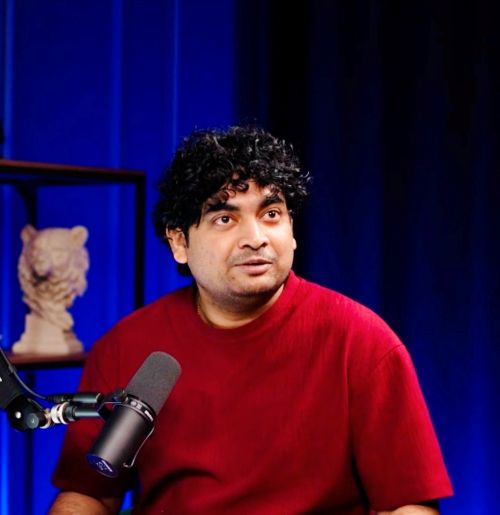


The iGaming job market is changing quickly, and AI is now affecting both the companies hiring and the people trying to get hired.
Jennifer Innes, CEO of BettingJobs, joins Surya at iGB Live in London to discuss what she is seeing after 20 years with the recruitment company. Redundancies are increasing across parts of the industry, but Jennifer says AI is only one part of the picture. M&A, restructuring and regulation are also changing where companies hire and which roles remain.
For candidates, the challenge is different. More applications are being screened by systems before a hiring manager sees them. Jennifer explains why one generic CV is no longer enough and why applicants need to adjust their CV depending on the role, the company and even whether the first reader is a person or an AI system.
The conversation also challenges a hiring belief Surya heard from another recruiter: that people who are actively on the job market are not the strongest candidates and that the best people are always headhunted. Jennifer strongly disagrees, particularly in a market where many talented people have been made redundant for reasons outside their control.
They also discuss remote work, employer expectations and the difficulties companies face when hiring globally. Even when the right candidate is found, location, employment structure, culture and benefits can still decide whether a hire actually works.
“What I try to do is work with people that have been made redundant and make them see that their skills can be transferable.”
“Have a vanilla version of your CV. Have a CV that you're happy with, but then add the extra sprinkle based on the role that you're applying for.”
“You have to be aware of the eyes that are looking at your CV or your application.”
“AI plays a part in most things these days. Actually getting to the authentic human behind the application.”
Key takeaways
AI is contributing to redundancies, but it is not the only reason
Jennifer says AI is clearly affecting headcount in some businesses.
She gives an example of a company introducing an AI chatbot and dramatically reducing the number of staff needed.
But she also points to M&A, restructuring and regulation as major factors behind current redundancies.
Redundant does not mean unemployable
Jennifer says her focus is often on helping people who have lost roles understand which parts of their experience remain valuable.
That could be knowledge of a particular platform, geography, language or operating model.
The goal is to find the hook that helps them move into another role without necessarily leaving iGaming.
One generic CV is no longer enough
Jennifer recommends having a strong base CV and then adapting it for each application.
“Have a vanilla version of your CV. Have a CV that you're happy with, but then add the extra sprinkle based on the role that you're applying for.”
Candidates also need to understand whether their CV will first be reviewed by a hiring manager, a recruiter or an automated system.
Candidates need to write for AI and humans
If a company is using an automated screening system, Jennifer says the language from the job description needs to be reflected in the application.
Otherwise, a candidate could be filtered out before a person gets the opportunity to review them.
At the same time, she still values personal cover letters and the human side of an application.
Being on the job market does not mean someone is a weaker candidate
Surya shares advice he previously received from another recruiter who said the best candidates are headhunted and that someone actively looking for work may not be good enough.
Jennifer pushes back on that.
“I would argue that that's not entirely the case.”
She points out that redundancies, availability and notice periods can all affect whether someone is currently on the market.
About the guest

Extended summary
Published by the podcast, not written by our newsroom.
Read the summaryHide the summary
(00:00 - 00:33) Surya: Again, AI. Jennifer: Yeah. Whether or not that's a good idea overnight, though. Surya: Try to guess how many staff they had at the end. Jennifer: 20. Surya: Close. 13. And you went from 200 staff to 13. Jennifer: What I try to do is work with people that have been made redundant and make them see that their skills can be transferable. Surya: What he said was really concerning to me. He said, “If someone is on the market, they're not good enough.
Only people who get headhunted are the best.” Jennifer: I would argue that that's not entirely the case. Surya: And what are we then saying, that those people are not good enough? Jennifer: Exactly. (00:37 - 01:21) Surya: We're here at iGB Live in London. iGaming Real Talk is excited to announce the next edition of Real Roadshow 2026. Very excited to bring the insights from the expo floor.
We spoke to leaders and experts from companies including Altenar, ST8, Endorphina, SOFTSWISS, My Gaming License, Tequity and many more. This series is brought to you by ST8, a single API game aggregator for regulated markets. (01:21 - 02:19) Surya: Hello and welcome back to another episode of iGaming Real Talk. We are here at iGB London and I'm with Jennifer from BettingJobs. BettingJobs is a brand that is very well known. I think it's been existing for more than 10 years.
Jennifer: More than 20. Surya: More than 20 years. Jennifer: Yeah. I've been with the company 20 years. Surya: 20 years. You founded the company? Jennifer: No. I am CEO and I own part of the company, but there was another gentleman that founded the company 20 years ago. I was their first female employee. Surya: Wow. And then you stuck around. How is it to stay with a company for 20 years, Jennifer? Do we actually see this in today's world? Jennifer: Not so much anymore.
Surya: I know my father worked for a company for around 25 years. Jennifer: With this company, with BettingJobs, the company has changed and my role has changed over time. So it doesn't quite feel like I'm doing exactly the same job anymore. (02:19 - 02:56) Jennifer: How long have you been in the industry? Surya: More or less nine, 10 years. I'm a non-EU citizen, so I was trying to find an opportunity. I was in Spain, Poland, Netherlands, Sweden, Germany.
I moved quite a bit trying to find the opportunity. But once I landed in Malta, it was very quick and easy. I just focused on one company for a few years, and that changed my career trajectory. Jennifer: I think that's still the case. If you were looking for a position in Malta nowadays as well, the best thing to do is be there. Surya: Yeah. Jennifer: Be available to network and for interviews.
(02:56 - 04:30) Surya: If we look at the recruitment space right now, we see a lot of big companies making very bold moves when it comes to cutting headcount. I'm curious to understand, is it more because of what we see in AI, or is it more because of restructuring, consolidation, buyouts, mergers and acquisitions? Jennifer: I think AI undoubtedly has a part to play. For example, we were working with one company based in Dubai.
They introduced an AI chatbot to the company and they had around 200 customer support and payments agents. Try to guess how many staff they had at the end after introducing this AI chatbot. Surya: 20. Jennifer: Close. 13. Whether or not that's a good idea overnight, though. So yeah, undoubtedly AI has a part to play in the redundancies. We also see the impact of mergers and acquisitions. Regulation, of course, as well.
The UK government's increase in gambling tax has had a big impact, certainly on UK-based vacancies. You see some companies that perhaps had offices in Malta and London. Someone leaves the London office, they want to replace that person in the Malta office. There are definitely downstream impacts of that. So I'd say regulation, M&A and, of course, AI. Those would be the largest factors.
(04:30 - 05:19) Surya: Looking at it from the recruitment perspective, because you see both sides. You see the operators, you see the companies, and you also see the candidates' perspective and the strategy moving forward from the redundancies. What's concerning from being in the middle as a recruitment agency? Jennifer: What I try to do is work with people that have been made redundant and make them see that their skills can be transferable.
Find the hook in terms of their experience. Be that platform-specific, region-specific or language-specific. I am concerned about the people that have been made redundant and want to help them pivot accordingly and move into new positions. It's how you can show them another path while still staying in iGaming. (05:19 - 06:33) Surya: Okay. That's interesting because we have a WhatsApp community and people talk to us. They come to us and ask for opportunities available.
I hear from a lot of candidates that the challenge is finding the right role. Of course, we do have platforms and open roles available across multiple platforms, but there seems to be a common challenge for candidates to find the right type of role. Jennifer: I suppose the community that you've created as well gives people the ability to ask, “Have you heard of this employer? Is this a good choice that I'm making?”
Having a platform like that, where there is a community that you can openly ask for a transparent answer, is really useful. It also holds some employers to account. Helping someone find a new job is one of the largest things that you're going to help them do in their life. Surya: Yeah. Changing jobs. Jennifer: So that's what motivates me in the morning.
If you work with the right recruitment consultant, or if you have access to communities such as yours, then you can fully ask, “Is this company good? Have you heard any stories to the contrary?” (06:33 - 07:31) Surya: What sort of advice do you have for candidates looking for new roles? Jennifer: Aside from finding someone at BettingJobs to work with? Surya: Yeah. Jennifer: My analogy is, have a vanilla version of your CV.
Have a CV that you're happy with, but then add the extra sprinkle based on the role that you're applying for. There has to be something that makes you stand out from the crowd. Also bear in mind who is looking at the CV or your application. Is it another AI chatbot? Is it a human being? Are you sending an email directly to the hiring manager? You have to be aware of the eyes that are looking at your CV or your application in order to make sure that the buzzwords are there.
If it is an AI agent or some form of database, then you have to ensure that the words used in the job description or the advert are reflected in your application. Otherwise, you could be discounted simply on the basis of this. (07:31 - 08:40) Surya: Okay. There are a lot of people frustrated about the fact that they're not even getting reviewed by a human because AI is reviewing them right from the beginning. Jennifer: So the answer to that would always be the human touch.
Yes, we can use AI to help finesse the CV once it's written. Yes, we can use AI to help with the cover letter. Although I love cover letters that are personal and actually fit the person. You have to look at what's important to the company. Are they licensed in a certain region? Do they focus on certain geographies? Have you had that experience, and have you reflected that on your CV?
Your CV has to pack a punch straight away in order for the hiring manager or the AI to read further. Make sure that you reflect what is important to that company or important as far as that role is concerned. Always taking those few extra minutes to finesse the vanilla CV or vanilla application is going to make you stand out from the crowd. (08:40 - 10:28) Surya: There's an interesting thing that I heard from a very reputed recruitment agency. It's not yours for sure.
Someone else very reputed as well. A year and a half ago, I quit my job at a platform provider and I thought I could do consulting and make double the money. It didn't happen. I quickly realised and I was on the market looking for a new job. I asked him for advice because obviously he was also part of the community. What he said was really concerning to me. He said, “If someone is on the market, they're not good enough. Only people who get headhunted are the best.”
I was like, “Are you serious?” There are so many people on the market for reasons that are outside of their control. Jennifer: I would argue that that's not always the case. We have many clients who come to us... Surya: I got completely lost in that moment because I was looking for advice. If this is the reality of recruitment, that only headhunted people are the best and if someone is on the market they're not...
Jennifer: Maybe if you're asked to headhunt someone specifically for a position, they might be the best. I would argue that that's not entirely the case. As I said before, we have clients who come to us if they need to fill vacancies fast. Of course, someone working would have a notice period and therefore not be suitable for that position because they're not available within that timeframe. Surya: So you wouldn't agree that's true? Jennifer: Not necessarily.
No, I wouldn't agree that that's true. Surya: Okay. Big relief. Maybe I should have chatted with you then. Jennifer: Always. You know where I am now. If I'm asked to headhunt someone specifically for a role for a client, perhaps it's because they want that person and that reputation. But that doesn't discount the whole of the other community that's not working, especially in a world where lots of redundancies are being made. Surya: Yeah.
Jennifer: What are we then saying, that those people are not good enough? Surya: Exactly. I couldn't take it. It shouldn't be the case. But it's good to know your perspective on that. (10:28 - 11:40) Surya: Let's look at the coin from the other side. What are the challenges for iGaming companies to hire the right people? Because people are everything for growth, for everything. What's the current challenge for iGaming companies to hire the right talent?
Jennifer: Again, AI plays a part in most things these days. Actually getting to the authentic human behind the application. If you have a CV that's overly written by AI and a cover letter that's entirely AI-generated, how do you really know the person that's applying for the position?
And then the challenge in a post-COVID world, where still a large percentage of people in the industry work remotely or indeed want to work remotely, is how you onboard them and how you make them feel part of a company and want to stay with your company. I'd say those are probably the two largest challenges that we see. (11:40 - 13:09) Surya: The vast majority of candidates that we register are still looking for either remote-based work or partially remote-based work.
Has the urge to be remote gone down now that we have clearly passed out of the pandemic era? That's when it got popularised. Have companies realised that it's better for people to be in-house? Jennifer: It almost depends on the company. Perhaps the more corporate the organisation, the more expectation there is to be in the office. Startups and cryptocurrency businesses that are coming around in the industry are more likely to be remote or remote-first.
Then you've got the challenges of paying people on a global basis. Some cultures don't want to work as a B2B contractor. You see a lot of Australian nationals where B2B contracting work is not something culturally that they're very open to. The same with Italian and Portuguese nationals. They far prefer the employment contract, the stability, pension and healthcare provisions that come from a full global employment contract.
So you've still got all these additional challenges. Even if you find the perfect candidate, you also have to ask, where do they want to work? Where is the company? It keeps the iGaming industry interesting. Surya: Definitely. (13:09 - 13:22) Surya: Well, thank you so much for joining me and sharing your perspective. Jennifer: Thank you for having me. I appreciate it. Nice to meet you. Surya: Nice to meet you as well. That's it for today, guys. Thank you for watching.
Do share your thoughts in the comments below. I'll see you on the next one.
 11 min
LinkedIn Is Cringe. So Why Does It Still Win Business?
Eugene Camilleri · Director, Malta, Pateplay
 30 min
Can Good Marketing Save a Bad Product?
Dinos Stranomitis · Director & COO, Alternar
 11 min
All Roads Lead to Rome: What’s in Store for SiGMA 2026? | Chloe von Brockdorff
Chloe Von Brockdorff · CCO, SiGMA Group