

How Tequity is Innovating Game Development & Distribution
with Alex Scott, CPO, Tequity
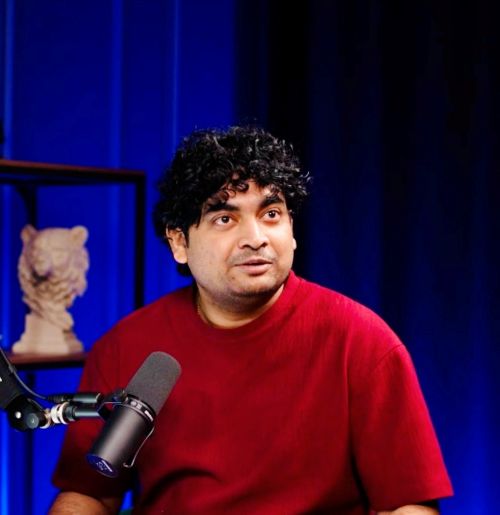


Game development and distribution are often treated as two separate parts of the business. Tequity is connecting them with their full suite products: Originals, RGS, Publishing, and Exclusives.
Alex Scott had joined Tequity as CPO only four days before this conversation with Surya. One of the things that attracted him to the company was its reputation for being fast, responsive, decisive and innovative.
A big part of the conversation looks at how Tequity’s RGS, Originals, Publishing and Exclusives work together. Rather than building each vertical separately, the company has developed them as connected parts of the business, with each one building on the technology, experience and distribution created by the previous one.
The RGS gives studios the infrastructure to build games. Originals helped Tequity develop its own content and distribution channels. Publishing then opened those channels to studios using the RGS, while Exclusives uses Tequity’s development and distribution capabilities to create bespoke content for individual brands.
The conversation also looks at what comes next. Alex discusses the thinking behind Tequity’s product roadmap, keeping the company fast as it grows, and preparing to enter more regulated markets based on customer demand, commercial value and market requirements.
“Everybody who deals with Tequity has only positive things to say about it.”
“How do I maintain Tequity's speed and decisiveness and responsiveness as we grow and as we scale?”
“When we see a need in the industry, particularly if we have some of the skills already, that's the direction that we will go in.”
“It's part of my responsibility to determine what order should we enter regulated markets, which markets bring the most value in the shortest amount of time.”
Key takeaways
Game development and distribution can work together
One of the main ideas behind Tequity’s product strategy is connecting the technology used to build games with the channels used to distribute them.
Its different verticals solve different problems, but they also support each other.
The result is a model where new products can build on technology, relationships and distribution that Tequity has already developed.
Tequity’s products were built as a natural progression
Tequity started with its RGS, giving game studios the infrastructure to develop their content.
Originals came next and helped the company build its own content and distribution channels.
Publishing then gave studios using the RGS access to those channels, helping them reach a wider audience.
Exclusives builds on those capabilities again, allowing Tequity to create bespoke content for individual brands.
Different products solve different problems
RGS, Originals, Publishing and Exclusives may sound similar from the outside, but Alex says they serve different needs.
RGS supports studios with game development infrastructure. Originals provides Tequity-developed content. Publishing connects studios with distribution, while Exclusives gives brands the option to create content specifically for their own audience.
The connection between them is what makes the wider model interesting.
Product development starts with an industry need
Alex says Tequity will continue looking at needs in the industry and where the company already has the skills and technology to build a solution.
“When we see a need in the industry, particularly if we have some of the skills already, that's the direction that we will go in.”
Instead of adding products simply to expand the portfolio, the idea is to continue building on what Tequity already does and where it sees demand.
Regulated markets need to be entered strategically
Moving into regulated markets is another part of Tequity’s next stage.
Alex says different jurisdictions have different requirements, so expansion cannot follow the same approach everywhere.
Part of his role is deciding which markets Tequity should enter first based on where the company can create value for its current and future customers. The company already has a roadmap for reaching more regulated markets across different regions.
About the guest

Extended summary
Published by the podcast, not written by our newsroom.
Read the summaryHide the summary
(00:00 - 00:28) Surya: Hello and welcome back to another episode of iGaming Real Talk. We are here at iGB in London. I'm with Alex from Tequity. Alex has recently joined as CPO at Tequity, and we've had a couple of discussions with Dominic previously in Brazil as well as in Manila, covering what Tequity has been doing over these months. Now we have the opportunity to have Alex on the show. So Alex, welcome to the show. Alex: I'm pleased to be here. Thanks for having me.
Why Alex Joined Tequity (00:28 - 01:23) Surya: Great. Let's kick off. You've had great experience with some interesting brands in poker. What's the intention behind taking the role as CPO at Tequity? Alex: Tequity is a company I heard of maybe one to two years ago. Surya: Oh, really? Alex: Pretty recently. Ever since I heard of the company, I've admired it.
It is a company which is really rare in the sense that everybody who deals with Tequity has only positive things to say about it. Before joining, I'd heard the company was fast, responsive, decisive and innovative. These are all things that I've seen as I've gone through the recruitment process and eventually joined the company just four days ago. Surya: Just four days ago? Alex: Just four days ago. So here I am doing an interview after four days. But so far, so good.
Everything I've seen so far matches what I've heard about the company. So it's a super exciting time. Scaling Without Losing Speed (01:23 - 02:22) Surya: Are there certain things that you've seen over the course of your journey that are very crucial for a startup to turn into a scale-up?
Alex: One of the challenges as you go from being a small company with just a few employees, where everybody knows each other and what everybody is responsible for, to becoming a bigger company is that you can lose some of the cohesiveness. But more importantly, I think you lose the decisiveness and the speed. Or you can lose the decisiveness and the speed. This is something I see particularly with companies in iGaming.
They get really big and they start going into regulated markets and things like that. Certainly one of the things that's at the back of my mind as I join the company and start working in this role is, how do I maintain Tequity's speed and decisiveness and responsiveness as we grow and as we scale? The company is doing that really, really quickly. So that's at the back of my mind all the time. Surya: How big is the company? How big is the team right now?
Alex: There's about 20 people in the team at the moment. What a 20-Person Team Has Built (02:22 - 02:54) Surya: So still relatively small. Alex: But it's incredible what that team has achieved. 20 people have achieved so much. Surya: With 20 people, no one would have thought. I see a lot of announcements from Tequity. Every week, two or three announcements are coming up. I'm sitting there wondering, there's a lot of activity happening.
Alex: One of the great things about the company is that there's always something cool and exciting and innovative happening. Having seen a little bit about what's coming in the future as well, there is so much more in the pipeline. It's a very exciting time. RGS and Originals (02:54 - 04:19) Surya: Okay, cool. Let's talk about the offerings of Tequity. We have RGS, Originals, Publishing, Exclusives. They all kind of sound the same for an outsider, probably.
Alex: They're all different solutions to different problems. The company started a few years ago with RGS, which is a way for startup game studios, cool new game studios like Shady Lady, for example, to build games on a remote game server. It's really scalable. It's quite mature now and feature complete. It's very powerful. Probably the most powerful RGS there is in the industry. That solves a problem for the startup game provider that wants to build games.
What came next was Originals. We now have 20 Originals, which are these super simple games. They're very popular among people who are new to casino. For people who need something a bit simpler than a very sophisticated slot like Megaways, for example, these simple games are a great way to learn how to play casino. Surya: Absolutely. That's why we see Crash. Alex: Crash games, Plinko. I love Plinko. Dice, Mines, this kind of thing. Super, super popular.
Like I said before, we have 20 of them now. The customer for that is different. This is B2C casinos as our customer in this case. Publishing (04:19 - 04:56) Alex: When we took those two things and built distribution channels for Originals, the third thing to do was, okay, how do we give those distribution channels to the game studios that we've onboarded for the RGS? So the third vertical was Publishing.
This basically took everything that we'd learned so far and combined it all together. Now we can give the access that we've developed through our Originals games to the game studios that are using our RGS so they can reach the widest audience possible. These things are all synergistic. They all combine and add on to each other. When we do something that helps us as a business, it also benefits our RGS customers.
Exclusives (04:56 - 06:30) Alex: The logical step when you combine those three things is Exclusives. Now Tequity has built the ability, we have the muscle, if you like, to build casino games, and we've got the distribution channels for it. If you're taking our Originals, you may be interested in exclusive content. Surya: What's the main difference? Alex: An Exclusive can be anything really. It can be any game that is built just for you and your players.
Surya: So branded games? Alex: Yeah. It can be a branded game. Maybe you have access to some IP that is exclusive to you and you want us to build a game on it. It can be a slot. It can be a burst game. It can be a version of an Original. It can really be anything. The key thing is that it's bespoke to you. Nobody else has access to it. We've built the muscle to build games like that. It's a natural next step. It's the natural evolution of Tequity and our business.
Again, it builds on what we've done before. What benefits us benefits our customers as well. Surya: When it comes to Originals, those are the games that Tequity develops so anyone can use them. Exclusives are built for a specific brand? Alex: Yeah, that's right. Originals are customisable. We can very easily and very quickly deliver you an Original which is customised quite extensively to you and your casino.
Exclusives are something where we go right back to the drawing board and build something from scratch exclusively for you. It can be anything. Any idea that you have, we can bring to life. How Tequity Decides What to Build (06:30 - 07:25) Surya: Cool. It's great to understand each vertical and how they came into existence because it seems like it's almost a natural progression of the business itself based on need, interest and demand. Alex: Yeah. That's how I see it.
I think you can expect to see Tequity continue to develop in this way in the future. When we see a need in the industry, particularly if we have some of the skills already, that's the direction that we will go in. Surya: What's the bigger vision when we look at the next three years? Three years is long if we talk about a company like Tequity. Alex: I've only joined the company four days ago.
So part of my responsibility will be to take the vision that the founders have and put some structure around it. Think about how we implement it over the next three years, the next five years and so on. While I can't talk too much about what that vision will be at the moment because it's such early stages, I've heard some of the ideas and they are super exciting. What's Coming Next? (07:25 - 07:59) Surya: Can you reveal anything specifically in terms of product roadmap?
Alex: I would say keep an eye out for games coming in the very near future. Hopefully I'm not revealing something. One of our next Originals will be CCTV games, which is the ability to bet on things that are happening in real life, basically. Surya: Wow. Very, very interesting product. Alex: Yeah. Super exciting. Super interesting. Moving Into Regulated Markets (07:59 - 09:09) Surya: There's also news that Tequity is preparing for regulated markets in the coming future.
What's the plan around that? Are there any specific markets you're preparing for certifications and so on? Alex: It's something that doesn't happen overnight. Regulated markets are not easy, particularly when you look at how they've all developed independently of each other and seemingly have completely different rules and regulations sometimes. We've started.
Actually, it's part of my responsibility to determine what order we should enter regulated markets, which markets bring the most value in the shortest amount of time to the customer base that we have and the customers that we want to attract in the future. Before I joined, the company had worked on certifications for the Estonia market. A very sensible first regulated market to go for, I think. It's a very pragmatic regulator. Very smart. A great first start.
There's a roadmap in place, some of which has been worked on already, to enter more regulated markets so that we can open up that whole new demographic of European regulated markets, regulated markets in the Americas, Asia, Africa and so on. There's a big market out there we haven't yet fully reached. It's my responsibility to help unlock that over time. Closing (09:09 - 09:30) Surya: Great. Well, Alex, thank you so much for joining me and sharing your thoughts.
We'll catch up again at one of the next events to go through some of the specifics in the roadmap and the rest of the vision. Alex: Sounds good. Thank you for having me. Surya: Thank you for watching. That's it for today. Do share your thoughts in the comments below and follow Alex on LinkedIn. And I'll see you on the next one. Thank you.
 54 min
He Risked 5 Years of Profit & £22M on ONE Product
Paul Dolman-Darrall · CEO, G.Games
 14 min
Could Regulation Be the Better Path for Asia’s Online Gaming Markets? | Paul Fox, Claymore Solutions
Paul Fox · Founder, Claymore Solutions
 12 min
Why iGaming Companies Struggle to Enter Asian Markets | Pierre Wuu
Pierre Wuu · Advisory Board Member, SiGMA Group