

Fake Streamers, Bad Traffic & iGaming Marketing | Part 2 | Levon Nikoghosyan, AffPapa
with Levon Nikoghosyan, Co-founder and CEO, AffPapa
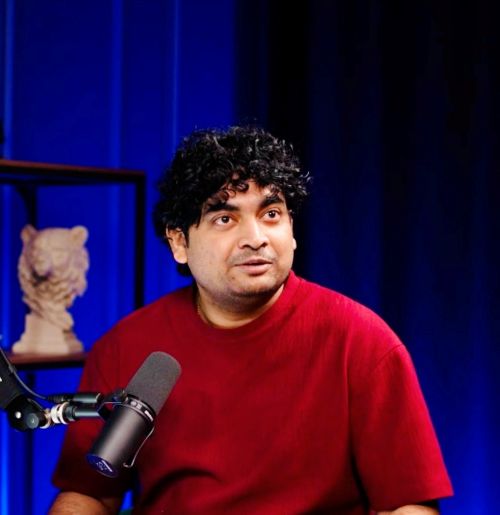


Affiliate management platforms are becoming a critical part of iGaming infrastructure, but what actually makes a modern platform stand out?
In episode 71 of iGaming Real Talk, Surya Palli is back with Levon Nikoghosyan, CEO of AffPapa, for Part 2 of their conversation, diving deep into the problems behind affiliate marketing, fake streamer numbers, creative B2B campaigns, team building and what it actually takes to scale an iGaming business.
What the industry is facing
- Fake streamer numbers and inflated traffic
- Operators relying too heavily on one marketing channel
- Affiliate fraud and unverified traffic
- B2B gaming marketing becoming repetitive
- Companies playing too safe with creative campaigns
- Teams scaling faster than their internal systems and remote teams struggling without clear KPIs
What this conversation explores
- Why operators need a multi-channel marketing strategy
- How AffPapa is verifying streamers and their traffic
- Why iGaming brands need to experiment with marketing
- How AffPapa deals with affiliate and operator complaints
- Why responsibility and curiosity matter when building teams
- How clear KPIs make remote work possible
- Why success is a process, not a final number
- What keeps Levon building AffPapa for the long term
Notable quotes
One channel marketing is not the solution for your operations.
You have to have a proper strategy to work through different channels. Not just one, especially streamers.
If you don't experiment, then you are definitely falling behind.
Key takeaways
Operators should not build acquisition around one marketing channel
"One channel marketing is not the solution for your operations." Levon believes operators take a big risk when they depend too heavily on streamers or any single source of traffic. A strong acquisition strategy should combine SEO affiliates, PPC, social media, streamers and other channels. The better approach is to test smaller budgets across different sources and understand what actually works for the brand before scaling.
A successful streamer for one casino can fail completely for another
"They might be excellent for one brand, but your brand can just burn their traffic." Large audiences do not automatically translate into good results. A streamer may perform extremely well for one crypto casino because their audience fits that product, while the same traffic may perform badly for another operator. Operators need to look beyond follower numbers and understand whether the audience, brand and product actually fit together.
Fake streamer traffic is becoming harder to identify
"There's more scams than the real ones." AffPapa has seen growing numbers of streamers joining the affiliate ecosystem, but verification has become an important part of the process. Profiles can look legitimate while viewer numbers, depositors and engagement may be inflated. The platform is now collecting data from channels such as YouTube, Telegram and Kick to give operators a clearer picture before they start a partnership.
B2B marketing needs constant experimentation
"If you want your marketing to work, you have to be different." Levon believes traditional B2B content is becoming easier to ignore because too many companies are doing the same thing. AffPapa continuously tests new formats and keeps using them while they work. Once a format becomes common or stops performing, the team moves on and tests something new. For him, experimentation has to be part of the marketing process.
iGaming can learn much more from industries outside gaming
"There is so much that we can learn from other industries and bring it to here." Levon does not believe every marketing or event idea needs to be invented from scratch. AffPapa has taken concepts that already worked elsewhere, adapted them to iGaming and tested whether they fit the industry. The same approach applies to content, events and marketing campaigns. Looking outside iGaming can give brands ideas before they become common inside the industry.
Staying relevant means fixing problems as the business grows
"How do we fix this to remain relevant to the industry?" AffPapa never reached a point where Levon believed the original idea was no longer needed. The bigger challenge was improving the platform when operators and affiliates started facing problems such as fake traffic, unverified accounts and unpaid commissions. That led to affiliate verification, complaint systems and stronger moderation. Growing a business means continuously solving the new problems that appear around the original idea.
Good leaders need responsibility and curiosity
"It's responsibility and curiosity." As AffPapa grew beyond a small team, Levon had to start selecting people who could lead others. For him, responsibility means owning problems instead of blaming someone else. Curiosity means constantly looking for better ways to work. When leaders have both qualities, founders can delegate with more confidence and spend less time solving internal disputes.
Remote work depends on systems, not ideology
"It's about what systems and KPIs you have in place." Levon does not believe there is one correct answer to the remote versus office debate. Some companies work well remotely. Others struggle because they do not have clear ways to measure performance. If businesses know how to measure output, teams do not necessarily need to sit in the same office every day. The right working model depends on how the company has been built.
Scaling too quickly can expose weak foundations
"Sometimes your company can scale too fast." Hiring more people does not always create more output. Levon believes companies can grow headcount faster than they build the systems, KPIs and management structure needed to support that growth. When that happens, businesses may keep hiring while productivity stays the same. Scaling works better when the foundation grows with the team.
Success can be the process itself
"The success can be a process." Levon does not see AffPapa as having a final number or point where the company is suddenly complete. Growth moves up and down. Some periods require more investment, while others bring stronger results. For him, enjoying the process of building, solving problems and creating something from the ground up is already part of success.
About the guest

Levon Nikoghosyan
Co-founder and CEO, AffPapa
Levon Nikoghosyan is the Co-founder and CEO of AffPapa, the premier B2B directory connecting iGaming operators with affiliates. With a background in software development and over 8 years at EveryMatrix's PartnerMatrix, Levon built AffPapa to solve a clear gap in the market: helping operators find quality affiliates without middleman fees. Under his leadership, the platform has grown to over 2,500 affiliates and 350 operators, and expanded into networking events, media, and affiliate management services.
LinkedIn profileExtended summary
Published by the podcast, not written by our newsroom.
Read the summaryHide the summary
Surya: Do you think that now the new age affiliates are the streamers and influencers? There are plenty of streamers that have fake numbers, fake viewers, fake depositors. The AI took over this area a lot. What do operators need to have in mind? Levon: One channel marketing is not the solution for your operations. What do operators need to have in mind, especially when it comes to streamers? What do they get it wrong?
You think there is some misconception that some operators go direct to streamers? What is it that they need to know? They need to know that the one channel marketing is not the solution for your operations. You have to do a multi-channel marketing. You have to work with SEO affiliates. You have to work with PPC companies. You have to work with social media.
These days, if we are speaking about larger operations, there are many brands that are super active with TikTok, Reels, Instagram. You should not concentrate only on one channel. It's not the remedy of your issues and the solution to your business problems. You have to have a complex solution, different channels, and use smaller budgets to test each of them. Because you might see a great deal with one of the best streamers in the industry.
They might be excellent for one brand, a crypto brand which performs really great with their audience. But your brand can just burn their traffic. It can affect them losing their own players and their revenue from your partnership. And you from losing the trust from the players that just were promoted. So the solution to this is you have to have a proper strategy to work through different channels. Not just one, especially streamers.
Surya: So now you have established a bit of platform between operators and affiliates. Do you plan to also include streamers? Levon: Yeah, we do have streamers. They fall under the affiliate category. We have a separate section for streamers. How many streamers do you have? I think around 250 or something like this. And we have seen recently how many are registering.
That's how we figured out that there is something, you know, really like some people figured out the way to make money. So basically we are trying to moderate it like very carefully. There's more scams than the real ones. Surya: And that's the thing with streamers, you don't know it beforehand. You see their webs, they are on Kick. Everything looks like it is real. Levon: Yeah, inflated numbers and stuff. And then one or two brands, they buy two streams from them.
They see no results. They complain and this streamer disappears. And then the same 100 USDT is being passed over all the flow. So yeah, for the streamers, we have had them for many years, but now we have a separate section. And we are implementing a new feature to also collect their streaming data and show it in the system. Because with SEO affiliates, we have the integrations with ARF. We can see the data. With streamers it's different. You can't get their data from ARF.
So now we do additional integrations to get the YouTube numbers, Telegram numbers and Kick and et cetera. But still, do you verify them like going further? Yeah, it is easy to verify them. They usually like change something in the bill. Surya: Let's switch the gears a little bit. Let's talk about your marketing, which I'm really kind of interested in. Because you know, you come up with new things from time to time. I saw the other day a chicken video.
I was like, wow, that wow factor. The chicken goes to Madrid. Levon: That was so cool. The chicken video, I just remember which one you are talking about. It was just like a week ago. It's not that the team is just doing it chaotically, whatever they want. We have a plan. They know our vision. They know more or less what's in our strategy and what is not.
And the videos like this were just like they are already, you know, generating themselves, trying if something works is good. If not, we try something. And you have to constantly try because if you stick to the traditional marketing, you know, sharing these nice pictures of each other's and talking like sharing some philosophical ideas and stuff, it's not working anymore. Every second person shares their photo with some interesting quote.
So if you want your marketing to work, you have to be different. And by being different, it doesn't mean you have to invent something. You just have to observe, you have to look what is going on in the world, like what other marketing tricks or campaigns other industries are applying, what we could do in our industry because our industry is small, man. There is so much that we can learn from other industries and bring it to here.
The same with our events, like speed dating sessions or affiliate market. These things we didn't invent, right? We just saw that it works somewhere. We tried it in our industry and it works here too. Surya: Is there any marketing campaign that you're really proud of in the whole AffPapa journey? Levon: There is so mixed that I can't think just of one. It's not that we ever like worked on a specific campaign, but we had different ideas and we just choose which one we do.
Whatever works, we keep doing it until it's obsolete and it stops, because you can't do the same thing. That's why you have to always change. You have to always come up with a difference. First we started with reels. Maybe remember when these funny cuts from TikTok and stuff. And it was a bit weird to share it on LinkedIn, but suddenly now, like all the companies, even the serious companies are doing that. Because that's the trend, that's how it all is moving.
Some things are cringe, then it's being adopted by a small group of companies, then it's becoming mass marketing. And then two years later it becomes, again, a funny thing to come back on. Surya: So if we look at B2B gaming companies, what do you think they get it wrong when it comes to their marketing? Levon: I don't know what they get it wrong to be honest because some companies are stock-listed.
Some companies are staying in a very serious lane and not allowed to experiment with such things. That's why we don't see, you won't see Evolution posting something. But we have HubSpot, just for an example, on the B2B SaaS tech. HubSpot's LinkedIn I think is the most enjoyable thing. In iGaming, we have a very different way of doing things. But if you don't experiment, then you are definitely falling behind. But if you experiment, then you fail, that's OK.
Surya: Let's also look at building AffPapa for a moment, because you started in 2022. It's been almost more than four years in a way. Was there any moment where you felt like this might not work? Or are there any tough moments in building AffPapa from the ground? Levon: The project was starting in 2020. I joined as an operational CEO in 2022. I don't think we ever had the moment when we thought the idea is obsolete, or that the issue we are solving is no more actual.
But we had moments when we felt that we are not delivering what our customers want, for example, they are having some issues with unverified accounts, they are having some issues with affiliates who send them not really real players, some fake bots or traffic or whatever. And we had just to find solutions for that. Our equation that we asked ourselves was not like, are we doing the right thing or are we still needed in the industry?
But it was like, how do we fix this, to remain relevant to the industry? And that's why we started verifying affiliates. We opened up this complaint section in order to receive complaints and get rid of scammy affiliates and operators as well, because in average, during the year, we are closing like 10 to 12 operators. Last year, we closed around 12 operators just for not paying commission to the affiliates.
If the affiliate brought your traffic, whether you like it or you don't like it, if it's the right traffic, they are a right affiliate, but for some reason your company, your brand was not able to convert the traffic, and then you are saying I'm not paying what I've promised, then it's not the affiliate's problem. It's your problem to do the homework before. That's why every case you should analyse separately. It's not all the same.
Surya: When we look at your team, how big is your team? Because you're doing a lot of things. Levon: Right now, we are a little bit over 40. 40 to 43, I believe. For just the affiliate managers, we have more than 12 affiliates for the service here. Then we have the gamblers team of four or five people. We have now events team who are separating. So we are having separate marketing there, separate sales.
For our Papa Dashboard, we expanded the team last year because we created this new version in order to be able to keep developing it. It's going to be constantly improved with new features, with new functionalities. Surya: What's your main principles in terms of leadership and building a team? Levon: I think that's the hardest part of any business. When we add more people, more complexity also adds. Every stage, it's different.
From scaling from like two, three people team to 10 people team, it's a different job. Then when you grow above that, you are creating infrastructure. You need to start creating and selecting leaders. That's a different challenge because now you have to look at other characteristics of your employees. And there are like two main characteristics that I think is the most important for an employee and specifically for a leader, like someone you can delegate to lead the team.
It's responsibility and curiosity. Responsibility helps you to easily work with them because if you find something wrong in their output, you criticise or you comment, they won't get offended and they won't be blaming others. They will try to find a solution to improve it and being in charge of the issue. And when they are curious, they will constantly look for different ways to improve their output and to become better in their position.
When you have these two, you can trust these people to lead teams because then you don't have this blame game thing. The leader will take it on their account and they will just go and solve the problem. They tell you, I understood, we'll fix it. And that's who you need in your team, otherwise you are becoming a detective to find who's right, who's wrong.
Surya: So you don't have strong views about, because you know, some CEOs, founders, entrepreneurs, they think that it's important for the team to be in an office environment every day. What's your views on that? Levon: You know, it depends because it's hard to tell for all businesses. Right now, for our business, it works. It depends on multiple factors, man.
If you don't have the right KPIs for your team, you don't have a way to measure the output of your designer, the output of your content writer. You don't have these ways of analysing how they did their work. The only thing is left, of course, is just to bring them to sit next to you, to make sure that they are spending like eight hours a day next to their desktop. And some companies do that because some companies have seen a decline when people moved working from home, right?
And that's why they decided let's bring them back again. But on the other hand, we also have seen many, especially affiliate companies who are 100% remote. They have over 1000 people's staff, and it works for them. It's how you build it. And it's about what systems and KPIs you have in place. And that's the problem. Sometimes your company can scale too fast. And you don't spend enough time and resources on establishing the foundation.
That's why you struggle, you hire more and more and more, but the output is the same. Surya: Does it feel like you've already reached the success in terms of whatever you had in mind, like when you were starting the brand? Levon: I didn't have any like end game in my mind. What's going to be like, you know, what's the limit of the growth or something? AffPapa is a process and I truly enjoy the process myself.
And there is no end game that like when we reach here, we are done or we consider it success. The success can be a process. And sometimes the success can go a little bit down, then go up. It's not linear. It's not exponential. It's always a zigzag. So it goes up and down, up and down. Sometimes you invest, sometimes you invest more and then you realise you need to still invest more into that because you are playing on a long run.
But the process, if we consider success, that how enjoying is the process and how much fun and joy it brings to me, to run the company, then yeah, it's definitely a success for myself. Surya: Do you personally have a number? Like when I hit this number, I'm going to retire or whatever. Levon: No, I don't have the number. I had maybe when I was young, there was a number, maybe like a million or a couple of millions or something.
But then this number gets blurred because when you are young, what you are planning to do with the money, right? Travel, enjoy your life and et cetera. When you get a little bit experienced, you are living the life, you realise that without having a proper profession, something to wake up for every day, you are not going to enjoy yourself after a month, just sitting idle. What's next, like, there should be a process, there should be a fight always.
And these fights are the things that make you feel you are alive. And by battle, it doesn't have to be something tremendously big. It's a small win that you are having, and this is what makes your life enjoyable. Surya: What keeps you going? What makes you wake up every day like wow, this is a beautiful day? Levon: Maybe the fact that we are setting a bigger goal, a goal that is almost impossible to reach, or extremely hard to reach. And we are going after this.
We are going after the emotions, after the meetings like this, when we sit and discuss how AffPapa managed to run this kind of marketing, bring so many people together, start something from scratch, literally from the ground zero, and establish a network or a community around it after six years. And these things are probably driving, because you want more of these emotions, you want more of this reward for the job and the energy that you have spent on the project.
 1h 2m
1h 2mJust Play the Game
Alexandre Tomic · Founder, Alea & Vegas Legends
 9 min
9 minSiGMA Nexus Elite | Executive Network by SiGMA
Louise Mouton Tingager · Head, SiGMA Nexus Elite
 14 min
Why the Cheapest Gaming License Can Cost You More Later
Khristina Karanskaia · Head of Content, My Gaming License