

Are There Too Many iGaming Events? | Alex Pratt, Clarion Gaming | iGaming Real Talk
with Alex Pratt, Managing Director, WorldGaming
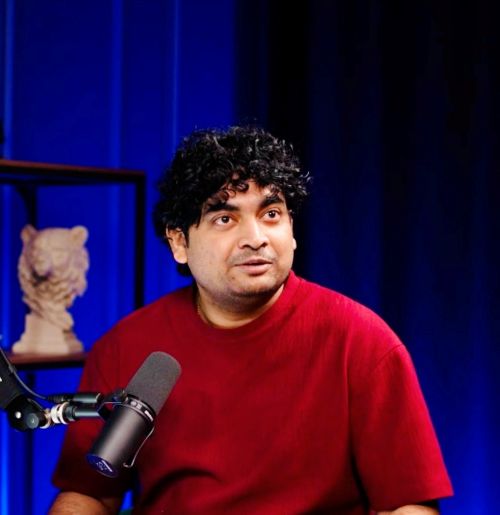


Are there too many iGaming events and how should companies decide which ones are worth attending?
Flexing an initial milestone of Episode 70 of iGaming Real Talk, we are here with Alex Pratt, Managing Director at Clarion Gaming, about the changing landscape of iGaming events.
Alex shares his perspective on iGB Live, ICE, event ROI and return on objectives, measuring value through data, the role of technology and fintech, and why an event should be treated as part of a wider marketing campaign.
We talked about how the industry is facing
- Too many events competing for the same budgets
- Rising costs for exhibitors and attendees
- Difficulty proving the real value of events
- Smaller suppliers competing with huge exhibition stands
- Limited time for follow-ups between events
- Growing pressure to measure attendee and buyer behaviour
What this conversation explores
- Why iGB Live gives smaller suppliers a level playing field
- Why London gives iGB Live a unique advantage
- How ICE is expanding beyond the traditional gaming event
- Why event success should be measured by clear objectives
- How data can help prove the value of events
- Why events need to be part of a wider marketing campaign
Notable quotes
We can't exist unless we can prove that we've delivered value.
I don't look at it as ROI. Everyone has a different objective.
iGB Live allows me to compete on the same level playing field.
Key takeaways
iGB Live gives smaller suppliers a fair shot
"iGB Live allows me to compete on the same level playing field." Alex believes one of iGB Live's strengths is that smaller suppliers don't have to compete with huge exhibition stands. The event gives growing companies a chance to meet the same buyers, spend less on space, and focus on business rather than presentation. For him, a bigger stand doesn't automatically mean a better event.
London brings more than gaming people into the room
"London becomes our USP." Alex sees London's location as a major advantage for iGB Live. The city gives the event access to investors, funds, CFOs, corporate development teams and businesses from outside traditional gaming. That wider audience gives iGB Live a different kind of reach.
ICE is becoming a bigger conversation about the industry's future
"All of the conversations that should be happening about this industry and the future of it happen there." Alex believes ICE has moved beyond the traditional buyer-and-supplier format. Operators, regulators, legislators, charities, researchers and academics are now part of the conversation. For Clarion, that creates an opportunity to bring the industry together around regulation, player protection and where gaming goes next.
An event's value depends on what you want from it
"I don't look at it as ROI." Alex doesn't believe every company should measure an event in the same way. A smaller company might focus on leads, while an established business may care more about retention, upselling, cross-selling, brand awareness or moving existing prospects closer to a deal. The objective should decide the measurement.
Event organisers have to prove the value they create
"We can't exist unless we can prove that we've delivered value." Alex believes organisers need to look beyond attendance numbers. Clarion is looking at things like stand visits, scans, dwell time, buyer intent and activity before and after the event. The goal is to make the value of attending an event easier for marketers to prove internally.
An event should be part of a bigger marketing campaign
"It can't be event, event, event, event." Alex believes companies lose value when they move from one event to another without giving themselves time to build on the conversations. The real work happens before the show, during the meetings, and after the event through content and follow-up. An event shouldn't be the whole campaign.
There may simply be too many events now
"I think the demand is going to slow." Alex believes the industry is reaching a point where there are too many events competing for the same budgets, exhibitors and attendees. As companies become more selective about where they spend their time and money, weaker events could struggle to keep up.
Buyers do their research before they speak to sales
"By the time they're talking to you, they probably researched you all over the shop." Alex believes the sales conversation is no longer the starting point. Buyers may already have researched the company, spoken to peers, checked its online presence and involved other decision-makers before meeting the supplier. That makes brand visibility important long before the sales team gets involved.
New suppliers don't need the biggest stand to win
"Don't think about the whole market. Just laser target it." Alex's advice to smaller suppliers is to stop trying to look like the biggest company in the room. Know exactly who you want to reach, build a strong product, focus on the right buyers and build relationships. The first few customers are difficult to win, but spending more on a giant stand isn't necessarily the answer.
About the guest
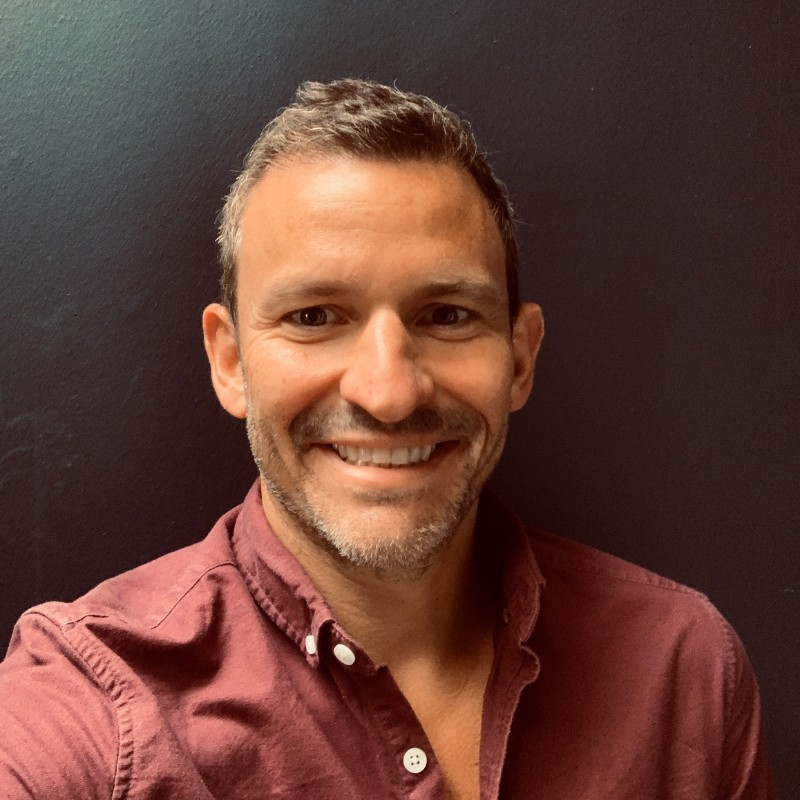
Alex Pratt
Managing Director, WorldGaming
Alex Pratt is the Managing Director at Clarion Gaming, one of the leading organisers behind major iGaming events including ICE and iGB L!VE.
LinkedIn profileExtended summary
Published by the podcast, not written by our newsroom.
Read the summaryHide the summary
Surya: Hello and welcome back to another episode of iGaming Real Talk. I'm here with Alex from Clarion Gaming. We're here at IGB in London. So I'm very excited to speak to Alex straight from the management itself about what's going on here from the expo floor. So Alex, welcome to the show. Thank you. Surya: How's it been so far? How's the response at IGB this year? Alex: No, really good. And actually, look, it's not been... You and I know you can look all across the web.
There's a lot of events in this industry. I think I've said for a couple of years there has been a point where we start to see decline and friction and actually some of these events slow down. And actually, this year has been a lot harder than I'd say the last two or three years. And actually, we got there. We've pushed really hard. We've got... Obviously, you can see a full exhibition now. But for me, it was about can we get the attendees still?
And actually, yeah, so it's been, I think, brilliant so far. Loads of really good feedback. I think we had just over 10,000 actually in the show yesterday. I hope to sort of add another 3,000 or 4,000 today. So sort of pushing to the same as last year, if not maybe a couple of hundred more. Surya: OK. And when we compare to how IGB in Amsterdam was, are these numbers a bit declining or the same or how do you see it? Alex: They're growing.
Yes, it's a much bigger event, both from kind of its footprint, but also actually the volume of attendees. And I think the bit that I've seen really interesting this year is, and we were talking about it before, is just the quality. So we've seen that IGB Live has been on a journey for 15 years. Maybe 10 years ago, it was a lot more stressful where one year we'd have a huge amount of affiliates. It'd be really good.
The other year, we'd have loads of operators, but no affiliates. And actually, we've now got that balance where we've got the right people, we've got enough of them. And actually, I think it's, yes, an event that has a really strong position now in the market. Surya: Yeah. One thing I liked on the floor plan, it's clear blue and red. You know, I don't know if it was always like this, but I checked the floor plan like a few days before the show.
I was like, oh, this is fantastic because it's and it looks like it's almost half and half in terms of. Alex: Yeah, it is. It's a good balance. Actually, next year, exclusive. We're actually almost going to turn it across this way. So we'll go across the aisle, across the boulevard. So you'll have the iGaming B2B supplier side on that side and then affiliate on this side. And then you have a load of activations on the boulevard.
So it becomes even I guess a place or a home for those different tribes that will work together. But actually, you still want your own room, your own atmosphere. Surya: And people are, I think they're fundamentally different, even though they're in the same sector. But does that mean that the show will grow? Because right now we have how many halls on one side, right?
So if you're going to go both sides, would it mean that it's going to grow in terms of the number of booths and so on? Alex: At the moment, we've planned it to have a small amount of growth. But the great thing about Excel is that you could just open another hall in another hall. So actually there's opportunity to grow.
I think with this event, I've always not wanted it to be a kind of giant version of ICE or a mini version of ICE because people start to then question the amount of money you're investing in the show and actually have a race to who can have the biggest stand, who's got double deckers.
And actually what I want to be able to deliver is drop a value, but also a very low barrier to entry if you're, I don't know, a scaler wanting to compete with a tier one supplier actually gives you an opportunity to go toe to toe and compete. And I think we have to be careful allowing two bigger stands because it just becomes another event in the industry of which there is a lot. Surya: Oh, is it a strategy? I didn't know about this. Alex: Part of it.
Part of it was always, it was always almost... Leveling the playing field? It was interesting. And I didn't create the strategy. It was a customer that said to me, actually ICE, I feel dwarfed. I feel like diluted and small is really hard. Like people are buying stands the size of the whole of IGB Live almost. And actually IGB Live allows me to compete on the same level playing field. It's a smaller investment. And actually, yeah.
And then it's always about trying to drive deals and trying to drive ROI during the event. So it's always been a bit different. Surya: Okay. Amsterdam was a great location. A lot of people always tell, and then there's talk going on in the industry as well, that they miss IGB Amsterdam. So do you have any plans to go back to Amsterdam at all? Alex: It's interesting. Because there's no event in Amsterdam yet. Although SBC is now launching one. And actually we had it.
We still have it on hold. Dates. And we, as we said, we'll come to London. We'll see how it works. So we still have dates on hold for next year. Obviously SBC now have looked to launch another European event because we all need another one. But actually we're still looking like Dewey and we've been debating it for the last six months. We've spoken to a lot of customers. And actually I would say we will stay in London. It is a really split decision.
And I think we wanted to see how this event was second time round would deliver. And actually it really has delivered to people. And I think in the last three or four weeks, you've seen a real mood of can't wait to be back in London. I've missed Excel. Like London is, whatever we say, is an expensive city. I mean, that is just the truth, but it's expensive because it is one of the greatest cities in the world.
So it's like people compete internally, as I saw here, like to attend this event because they want to see London. Surya: Yeah. Alex: On top of that, you've got the home of the finance industry. So you saw we had the M&A summit here. So it meant we could bring really big investment funds, investors, CFOs, heads of corporate development, because they're in London. So we could bring them to a room to actually get those types of deals done. We had the Africa summit.
It's really easy for people from Africa to come over to London. So actually it means, interestingly, I think London becomes our USP. We could go to Amsterdam. We could put massive parties on. Everyone will have loads of fun. But actually that's the same as every other event in the market. What London does, it gives us the most connected, most fun, most vibrant. Also, actually, this is the home of iGaming. This is where it was born. Still got big head offices here.
I would say we're going to London our home. Never say never, but it's work. Surya: Yeah. And if it's working, why break it? Yeah. Personally, I love coming back to London because, you know, when ICE moved to Barcelona, it was a bit disappointing because, you know, this is an opportunity for us, for many of us, to come to London, to experience London as well as do things around the event. And I must say, Excel also is a very good facility in the way that it's built.
So it's not very hard to move around personally. Alex: Now, if you're weirdly geeky like me and into venues, I mean, it is one of the best venues in the world. I could get boring, but there's no columns. There's an amazing loading base. If you've got the Elizabeth Line straight into London, you've got all the hotel and campus around there. It's a good place. And they're investing so much money in this area. So it can only get better.
Surya: We have ICE 2027 coming up in six months. As you mentioned, there's already too many events that ICE is the one that everyone should go to. So what's the plan for ICE 2027? Where are you heading from here? Because you're already the biggest. Last year you had 60,000 attendees. So what are you planning for next year? And where are we headed for the next two to three years from here? Alex: I think ICE is a totally unique event in this market.
You've got your traditional buy-sell, exhibitor meets their buyer format. But beyond that, we've got the biggest gathering of regulators, the biggest gathering of legislators, more charities than anywhere else. We've got research and academics. So all of the conversations that should be happening about this industry and the future of it happen there. So I think one direction is to really embrace that.
So we're talking to operators in certain countries where they want to take pavilions to use that to lobby government and actually use ICE as a platform to change regulation. We've been investing significant amounts of money annually now for three years into academic research all around safer gambling and player responsibilities. So that's now starting to deliver findings and results. So how do we use ICE to disseminate those findings and actually have an impact in industry?
So things we've done research on recently is how do you use AI ethically within the gambling? Where should you not use AI and where should you use AI? Or we've looked at how does dual disorders affect your propensity to addiction? And so how do we then take those findings, like incredible research, but actually now have impact in the sector. So there's that. And then there's just the traditional adjacent sectors.
So a big thing for us, and we've talked about it, is technology. So we're opening Hall 7 next year. That will be totally focused on fintech and technology. So last year you saw working with Microsoft, we'll be talking to them about getting more and more involved and other big tech companies.
How do we start to use, I guess, big blue chip companies that are working in multiple other sectors to come into us to help us move forward and also become part of this incredible entertainment industry that is all about technology jobs, providing entertainment to consumers. And I think it's going to be a really interesting new hall that will bring a whole load of new exhibitors, new attendees, things like your CTOs that don't traditionally come to the gaming events.
So I'm really excited. And on top of that, there'll be a ton of other stuff I don't even know about yet. Yeah, they're probably keeping a secret from me. So I don't tell you. Surya: Are you doing anything in the area of psychedelic research? I know Alex is from ELEA is funded. Alex: No, I don't think we have, but not on the research stuff. So we have a grant that we do each year.
And one of the questions actually we've got here, and I welcome anyone that's watching this on LinkedIn or YouTube to either comment or message us that we want to know what are your biggest challenges or questions that you want to have evidence to back up a conclusion around that. So if it's that, speak to myself or speak to Eva Bakun, who runs our Research Advisory Institute. And we will look to how can we fund research into that and how can we get real data.
So, yes, that's one of the ones we've talked to Alex about. And we're looking at anything and everything around kind of consumer protection. Surya: You know, last year when I was doing the interviews, I went around asking a few marketing managers, CMOs, like, do you really like measure ROI on conferences? And most of them surprisingly said that we don't because our management understands that this is an activity that will be fruitful in the long run.
That was a surprising, but also I was a head of marketing before and it was also similar because it's very complex in terms of like how to measure. But I would love to hear from you. What do you hear from your exhibitors and from your perspective of being in the events industry? Do you see companies measuring ROI in a certain way? Or what's your perspective on how to justify it?
Alex: Yeah, no, I think it's, you know, I love this question and I'm obsessed with it as well because I believe we can't exist unless we can prove that we've delivered value. And whether they want us to do that now or do it in three years time, we have to think about that. I don't look at it as ROI. Because actually everyone has a different objective.
So either ROO, which I know you've talked about, like return on objective, or even just value for money is a big one we ask because that value, so if I speak to one customer, actually it's one customer I speak to that's now a very established B2B software business, he talks about how do they measure value. So the start when they were new, it was all about leads. How do they convert that? Now he's much bigger.
He's like, look, I know in every jurisdiction, I know the customers we can work with. So you can't give me leads anymore. So for him, it's retention, upsell, cross-sell, and brand. He said, well, how do you measure that? And I think for me, these are really interesting questions that we as organizers should be challenged on. And I'm finding more and more the conversations around value are becoming actually happening.
And it's something I encourage is why I ran the Marketing Leaders Forum, because I want to upskill everyone in marketing and B2B marketing. So you ask and put pressure on us to deliver proven value. And I think part of that comes from us using data. So we can measure dwell time, we can measure what people are going to stand, we can measure scans, we can measure their behavior during the show.
But we can also start to look, actually, it doesn't just start and end when we open the doors and when we close the doors. We have an entire media business where actually we should be running campaigns that start in September, October, that run straight through to the event and then afterwards. So that campaign could be you want to be seen as a thought leader and you want people to mention you as like an expert.
Or it could be generating leads, or it could be actually these are the 10 customers. They're in the middle of our funnel. How do you help us moving through? And so what we're trying to do as a business now is trying to help. And it sounds a bit floppy, but try and be a partner to help people with those objectives. And I really believe we have to be accountable as event organizers for the value we deliver. And I don't think it's just gaming.
I think it's across all the events we do within Clarion. Surya: And is it the same across other industries as well in terms of measuring this? There's always been a bit of ambiguity as well as no clear way to do so. Alex: Yeah, it's different. So in some of our technology shows where you've got where they're selling tech, yeah, now those, they measure everything.
And they know the value and they know the value of a lead, they know the value of a marketing qualified lead, a sales qualified lead, they know moves in the funnel, they measure and they look at it as a straight, we spend this, we got this, we'll repeat it. And there is no negotiating with that. Then through to somewhere more like gaming where what would happen if I wasn't here? And that's fine. But the problem is it only takes one exhibit to walk and then you lose them all.
And shows, I've seen giant shows die in two years because they've relied on that fear of missing out, which is, that's what it needs to be is like fear of missing out on business, fear of missing out on the objective you want to. Surya: Yeah. It's really interesting. And by the way, some people in gaming, you always use them as an example for sport radar, the guy that heads up is like credible about what he measures.
And there's some other guys who the company of a day, they have cameras on their stand, they're measuring movement within their stands, facial expression, the mood of the person when they move. So people are starting to measure different data points. Alex: And I think as we start to look at our data infrastructure, and then so we're moving on to the data bricks, so we can bring in every bit of our data.
And so the more that we can start to understand our customers, and whether it's like buyer intent, or what they're doing a show with you, professional with you and start to think about it in a more digital way. I think we can start to really deliver and prove value. And I think that's, it's a big objective of mine. Surya: Are there too many events now in our calendar year? Alex: Simon, I mean, so many, I keep reminding people, we only have two, we used to have about 12.
We shut our events. So please don't blame us. Surya: No, we used to... Yeah, we used to have by lots of smaller ones, right? Alex: Yeah, smaller conferences. And we had stuff in Brazil and Africa in a couple of smaller ones in the UK. Yeah, we used to have so many. Surya: And for me, I could see it the other day, when we were coming up to this, I was like, why is no one doing that?
I'm going to be live on LinkedIn and it suddenly started about two weeks before the event instead of six weeks. I was like, it's because there were four or five other events. So they can't, they're actually, they've got to get through three events before they can even get this. But there was America's SBC America. What do you think is going to happen now? Like we have to move exhibitors, attendees are not going to come. Alex: And we will see them eventually close.
And it's why I've said for ages, don't keep telling everyone there's more events. Yeah, stop sponsoring them, stop attending them. And if we don't win because we haven't got a good enough product that's on us. But please, yeah, like be choosing. Surya: Yeah, there's more than a one a month at the moment. Of course, I mean, there's different focus, different regions. But still, we know companies who go to these events every month.
I don't know, speaking to someone yesterday, you have to do them all. And she was saying it's so difficult financially, this opportunity time. So that people are out the office and they have to be able to then have time to actually do their job and follow up. Alex: And I think events are amazing. I think it allows us to have face to face time, good relationships. I think I wouldn't be in if I didn't think it was an incredible channel. But it has a place.
And it has a place within your campaign. And it can't be event, event, event, event. Surya: Yeah. Yeah. Yeah. Clever campaign. Alex: Yeah. Because you've got to do some things before the event in the run up during the event after the event. It's one event is a campaign that provides multiple opportunities for your brand to speak online as well as create and create that holisticness.
Surya: If you do like one event every month, then probably you're just going to do the during the event campaign. And that's it. And I think even from an attendee perspective, they don't need to go to every event. I don't need to meet the supplier 17 times. I don't need to learn about opportunities in the African market every month. I mean, probably they could read it and they could go on webinars because they don't need to be in a live conference room.
Alex: So, yeah, what I'm starting to see is, yes, it's those choices being made by attendees that are choosing the ones that will deliver them the value or turn on their objective. And we're seeing it on exhibitors as well. And I think you'll start to see budgets being pulled from certain places and we'll start to see some natural survival of the fittest by basic economic theory of supply and demand. And I think the demand is going to slow. Surya: Yeah. OK.
And hopefully the supply will then decline and we'll go back to some sort of normal life. OK, last question. Just as a follow up from your experience, how do operators choose a supplier? It's a very broad question. Alex: I have the exact same question. And it's and I think if we asked someone yesterday about this and I think it varies massively from people that will do a really methodical, analytical. Is it brand? The most known? Is it ask a friend?
Brand makes a huge difference. I think referrals make a huge difference. I think if you look at the way B2B decisions made now, by the time they're talking to you, they probably researched you all over the shop, asked other peers about it. But also the decision making group is now beyond that kind of buyer, like your traditional C-level environments.
Actually, it's the heads of legal, heads of finance and things like this, which you wouldn't traditionally be able to talk to an event, which is where things like LinkedIn marketing becomes much more interesting because it targets those people that aren't coming to the event. But actually, when that contract hits that, I know CFO or chief legal officer, actually, they know that brand. So they're more likely to sign or more likely to spin in through.
Surya: Yeah, I think it's to be honest with the marketing leaders forum that we do, something I'm really... When is that usually? Alex: In November. Surya: OK, so something I'm thinking about is getting a whole bunch of operators and ask them, how do you decide what is what does influence your decision? Do you care that these guys have got the giantest stand ever and a DJ on it? Or actually, is this incredible white paper? Or is it just everything? I'm fascinated.
Alex: Yeah, because, you know, I talk to a lot of startups, right? B2B suppliers, I don't know, AI, customer support, lots of them. In the beginning, it's very difficult for them to get the foot in the door. But they can't compete with the big guys by having big stands. First of all, they can't get a stand at ICE because, you know, if they're not exactly. So what do they do? Like for the new B2B companies, how do they get the customers?
Surya: I think getting the first five customers is the most challenging part itself, because, you know, there's these dinosaurs, you know, who have been in the industry for a long time. They're not extinct yet, but they are taking over everything. So I talk to a lot of these startups and they tell me, like, it's mostly based on referrals. Alex: Yeah, I agree with that. For them.
And this industry, okay, it's a big industry, 60,000 comes to ICE, but actually, it's also a really small industry. And I think you have to be relentless. Save yourself time, you have to be a good person. Sounds ridiculous, but people only look after good people, kind people. And I think if you've got a good product and you believe in it, you will. Same as like we, we're a big corporate, we're a buyer of services around events.
And actually, we predominantly buy off the big suppliers. And like there's a guy trying to sell me this thing at the moment. I think his technology is amazing. But to get him inside our business is difficult because we have bigger decision making trees, we have to get sign off, we have to do massive due diligence on you. But he is on me all the time. And I think over the next nine or 10 months, we probably will test him eventually, or someone in Clarion will test it.
And I think I see it the same as this, like, it is hard, it is relentless. And I think you need to know your customer is, who is your ICB, don't think about the whole market, just laser target it and just like, yeah, work your ass off. And it doesn't have to cost loads of money. First mistake people make think, oh, if I buy this giant booth and spend a load of money, deals are done. Don't need to, just need a good product. Surya: Cool.
Is there anything else you would like to talk about and close off the conversation? Alex: No, no. Can't wait to watch this. Can't wait. We have our first drink from the Aliyah stand now with your WhatsApp booth. Fantastic. Thank you for being active there as well and responding to some of the things. You know, it's great to have you in the community as well as I think community is going to be the power. Surya: Yeah, that's AI proof. Alex: Yeah, it's AI proof.
That's the whole reason we started it as well and to forge some of the conversations in real time. Not all are, of course, always valuable, but you know, people do connect. Brilliant. Surya: Cool. Thank you so much, Alex. If you have any questions, do tag Alex as well as ask the questions in the comments. Thank you for watching. Do like, subscribe, and I'll see you on the next one. Thank you.
 1h 2m
1h 2mJust Play the Game
Alexandre Tomic · Founder, Alea & Vegas Legends
 9 min
9 minSiGMA Nexus Elite | Executive Network by SiGMA
Louise Mouton Tingager · Head, SiGMA Nexus Elite
 14 min
Why the Cheapest Gaming License Can Cost You More Later
Khristina Karanskaia · Head of Content, My Gaming License