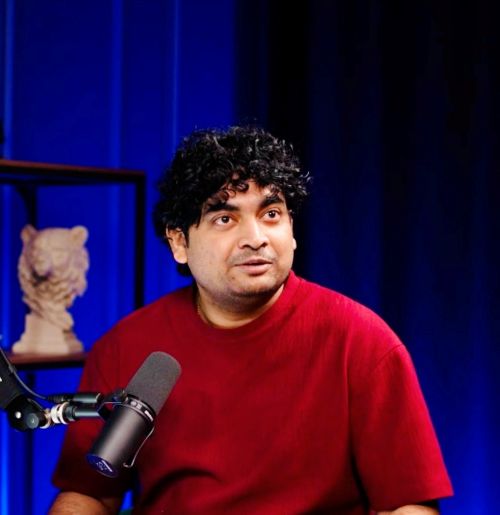
Psychedelics and Gaming Addiction | Alexandre Tomic | iGaming Real Talk
with Alexandre Tomic, Founder, Alea & Vegas Legends


This episode contains discussion of psychedelics and related substances in the context of personal perspectives and scientific research.
The content is intended for informational and educational purposes only and should not be interpreted as medical advice or as an endorsement or encouragement of the use of any controlled substances.
Most conversations in iGaming are about products, regulation, or growth.
This one went somewhere completely different.
In episode 62 of iGaming Real Talk, Surya Palli caught up with Alexandre Tomic, Founder of Alea, for one of the most unconventional conversations we've ever recorded.
Alexandre shares why he's fascinated by consciousness research, the science behind psychedelics, how studies at Imperial College are changing the way we understand the brain, and why he believes luck is much deeper than most people think.
This isn't a conversation about products or company updates. It's about curiosity, philosophy, science, and asking questions that most people avoid.
Whether you agree or disagree, this episode is guaranteed to make you think.
Notable quotes
If you want to explore consciousness, if you want to grasp consciousness, you need to get into psychedelics.
When you take DMT, the world around you disappears. You move into what you could call another dimension.
We're going to know in one year whether mushrooms have affected gambling addiction.
Key takeaways
Did psychedelics play a role in how the human brain evolved?
"We started eating mushrooms... and then our brain doubled." Alexandre discusses Terence McKenna's Stoned Ape Theory and the idea that psychedelics may have played a role in the development of human consciousness. The theory is still debated, but it raises a bigger question about how psychedelics may have affected the way humans think and understand the world. For Alexandre, psychedelics are not only about the experience. They are also a way to study the human mind.
Psychedelics can make the brain less active
"Counterintuitively... the brain shuts down." One of the more surprising findings from psychedelic research is that some parts of the brain actually become less active after taking psilocybin. Alexandre explains how this can change normal patterns of thought and perception. Instead of simply making the brain more active, psychedelics can quiet some of the systems linked to our normal sense of self.
Consciousness is now being studied in the lab
"If you want to explore consciousness... you need to get into psychedelics." Psychedelic research is moving beyond philosophy and into universities and research labs. Researchers are using brain scans, neuroscience and controlled studies to understand what happens to the brain during altered states of consciousness. Questions about consciousness are no longer only being discussed by philosophers. Scientists are now testing them.
DMT is raising bigger questions about reality
"When you take DMT, the world around you disappears." Alexandre talks about research into DMT and the unusual experiences people report during controlled sessions. Some participants have described similar encounters and experiences while under the effects of DMT. Researchers are now trying to understand what is happening in the brain and why these experiences can feel so real.
Psychedelics and gambling addiction need real evidence
"We're going to know in one year whether mushrooms have affected their gambling addiction." One of the most important areas of research is whether psychedelics can help with addiction. Alexandre points to ongoing studies looking at whether mushrooms could have an impact on gambling addiction. The important part is that researchers are now testing these ideas instead of relying only on stories and personal experiences.
Studying drugs can help us understand the brain
"We studied the brain by studying the effects of drugs on the brain." Alexandre believes studying how different substances affect the brain has helped researchers understand more about human consciousness. Psychedelics could offer another way to study perception, awareness and how the brain creates our experience of reality. The bigger question is simple: how much do we really understand about the human mind?
About the guest

Alexandre Tomic
Founder, Alea & Vegas Legends
Alexandre Tomic is an entrepreneur and the founder of Alea, a company within the iGaming industry. He is known for his unconventional approach to leadership, maintaining a deep interest in consciousness research, philosophy, and the scientific exploration of the human brain.
LinkedIn profileTranscript excerpt
A short passage published by the podcast, not the whole conversation.
Read the excerptHide the excerpt
- Surya Palli
Do you believe that early man became humans just because they had mushrooms?
- Alexandre Tomic
Yes. We take someone who is taking mushrooms versus someone who is not taking mushrooms. We can see that the brain is completely rewired. Counterintuitively, what happens when you take mushrooms, the brain shuts down. Something else expresses itself. So it's almost like the cage shuts down. When you take DMT, the world around you disappears. You move into what you could call another dimension.
So the psychedelics, if you want to explore consciousness, if you want to grasp consciousness, if you want to have an idea of what consciousness is, you need to get into psychedelics. Someone from the online gambling industry did a research on psychedelic truffles. We're going to know in one year whether mushrooms have affected their gambling addiction.
- Surya Palli
Behind every license is a person betting on themselves. At My Gaming License, real people carry your application through. From jurisdiction to bank to launch, we do the work so you don't have to. 300 plus clients, a perfect approval record. My Gaming License, your licensing partner. There's one subject that is fascinating, which is consciousness exploration and how do you do consciousness exploration apart from meditation etc.
- Alexandre Tomic
The same way we explored neuroscience. The neuroscience field was born in the 50s, I think.
- Surya Palli
Yeah.
- Alexandre Tomic
Right after the Second World War, when scientists started looking at the effect of drugs on the brain. We studied the brain by studying the consequences, the effects of drugs on the brain. And these ones, let's put them on the side because they're really not interested.
- Surya Palli
Let's talk about mushrooms. Yeah, psychedelics.
- Alexandre Tomic
So psychedelics, if you want to explore consciousness, if you want to grasp consciousness, if you want to have an idea of what consciousness is, you need to get into psychedelics.
- Surya Palli
Sure. So what does that do to the system if we can go into it?
- Alexandre Tomic
Okay. Where do we start?
- Surya Palli
As simple as possible, 'cause I know you also follow this man who doesn't want to die, right? So whenever you like his Insta post, I get the notification. Oh, Alex liked this. Okay, I will check this out now. You know.
- Alexandre Tomic
You're talking about Brian Johnson.
- Surya Palli
Yes, correct.
- Alexandre Tomic
Interesting character actually.
- Surya Palli
'Cause he's taking really high dosages, but you've mentioned previously as well that you prefer high dosages to something like microdosing.
- Alexandre Tomic
Yeah, I don't find any value in microdosing.
- Surya Palli
So, how do you like,
- Alexandre Tomic
I want to talk about one compound. Mushrooms are very interesting.
- Surya Palli
Do you believe that early man became humans just because they had mushrooms?
- Alexandre Tomic
Yes. This is the theory of the Stone Age. The mainstream theory is that our brain doubled at some point because we started eating meat. Let's say that over thousands, if not millions of years, the fact of eating meat, actually the period of time is short, I don't remember exactly when our brain doubled by eating meat. Do we see today, on a short amount of time, that people who are eating meat are smarter than vegetarian or vegan people?
- Surya Palli
It doesn't seem to be the case.
- Alexandre Tomic
We don't have brains of carnivorous or omnivorous people that are more developed than brains of vegan or vegetarian people. So let's say that at least on a short period of time, it doesn't seem to make any difference.
- Surya Palli
Yeah.
- Alexandre Tomic
Right. What Terence McKenna argues is that it's not a consequence.
- Surya Palli
Okay.
- Alexandre Tomic
It's not a cause. There is no causality. There is co-occurrence, when two things happen at the same time.
- Surya Palli
Simultaneously.
- Alexandre Tomic
Yes, co-occurrence. And the real causality is we were following buffaloes, cows, and as we were following them to kill them to eat them, we found their feces basically, and on the feces mushrooms were growing. We started eating mushrooms and then our brain doubled. So now if we take someone who is taking mushrooms versus someone who is not taking mushrooms, we can see that the brain is completely rewired.
- Surya Palli
Is there systems to check this, like brain scans?
- Alexandre Tomic
I mean, there's a lot of studies done by Imperial College and UCL, and I can go,
- Surya Palli
As a common man, can anyone go and take a brain scan or,
- Alexandre Tomic
Yes. So you take a brain scan of somebody before mushrooms, you take a brain scan of somebody doing mushrooms and a brain scan after mushrooms, and you're going to see significant differences. So Brian Johnson, which is not a scientist, only did it on his brain and did it with a technology called the fNIRS, which is basically near infrared lights, they didn't do it by looking at the electrical activity of the brain, but just by PPGs.
PPGs are these lights that you have here, so you see the blood flow. So basically, counterintuitively, what happens when you take mushrooms, the brain shuts down.
- Surya Palli
Wow.
- Alexandre Tomic
You could imagine that it would be more like a Christmas tree. No, it shuts down. What does it mean? It's more like an ego death. The normal system, the default system shuts down and then something else expresses itself. So it's almost like the cage shuts down.
- Surya Palli
Yeah.
- Alexandre Tomic
There's a doctor called Dr. Andrew Gallimore who wrote a book about it called "Death by Astonishment," where he explains how all the indigenous people found this other compound that you would mix together and then you would have the effect. So only when you mix these two plants together will you have the effect of ayahuasca, and then you basically break through and you see entities. In the '90s, Dr. Rick Strassman did experiments on 60 subjects, injected them with DMT.
DMT is to ayahuasca what LSD is to mushrooms, it's the synthetic compound. Medical grade DMT injected to them. The trip lasts less than 10 minutes, 7 minutes, and they all saw entities. You don't have that, for example, with ketamine. I did ketamine a lot, intramuscular, in a clinic here in Barcelona called Clinic Synaptica.
- Surya Palli
Okay.
- Alexandre Tomic
You don't see entities. It's a very shallow drug. Very interesting drug, beautiful, but very shallow. With 5-MeO, which is another form of DMT, you don't see entities neither. You do see entities with psilocybin, but you still have the perception of the world around you.
- Surya Palli
Yeah.
- Alexandre Tomic
When you take DMT, the world around you disappears. You move into what you could call another dimension.
- Surya Palli
Wow.
- Alexandre Tomic
So Rick Strassman in the '90s takes 60 subjects, gives them DMT. He does the trip reports, publishes a book, "DMT: The Spirit Molecule." Young Andrew Gallimore, before he got his PhD in pharmacology, he was a chemist, pharmacologist and neuroscientist at the University of Okinawa, read the book, as I did.
- Surya Palli
Yeah.
- Alexandre Tomic
In 2016, he contacts Rick Strassman. He says, "Can I have your what's called the bed notes? It's all the notes he has from the trip reports that were not published in the book." And the Excel sheets where he would have the exact doses that he was giving to the patients.
- Surya Palli
Oh wow. It's like a study basically.
- Alexandre Tomic
Yeah. And he said, "Let's do something together. I'm now a doctor in pharmacology. Let's build what's called a pharmacokinetic model where we're going to inject what's called a bolus. So it's an initial dose of DMT like you did back in time, to reach 60 to 100 nanograms of DMT per milliliter of blood, which is the breakthrough. Above 100 you go into a blackout, under 60 you still see the world around you."
We have this machine, like when you have an anesthesia, that's going to deliver you continuously DMT, because DMT metabolizes very fast, when you stop giving DMT after 7 minutes you're out, which is a very good thing and you're going to understand why. And we're going to inject them with this syringe that would deliver what's called a target control intravenous infusion, target control between 60 and 100 nanograms per milliliter of blood, and you're stable.
Just for you to understand, ayahuasca gives you 20% of that. So people say ayahuasca is strong, it's not that strong. It's long. It's 10, 15 hours. If you have a bad trip, you're going to have a bad trip for a long time.
- Surya Palli
Yeah.
- Alexandre Tomic
So with DMT, it's five times stronger and you can get out in five minutes.
- Surya Palli
Wow, just five minutes.
- Alexandre Tomic
They built this pharmacokinetic model. They published it in 2016.
- Surya Palli
Okay.
- Alexandre Tomic
Imperial College, Dr. Chris Timmerman, takes over that study, that pharmacokinetic model, gives it to a Swedish pharmacologist. They built a more elaborated version of that, and they take eight to 10 participants over five years. It just stopped in March of last year.
- Surya Palli
Oh wow.
- Alexandre Tomic
And repeatedly they start with 30 minutes, 60 minutes, 90 minutes. I think they went up to two hours in the University of Basel in Switzerland, and they study what is happening to these people when they send them there, and they brain scan them, they put them in MRI machines at the same time. So they could see what happens in the brain, and they have a simplified keyboard which basically you would have three, four buttons. One button would be "take me out", emergency.
You push the button, you don't have to talk, you just push the button, they stop the infusion, seven minutes after you're out.
- Surya Palli
Okay.
- Alexandre Tomic
One would say "all out, I want to do a trip report." The problem is that if I get out, I'm going to explain you what happened, it's going to sound like, oh, it was freaking awesome, there's these guys and, how words are, I can't say it with words, you know. It's too complicated to explain.
So you need to be in between, to still be on the DMT but not completely, to be able to report without being completely clear but without being completely in, and then they could push another button and go back down there. So it's like a submarine, you know, you do that and they would go back forth, back forth, back forth. I have an admin, what I would call an admin here, or therapist, that I would report to and do this thing.
- Surya Palli
Okay. Yeah.
- Alexandre Tomic
They were on the NGA, and a couple maybe two years ago they released a podcast, all of them. Chris Timmerman, Gallimore was there, Rick Strassman was there, Graham Hancock was there, and the eight participants, Karl Aiden was one of the main ones also. What they describe is science fiction. It's like Flatliners. They all saw the same type of entities. They had crazy conversations with them.
And actually, Gallimore went on a lot of podcasts, with Jesse Michaels, which is American Alchemist, with Danny Jones on Concrete, and with Joe Rogan two months ago, and I was lucky enough to have him on my podcast two weeks ago.
- Surya Palli
Oh wow. That's the person that is not revealed yet.
- Alexandre Tomic
Yes.
- Surya Palli
Ah okay. Great.
- Alexandre Tomic
Yeah. And that's going to be, we had like a three and a half hours conversation, and I was lucky enough to meet Chris Timmerman, which is the one that conducted the studies in Imperial College, three or four days after that. He came to Barcelona. We didn't do a podcast but we had a long conversation.
 1h 2m
1h 2mJust Play the Game
Alexandre Tomic · Founder, Alea & Vegas Legends
 9 min
9 minSiGMA Nexus Elite | Executive Network by SiGMA
Louise Mouton Tingager · Head, SiGMA Nexus Elite
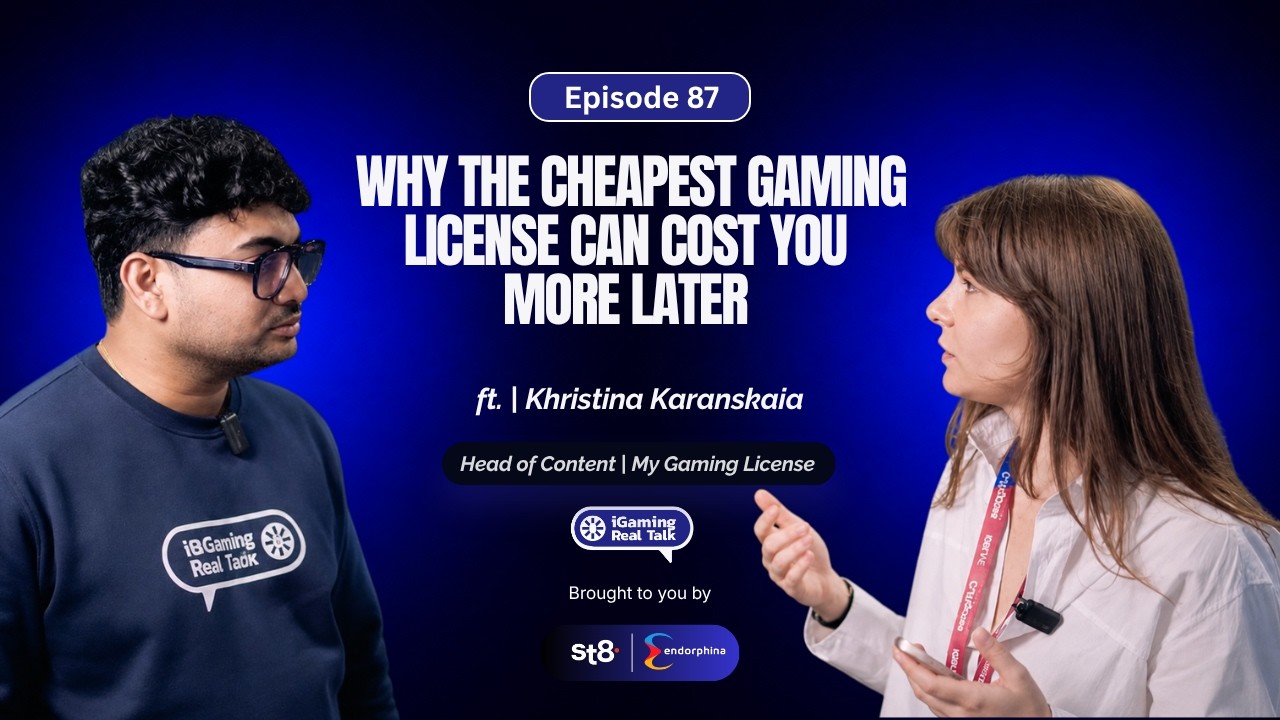 14 min
Why the Cheapest Gaming License Can Cost You More Later
Khristina Karanskaia · Head of Content, My Gaming License